

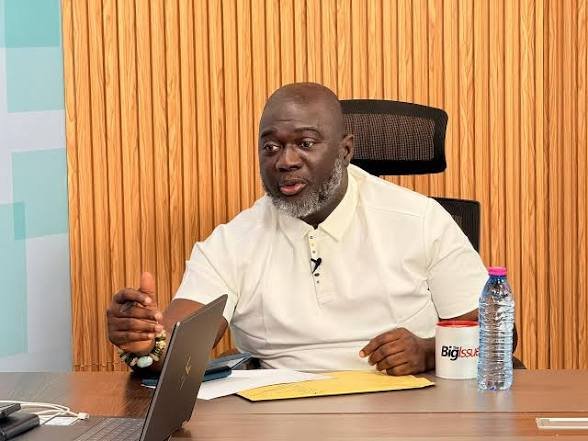
The Executive Director of the Chamber of Petroleum Consumers (COPEC), Duncan Amoah, has urged the government to pay teachers realistic salaries and adequately fund educational materials, arguing that increased spending on education must translate into better learning outcomes and improved opportunities for graduates.
Speaking on The Big Issue on Channel One TV on Saturday, October 10, 2026, Mr. Amoah said the government and teacher unions must sustain dialogue to address concerns over teachers’ conditions of service and prevent further industrial action. Editorial Ethics & Independence
His comments come shortly after three major pre-tertiary teacher unions suspended their nationwide strike following negotiations with the government over outstanding promotion arrears, allowances and other employment-related concerns.
The unions have directed their members to return to the classroom while discussions on unresolved issues continue.
Mr. Amoah believes the discussion about education funding must go beyond the amount of money allocated to the sector.

He argues that teachers need adequate compensation and access to the materials required to deliver quality instruction.
“Let’s pay teachers realistic incomes or salaries. Let’s pay for educational material,” he said during the interview.
His remarks highlight two connected challenges facing Ghana’s education system: ensuring that teachers receive fair remuneration and providing schools with the resources needed to support effective teaching and learning.
Teachers are central to the development of the country’s human capital. Their responsibilities extend beyond delivering lessons to preparing instructional materials, assessing students, providing guidance and helping learners develop the skills required for further education and employment.
However, concerns about salaries, delayed promotions and unpaid allowances can undermine confidence in the education system.
Mr. Amoah’s intervention therefore adds to calls for the government to address teachers’ financial concerns while ensuring that public investment produces measurable improvements in educational outcomes.
Teacher strike highlights concerns over conditions of service
The recent industrial action by pre-tertiary teacher unions brought these issues into sharp focus. The Ghana National Association of Teachers (GNAT), the National Association of Graduate Teachers (NAGRAT) and the Pre-Tertiary Teachers’ Association of Ghana (PRETAG) raised concerns about delayed promotion-related payments, salary adjustments and the implementation of the deprived-area allowance.
The strike began on September 25, 2026, and was suspended on October 9 after negotiations involving the unions, the Fair Wages and Salaries Commission and government representatives. Members were instructed to resume work on Monday, October 12.
Under the arrangements announced following the negotiations, the government committed to paying promotion and placement arrears to approximately 51,000 teachers by October 16, with the remaining payments expected to be completed by the end of October. Corrections Policy
Authorities also indicated that the complementary digital instruction support allowance was expected to be paid in November, while the continuous professional development allowance was scheduled for December 2026.
The government said it would announce the modalities for implementing the deprived-area allowance in January 2027.
These commitments are intended to address immediate grievances, although their successful implementation will be important in rebuilding trust between teachers and the government.
Mr. Amoah welcomed the suspension of the strike, describing it as the right step and calling for further engagement between the parties.
“The teachers have made their case, strongly and forcefully and I think that the government has also listened,” he said. He added that continued dialogue and goodwill during negotiations would help determine whether the unions considered the government responsive to their concerns.
Education spending must deliver better outcomes
Beyond the immediate dispute over remuneration, Mr. Amoah raised a broader concern about the relationship between education spending and employment opportunities for graduates.

He questioned the outcome of substantial investment in education when the economy does not generate the kinds of jobs graduates need after completing their studies.
His observation points to a wider policy challenge: education must equip learners with relevant knowledge and practical skills, while economic policy must support the creation of productive employment opportunities.
Improving teacher salaries and providing sufficient learning materials can contribute to stronger educational outcomes, but these measures must form part of a broader strategy. Editorial Standards
Schools also require adequate infrastructure, effective teaching methods, relevant curricula and reliable access to educational resources.
For teachers, access to textbooks, reference materials, digital learning tools and classroom supplies can make lesson preparation and delivery more effective. Where such resources are limited, educators may struggle to provide learners with the practical and comprehensive instruction required to meet educational targets.
At the same time, salary structures need to be fair, transparent and financially sustainable. The government must balance competing public expenditure priorities while ensuring that teachers receive the compensation and benefits agreed through established negotiations.
Dialogue remains essential to industrial stability
Mr. Amoah’s appeal for continued engagement comes as the government works to fulfil commitments made during negotiations with teacher unions.

Regular communication, clear payment schedules and transparent procedures for processing promotions could help prevent administrative delays from developing into larger labour disputes.
Such measures would also give teachers greater certainty about when approved salary adjustments and allowances will be received.
The unions, government agencies and education authorities will need to maintain engagement on outstanding concerns, particularly those requiring further negotiations or verification of eligibility.
For students and parents, the priority is to ensure that disagreements over employment conditions do not repeatedly interrupt teaching and disrupt the academic calendar. Newscard
Ultimately, Mr. Amoah’s message is that investment in education must be reflected in the welfare of teachers, the availability of learning resources and the quality of outcomes achieved by students.
Paying realistic salaries and adequately funding educational materials, he argues, should be part of a sustained effort to strengthen Ghana’s education system.
As discussions between the government and teacher unions continue, the implementation of agreed commitments will be a crucial test of whether dialogue can deliver lasting improvements in teachers’ working conditions and help keep classrooms functioning without further disruption.