

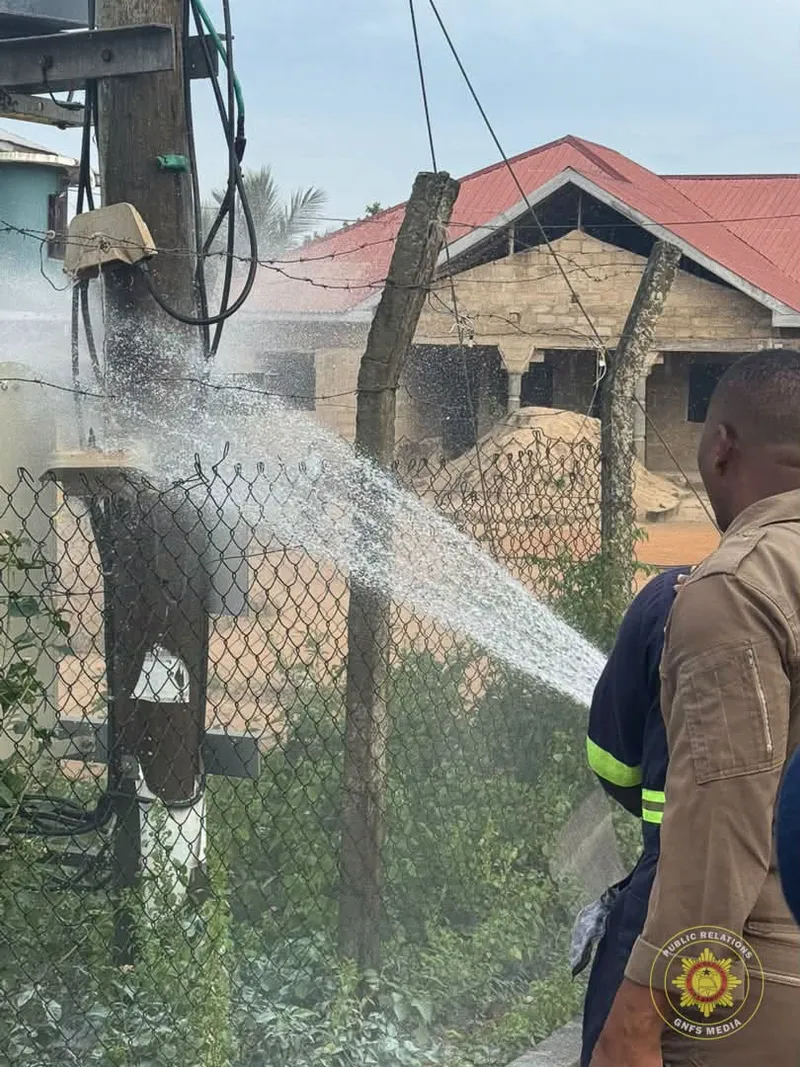
The Ghana National Fire Service (GNFS) has successfully contained a fire involving an electricity transformer at Pipeline-Salam Junction in Koforidua in the Eastern Region. Editorial Standards
The incident, which occurred on Monday, October 6, 2026, was brought under control before it could spread to surrounding properties, highlighting the importance of a rapid emergency response when fires break out around electrical installations.
According to information from the GNFS, the Service received an emergency call at approximately 6:46 p.m. concerning the fire. A nine-member firefighting team was subsequently dispatched to the scene at about 6:48 p.m. to assess the situation and begin containment efforts.
The team was led by Assistant Divisional Officer II (ADO II) Boakye and Assistant Officer Korda. Firefighters arrived at the location at approximately 7:04 p.m. and immediately began operations to prevent the fire from escalating.
Because the incident involved electrical equipment, electricity supply to the affected area was disconnected as part of the safety measures.
The precaution was necessary to reduce the risk of electrocution and allow firefighters to work more safely around the affected infrastructure.
Firefighters succeeded in bringing the blaze under control at about 7:26 p.m. and completely extinguished it approximately five minutes later, at 7:31 p.m.
The rapid intervention helped limit the damage recorded at the scene. Preliminary assessment by the GNFS indicated that the fire caused partial burning of the pole and damage to a cut-out fuse. An electrical fault was identified as the preliminary suspected cause of the incident.
However, the preliminary assessment does not necessarily represent a final determination of the cause. Further technical checks may be required to establish what triggered the fault and whether there were underlying problems with the affected electrical installation.
No deaths or injuries were reported in connection with the incident, and the available information indicates that the fire did not spread to nearby buildings or other properties.
The incident nevertheless highlights the potential risks associated with electrical infrastructure, particularly transformers and distribution poles located in populated communities.
A fault involving electrical equipment can quickly become dangerous if it is not detected and addressed promptly. Corrections Policy
Electrical fires also require particular caution because members of the public may unknowingly expose themselves to live electricity while attempting to assist.
Residents are therefore advised not to approach damaged electrical installations or attempt to extinguish such fires themselves when the power supply has not been confirmed as disconnected.
Instead, emergency services and qualified electricity technicians should be contacted to assess the situation and take the necessary safety measures.
The GNFS response at Pipeline-Salam Junction demonstrates the importance of early reporting and coordinated emergency intervention.

From the time the emergency call was received to the arrival of the firefighting team, the response was initiated within minutes, allowing firefighters to begin containment before the incident developed into a more serious emergency.
The incident also comes amid renewed attention to fire safety in Koforidua following other fire-related emergencies recorded in the city.
Fire outbreaks involving electrical installations can have consequences beyond the immediate damage to equipment. They can disrupt electricity supply to homes and businesses, damage other infrastructure and, in more serious circumstances, threaten lives and property.
For electricity consumers, the incident is a reminder to pay attention to warning signs such as sparks, unusual sounds from electrical equipment, burning smells, smoke or repeated power interruptions. Such signs should be reported to the appropriate authorities or electricity service provider rather than ignored.
Residents should also avoid unauthorised modifications to electrical systems and should ensure that electrical repairs are carried out by qualified professionals. Improper connections, overloaded systems and damaged components can increase the risk of electrical faults and fires.
The safety of electrical infrastructure is particularly important in busy communities where transformers and poles are situated close to roads, shops, homes and other public spaces.
Regular inspection and maintenance can help identify faults before they develop into emergencies.
The Koforidua incident further demonstrates why members of the public should remain familiar with emergency contacts and respond responsibly when a fire is detected. Editorial Ethics & Independence
Early notification gives firefighters a better opportunity to contain an outbreak before it causes extensive damage.
The GNFS has over the years continued to emphasise fire prevention and public education as important components of reducing fire-related incidents across Ghana.

While firefighting remains essential, preventing fires and ensuring that communities understand how to respond safely can significantly reduce the potential consequences of emergencies.
At Pipeline-Salam Junction, the outcome was relatively limited, with the reported damage confined to part of the electrical pole and a cut-out fuse. The successful containment also prevented the fire from developing into a wider threat to surrounding properties.
The incident serves as another reminder that electrical faults should never be treated as minor problems. Even a relatively small fire involving a transformer or power distribution equipment can pose serious risks if it is allowed to spread.
For residents of Koforidua and other communities, the key lesson is the importance of immediate reporting, keeping a safe distance from electrical fires and allowing trained emergency personnel to manage the situation.
With firefighters successfully containing and extinguishing the blaze, attention will now be on ensuring that the affected electrical infrastructure is properly assessed and restored safely.
Any further technical findings could also help determine the precise cause of the fault and inform measures to reduce the possibility of similar incidents in the future.
The swift response by the GNFS ultimately prevented the transformer fire at Pipeline-Salam Junction from becoming a larger emergency, underscoring the critical role of timely reporting, professional firefighting and public cooperation in protecting lives and property.