

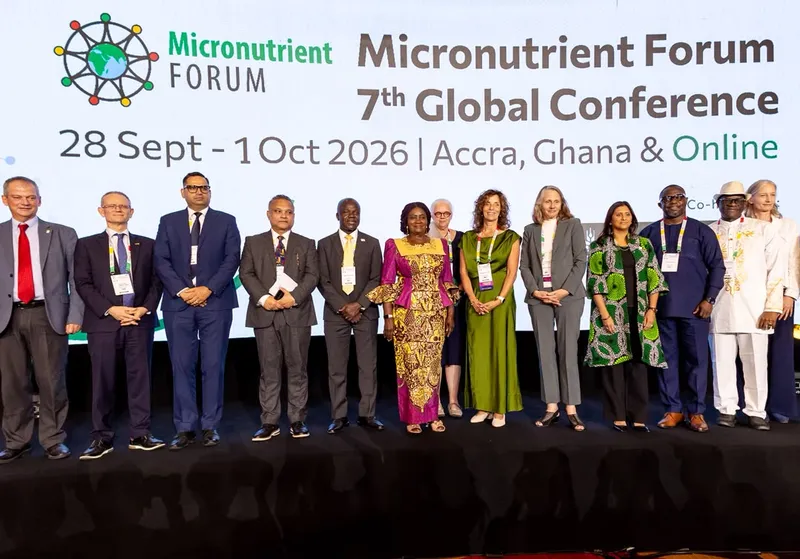
Vice President Professor Naana Jane Opoku-Agyemang has called for sustained investment and stronger collaboration to address malnutrition and micronutrient deficiencies, stressing that the challenge requires coordinated action across health, education, agriculture and social protection.
Speaking at the opening of the Micronutrient Forum’s Seventh Global Conference in Accra on Monday, September 28, 2026, the Vice President said malnutrition remained one of the world’s persistent challenges, with consequences that could extend from childhood into adulthood and affect the health and development of future generations. Editorial Standards
She emphasised that tackling nutritional deficiencies required more than isolated health interventions, urging governments, private-sector organisations, development partners and other countries to work together to establish sustainable solutions.
The four-day conference, which runs from September 28 to October 1, is being held under the theme “Nutrition at the Frontiers of a Changing Environment.” It brings together researchers, policymakers, programme implementers, funders and other stakeholders to examine evidence and practical approaches to improving nutrition in a changing world.
Despite progress in Ghana’s nutrition efforts, Prof. Opoku-Agyemang acknowledged that significant challenges remained.
She highlighted anaemia among women and adolescent girls, limited dietary diversity and breastfeeding as areas requiring continued attention.
Anaemia and micronutrient deficiencies can affect people’s health and well-being, while inadequate nutrition during childhood can have lasting implications for physical growth, learning and development.
Addressing these concerns requires interventions that reach people at different stages of life, particularly pregnant women, infants, young children and adolescents.
The Vice President noted that nutrition outcomes were influenced by several factors beyond access to healthcare.
Household incomes, the availability of nutritious food, school feeding arrangements, information available to parents and access to health services all contribute to the quality of diets and the nutritional status of individuals.
She consequently called for an integrated approach that connects health services with education, agriculture and social protection programmes rather than treating nutrition as the responsibility of one sector alone.
School Feeding Programme Identified as Key Intervention
Prof. Opoku-Agyemang highlighted Ghana’s school feeding programme as an important platform for improving children’s access to food. She said the programme now reaches more than 4.5 million children, while efforts are underway to strengthen nutritional standards, improve caterer training and enhance monitoring.

The programme provides an opportunity to incorporate nutrition objectives into the education system by ensuring that meals served to pupils contribute to their dietary needs. However, the nutritional value of school meals depends not only on the number of children reached but also on the quality, diversity and consistency of the food provided. Editorial Ethics & Independence
Strengthening meal standards and monitoring could therefore help ensure that the programme supports children’s health alongside school attendance and participation in learning.
The Vice President also pointed to primary healthcare as an opportunity to expand preventive nutrition services, particularly through maternal and child health interventions.
Such services can help identify nutritional risks, provide appropriate guidance to families and support interventions aimed at improving the health of mothers and children.
Calls for Stronger Domestic and International Financing
The Vice President stressed that addressing malnutrition would require adequate and predictable financing, supported by scientific expertise, innovation and international cooperation.
She observed that countries facing high levels of malnutrition often contend with competing fiscal demands, climate-related shocks and pressure on their health systems.
These challenges can make it difficult to maintain nutrition programmes or expand interventions to communities that need them most.
Prof. Opoku-Agyemang therefore called for domestic resources and international support to complement each other, arguing for long-term investment in nutrition systems rather than reliance on short-term interventions.
Sustained financing can help governments strengthen service delivery, improve access to nutritious foods and maintain programmes targeting vulnerable populations.
Collaboration with development partners and the private sector can also provide opportunities to share technical expertise, support innovation and improve the implementation of nutrition policies.

The conference’s focus on the relationship between nutrition, food systems, climate and development provides a platform for stakeholders to examine how changing environmental and economic conditions affect access to healthy diets.
Ghana Hosts Global Nutrition Discussions
Ghana’s hosting of the conference brings international attention to the country’s efforts to improve nutrition and strengthen food systems. The gathering is expected to facilitate the exchange of research, policy experiences and practical approaches that countries can adapt to their own circumstances. Corrections Policy
In her address, Prof. Opoku-Agyemang reaffirmed the importance of collective action and formally declared the Global Micronutrient Forum open.
Her call places renewed emphasis on translating commitments into sustained action, with government institutions, communities, researchers and development partners expected to contribute to addressing nutritional deficiencies.
As the conference continues in Accra, a central challenge for participating countries will be ensuring that discussions and scientific evidence inform policies, financing decisions and programmes that deliver measurable improvements in people’s diets and health.
For Ghana, progress will depend on maintaining investment, improving coordination across sectors and ensuring that nutrition initiatives effectively reach women, children and other vulnerable groups.