


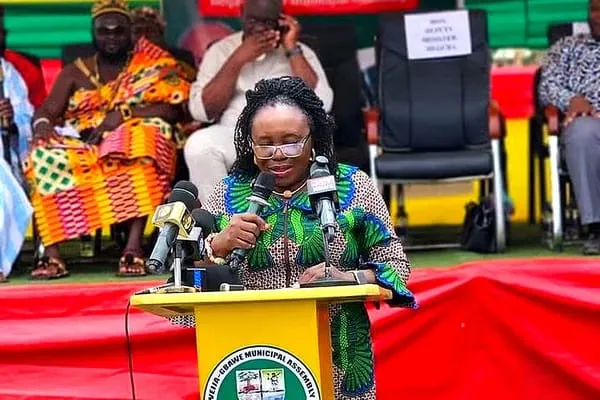
The Weija-Gbawe Municipality in the Greater Accra Region is set to receive a modern 24-hour market complex following the commencement of preparatory works for a project expected to improve trading conditions, create jobs and strengthen economic activity in the area. Editorial Standards
A sod-cutting ceremony to mark the beginning of the project was performed by the Deputy Minister for Local Government, Chieftaincy and Religious Affairs, Rita Naa Odoley Sowah, in collaboration with the Municipal Chief Executive (MCE) for Weija-Gbawe, Felix Odartey Lamptey, and traditional leaders from the municipality.
The project forms part of efforts to improve local economic infrastructure and provide traders with a safer, more organised and accessible environment in which to operate. According to the Weija-Gbawe Municipal Assembly, the market has been strategically located to serve communities within the municipality and neighbouring areas.
When completed, the facility is expected to accommodate a wide range of commercial activities while providing traders with a structured alternative to roadside trading. The Assembly believes the project could help reduce street hawking, improve sanitation and enhance safety for both traders and customers.
The proposed market is also expected to contribute to employment creation, particularly for women and young people. Beyond direct trading opportunities, the facility could generate additional jobs in transportation, food services, logistics, security, cleaning, maintenance and other support services connected to market operations.
Speaking at the sod-cutting ceremony, Deputy Minister Rita Naa Odoley Sowah said the project reflected the government’s commitment to strengthening local economies through investments in infrastructure that support livelihoods. Editorial Ethics & Independence

She explained that the market was not merely intended to serve as a trading centre but also as a platform for expanding economic opportunities and supporting the government’s 24-hour economy agenda at the local level.
“This market will not only provide a place to trade but will create opportunities for our people to work and earn income around the clock,” she noted.
The 24-hour market concept is intended to encourage economic activities beyond traditional daytime trading hours. Depending on the final design, operational arrangements and security provisions, the facility could allow businesses to serve customers at different times of the day while supporting a more active local commercial environment.
However, the success of such a facility will depend on effective management, adequate lighting, sanitation, security, transportation access and reliable utility services. Proper planning will also be necessary to ensure that the market remains clean, safe and financially sustainable after completion.
The Deputy Minister therefore charged the contractor to deliver the project to the required standards and ensure that construction is completed within the agreed timeframe. She emphasised the importance of quality, durability and value for money, noting that public infrastructure must be built to serve communities over the long term. Corrections Policy
She also appealed to residents, especially the youth, to support the project by protecting construction materials, equipment and other resources at the site. According to her, community involvement and ownership would be essential to safeguarding the investment and ensuring that the facility benefits the people for whom it is intended.
The Municipal Chief Executive for Weija-Gbawe, Felix Odartey Lamptey, expressed appreciation to the government and the Ministry of Local Government, Chieftaincy and Religious Affairs for supporting the municipality’s development priorities.
He said the market would improve trading conditions and could also strengthen the Assembly’s revenue mobilisation efforts by bringing commercial activities into a more organised and accountable system.
A well-managed market can support local government revenue through properly structured fees, permits and other legitimate charges. Such revenue, when effectively collected and used, can contribute to sanitation, maintenance, public services and other municipal development needs.
Traditional leaders who attended the ceremony welcomed the project and pledged their support for its successful implementation. Their involvement is expected to help promote community cooperation and encourage residents to protect the facility once construction is completed.

The 24-hour market complex forms part of broader initiatives by the Ministry of Local Government, Chieftaincy and Religious Affairs to improve market infrastructure, strengthen local economies and create more opportunities for traders and entrepreneurs across Ghana’s districts and municipalities. Newscard
Construction is expected to commence immediately. Stakeholders in Weija-Gbawe are hopeful that the project will be completed as planned and become a major commercial hub that supports livelihoods, improves the local business environment and contributes to the municipality’s long-term economic development.