

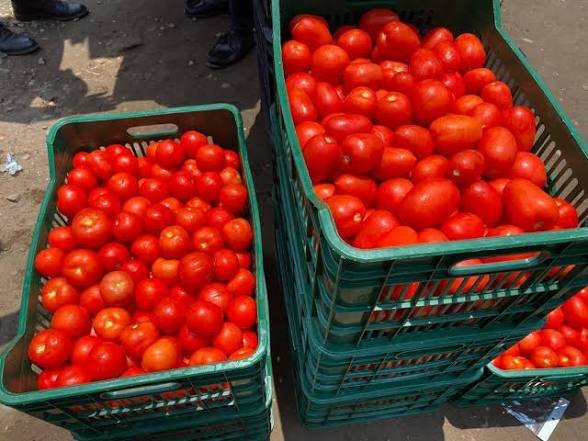
Fresh tomato prices recorded a 158.3 percent year-on-year increase in August, becoming the biggest price mover in the latest Ghana Statistical Service Consumer Price Index report.

Fresh tomato prices in Ghana increased by 158.3 percent year-on-year in August 2026, according to the latest Consumer Price Index released by the Ghana Statistical Service (GSS).
The increase makes fresh tomatoes the commodity with the largest year-on-year price increase recorded in the month. The development comes despite an overall moderation in food inflation, which declined slightly from 3.1 percent in July to 3.0 percent in August.
Government Statistician Dr. Alhassan Iddrisu explained that the headline inflation figure does not necessarily reflect the experience of every consumer because prices of individual goods can move in very different directions.
While tomatoes experienced a substantial increase, some other food products recorded price reductions during the same period. Lime recorded a 33.7 percent decline, while maize prices fell by 31.3 percent.
Other commodities, however, recorded significant increases. Ginger prices increased by 128.3 percent, while shrimp and mango prices rose by 67.1 percent and 57.7 percent respectively. Fresh coconut and fresh green pepper also recorded increases.
The latest figures highlight the different pressures facing Ghanaian households when purchasing food. Although food inflation has moderated, consumers may continue to feel significant pressure when the prices of frequently purchased items rise sharply.
Overall year-on-year inflation increased from 4.6 percent in July to 5.0 percent in August. Despite the monthly increase, the latest figure remains considerably below the 11.5 percent recorded in August 2025.
The GSS data show that non-food inflation remained the bigger contributor to the overall inflation rate, reaching 6.8 percent compared with 3.0 percent for food inflation.
Services also recorded relatively high inflation at 8.6 percent, while goods recorded 3.8 percent inflation.
The statistics therefore present a mixed picture for the Ghanaian economy. On one hand, the overall inflation rate remains significantly lower than the level recorded a year earlier. On the other hand, sharp increases in particular commodities can still affect household budgets.
Tomatoes are widely used in Ghanaian households and form an important part of many traditional meals. A substantial increase in their price can therefore have a noticeable effect on consumers, food vendors and other businesses that rely heavily on the commodity.

The figures also underline the importance of understanding inflation beyond a single headline number. According to the GSS, inflation measures the rate at which prices change rather than simply indicating how expensive a particular item is.
The August figures will likely continue to attract attention from consumers, traders, policymakers and businesses as they assess the direction of prices and household purchasing power.
For policymakers, the challenge will be to maintain the broader progress in inflation while addressing factors that cause sharp price increases in individual food commodities.
By: Oppong Frimpong Richard