

The United Nations has warned that the world could be heading towards an unprecedented El Niño event, with scientists cautioning that the rapidly intensifying climate phenomenon could trigger extreme weather conditions across several regions.
International meteorological authorities say the El Niño developing in the Pacific Ocean is strengthening at an exceptional rate, raising concerns about severe droughts, floods, wildfires, marine heatwaves and other climate-related disasters.
UN Secretary-General António Guterres described the emerging phenomenon as a major global climate threat, warning that the planet was entering increasingly dangerous territory. “El Niño is being supersized before our eyes. The science leaves no room for doubt: the planet is in uncharted waters, and those waters are heating up,” Guterres said.

El Niño is a naturally occurring climate phenomenon that originates in the tropical Pacific Ocean. It develops when changes in atmospheric wind patterns cause unusually warm ocean water to move eastward towards the central and eastern Pacific. The warmer ocean then releases large quantities of heat into the atmosphere, influencing weather patterns far beyond the Pacific region.
Recent monitoring data indicates that sea surface temperatures in key parts of the Pacific are already more than two degrees Celsius above average. Scientists are also warning that monthly sea surface temperatures could approach four degrees Celsius above normal levels, while temperatures beneath the ocean surface have been recorded at more than eight degrees Celsius above average in some areas.
Experts expect the current cycle to become the strongest El Niño event recorded since at least 1950, potentially surpassing the intensity of previous major episodes. The effects are not expected to be confined to the Pacific Ocean. Abnormally high ocean temperatures have also spread into parts of the Indian Ocean and waters surrounding Australia, raising concerns about severe marine heatwaves in southern Australia.

Scientists say previous marine heatwaves around southern Tasmania had devastating consequences for marine ecosystems, including starving penguins, widespread fish deaths and suffocating algae blooms. Australian authorities have consequently strengthened early-warning systems aimed at protecting fisheries and vulnerable marine ecosystems.
Dr Alistair Hobday, chief researcher at Australia’s science agency, described the situation in southern Australia as particularly severe. “Southern Australia is getting slammed,” Hobday said. Beyond marine ecosystems, the intensification of El Niño is expected to have serious consequences for agriculture, water supplies and international trade.
Central America, northern South America and Southeast Asia are among the regions facing increased risks of prolonged drought. Reduced rainfall could affect agricultural production, threaten water supplies and place additional pressure on communities already experiencing climate-related challenges.

The Panama Canal has also been affected by low water levels associated with changing weather patterns, prompting authorities to reduce vessel transits by more than 10 per cent. The restrictions could have wider implications for global trade because the canal is an important route connecting the Atlantic and Pacific oceans.
Indonesia is meanwhile battling extensive wildfires, with more than 107,000 hectares of land reportedly affected. The fires have created hazardous conditions for communities, particularly in areas where thick smoke has reduced air quality.
Darwin Romy, a resident of Central Kalimantan, described the impact of the smoke on daily life. “The smoke has become quite thick. When we step outside, our eyes start to sting. The smell of the smoke is also quite strong,” he said.
While some parts of the world are experiencing drought, others are facing the opposite threat—excessive rainfall and potentially destructive flooding.

China is preparing for multiple typhoon landfalls after already experiencing severe storms earlier in the season. Eastern Africa, southern Brazil and the southern United States are also expected to receive above-average rainfall, increasing the risk of flooding and related disasters.
Governments and humanitarian organisations are therefore stepping up disaster preparedness measures, including pre-positioning medical supplies and other emergency resources in vulnerable areas.
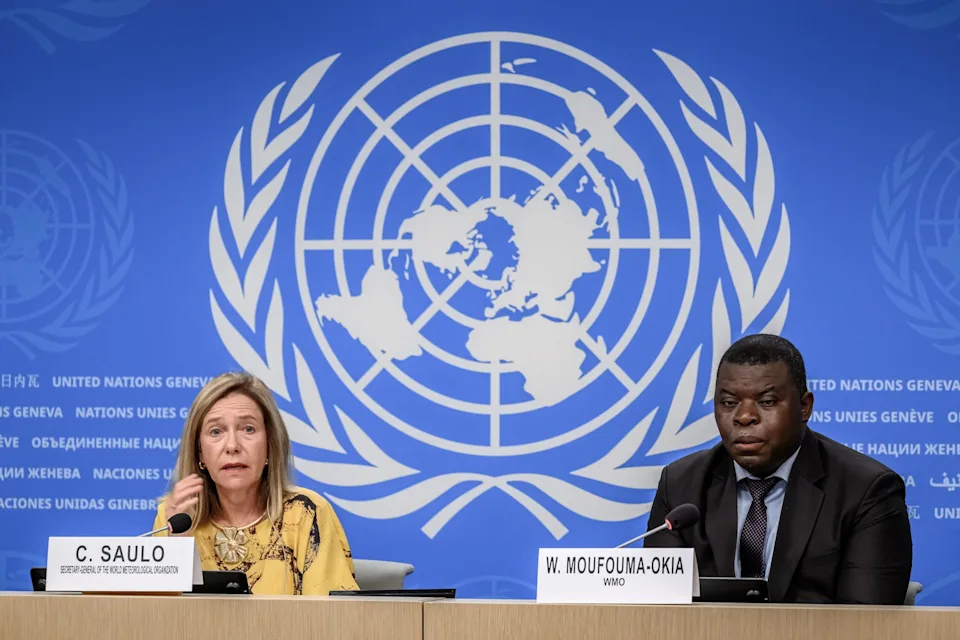
World Meteorological Organization Secretary-General Prof Celeste Saulo said the impacts of the phenomenon were already becoming visible in different parts of the world. “We are already seeing disruption and devastation from droughts and floods and we expect these impacts to increase as El Niño intensifies,” Saulo said.
“El Niño has the potential to deliver a massive blow to communities and economies across the world,” she added.

Countries along the eastern Pacific, particularly Peru and Ecuador, are also facing heightened risks of flash floods and landslides. The countries have historically experienced severe flooding and landslides during strong El Niño events, particularly when unusually warm ocean temperatures interact with atmospheric conditions to produce intense rainfall.
International organisations and foreign governments are responding by deploying medical ships, technical teams and other forms of assistance to vulnerable coastal communities. However, climate experts and humanitarian organisations say emergency response alone will not be sufficient to protect communities from the growing risks.
They argue that the severity of disasters is often determined not only by climate conditions but also by underlying socio-economic vulnerabilities.
Miguel Aréstegui, climate resilience lead at Practical Action, said the growing concern surrounding the developing El Niño should encourage governments to strengthen preparedness rather than create panic. “We are significantly concerned, but that concern needs to translate into preparedness rather than alarm,” he said.

Aréstegui noted that El Niño “does not arrive in a vacuum”, stressing that existing weaknesses such as poorly planned housing, fragile water and sanitation systems and inadequate healthcare can significantly increase the impact of climate-related disasters. The warning highlights the growing importance of strengthening infrastructure and public services in vulnerable communities.
Experts say investments in early-warning systems, resilient infrastructure, climate-smart agriculture, emergency healthcare and disaster preparedness could help reduce the human and economic costs of extreme weather. The potential record-breaking El Niño also comes amid broader concerns over rising global temperatures and increasingly frequent climate extremes.
As atmospheric and oceanic systems respond to growing thermal energy, governments face the challenge of balancing immediate disaster response with long-term measures to address structural vulnerabilities. For vulnerable communities, experts say, the difference between devastation and resilience will depend largely on the preparedness measures put in place before extreme weather strikes.

With the El Niño event continuing to intensify, international authorities are urging countries to strengthen early-warning systems, prepare emergency resources and protect vulnerable populations.
The emerging climate threat, they say, demonstrates the need for coordinated international action as extreme weather increasingly affects economies, ecosystems and communities across the world.
By: Philbert Amiba Ayuusah