

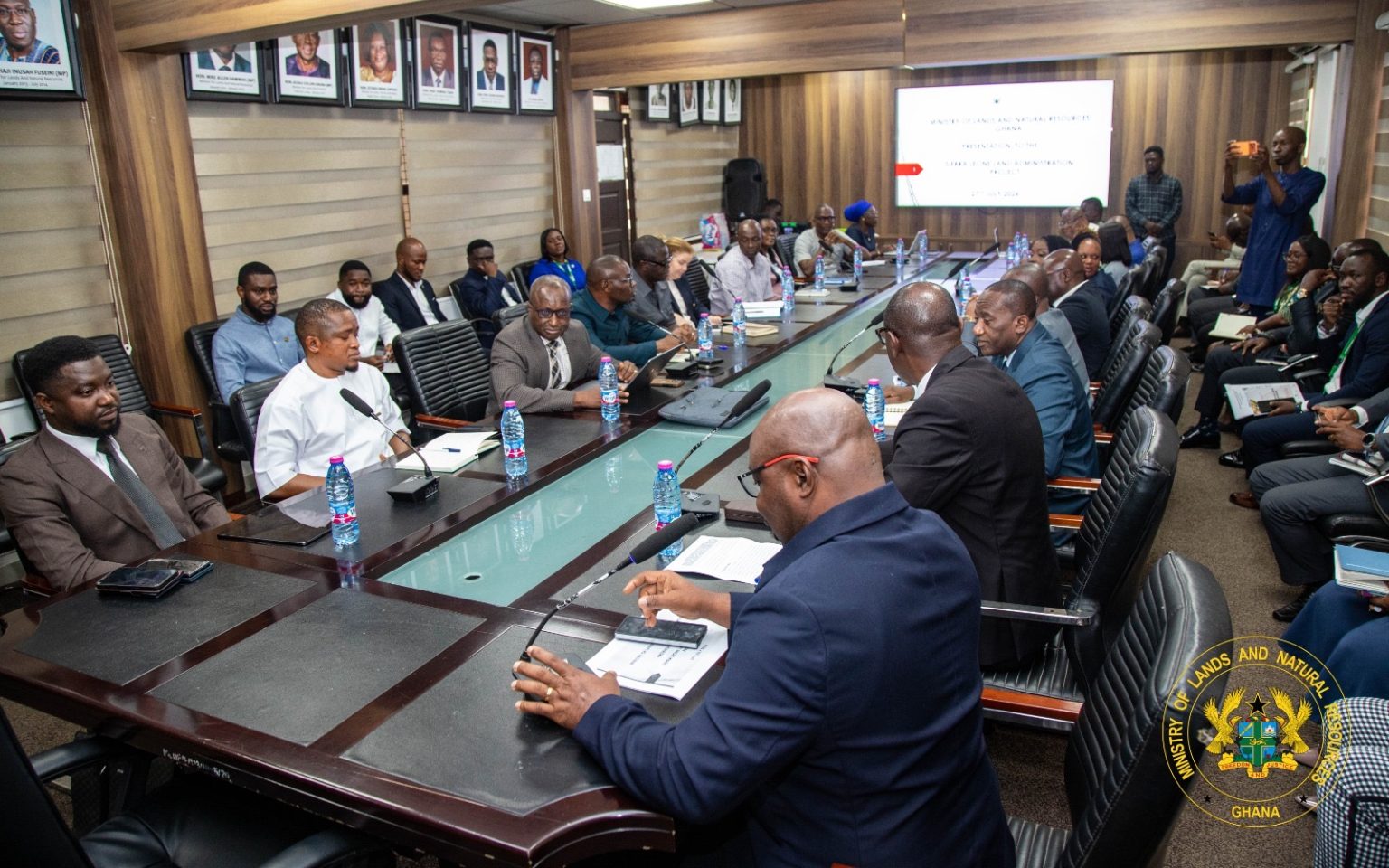
Ghana and Sierra Leone have taken significant strides toward strengthening South-South cooperation and enhancing West Africa’s regional land governance framework, following an official study tour by a high-level Sierra Leonean delegation to Accra.
The 10-member delegation comprising senior officials from Sierra Leone’s Ministry of Lands, Housing and Country Planning alongside leadership from the country’s newly established National Land Commission embarked on a comprehensive working visit to Ghana’s Ministry of Lands and Natural Resources. The engagement was tailored to facilitate knowledge transfer, study policy design, and evaluate the operational mechanics of Ghana’s ongoing land administration reforms.
The working visit underscores a growing trend among West African nations to seek localized, peer-led solutions to longstanding land tenure challenges. Land administration across the sub-region frequently grapples with overlapping legal frameworks, tenure insecurity, rapid urbanization, and complex interactions between customary land authorities and statutory institutions.

Welcoming the delegation on behalf of the sector Ministry, the Chief Director of Ghana’s Ministry of Lands and Natural Resources, Mr. Innocent Marcus Haligah, characterized the bilateral engagement as a crucial platform for transparent, institutional knowledge-sharing. He emphasized that bilateral visits of this nature should not be viewed merely as academic exercises, but as actionable opportunities for both nations to exchange institutional experiences, evaluate systemic successes, and address shared administrative bottlenecks.
“This visit provides an exceptional oppotunity for both countries to openly exchange ideas, examine institutional realities, and learn directly from each other’s field experiences,” Mr. Haligah stated during the opening session.
Speaking on behalf of the visiting delegates, the head of the Sierra Leonean delegation, Mr. Alusine Sesay, highlighted the strategic rationale behind selecting Ghana as a primary benchmark for land administration reforms. He pointed out that both nations share socio-legal similarities, particularly regarding dual land tenure systems that balance customary ownership with state regulatory oversight.

According to Mr. Sesay, Sierra Leone’s National Land Commission is actively undergoing a formative evolutionary phase following recent policy and legal overhaul initiatives. Consequently, studying Ghana’s institutional journey provides immediate, pragmatic value for Sierra Leone’s policymaking and implementation strategies.
“Ghana’s significant strides in land sector reforms make it an ideal study partner for Sierra Leone,” Mr. Sesay explained during the deliberate sessions. “Because our National Land Commission is still evolving, gaining firsthand insights into Ghana’s reform journey—its legislative breakthroughs, operational successes, and notably the challenges encountered along the way—will allow us to refine our own domestic strategies.”
Mr. Sesay further remarked that understanding how Ghana actively mitigated obstacles during its sector-wide modernization drives will assist Sierra Leonean authorities in avoiding similar pitfalls, thereby accelerating the rollout of secure land titles and equitable land access in Sierra Leone.

As part of the technical exchange program, the delegation participated in detailed working sessions led by Ghana’s Technical Director for Lands, Mr. Geoffrey Osafo-Osei Jnr. The presentations provided an exhaustive overview of Ghana’s legislative evolution, including the operational implementation of Ghana’s Land Act, 2020 (Act 1036), the integration of spatial data infrastructure, and ongoing efforts to digitize records within the Lands Commission.
The technical briefings extended beyond policy design to cover practical administrative challenges, including; Land title registration efficiency and backlog reduction, Revenue mobilization and sustainable fee structures, the formal establishment of Customary Land Secretariats (CLSs) to empower local traditional authorities and boundary demarcation methodologies using modern geospatial technologies.
The working visit forms part of a wider, continuous effort by both West African governments to deepen bilateral diplomacy, improve land security for local and foreign investors, and foster regional stability through legal clarity surrounding real property ownership.

As the delegation concludes its sessions, technical representatives from both ministries expressed optimism that this engagement will lay the foundation for a long-term institutional partnership between the land management agencies of Ghana and Sierra Leone.
Ayuusah Philbert Amiba