


The Ghana Cocoa Board (COCOBOD) is set to replace its long-standing annual syndicated loan facility with a domestic fundraising model beginning with the 2026/27 crop season, a move aimed at improving efficiency, strengthening the cocoa sector and supporting local value addition.
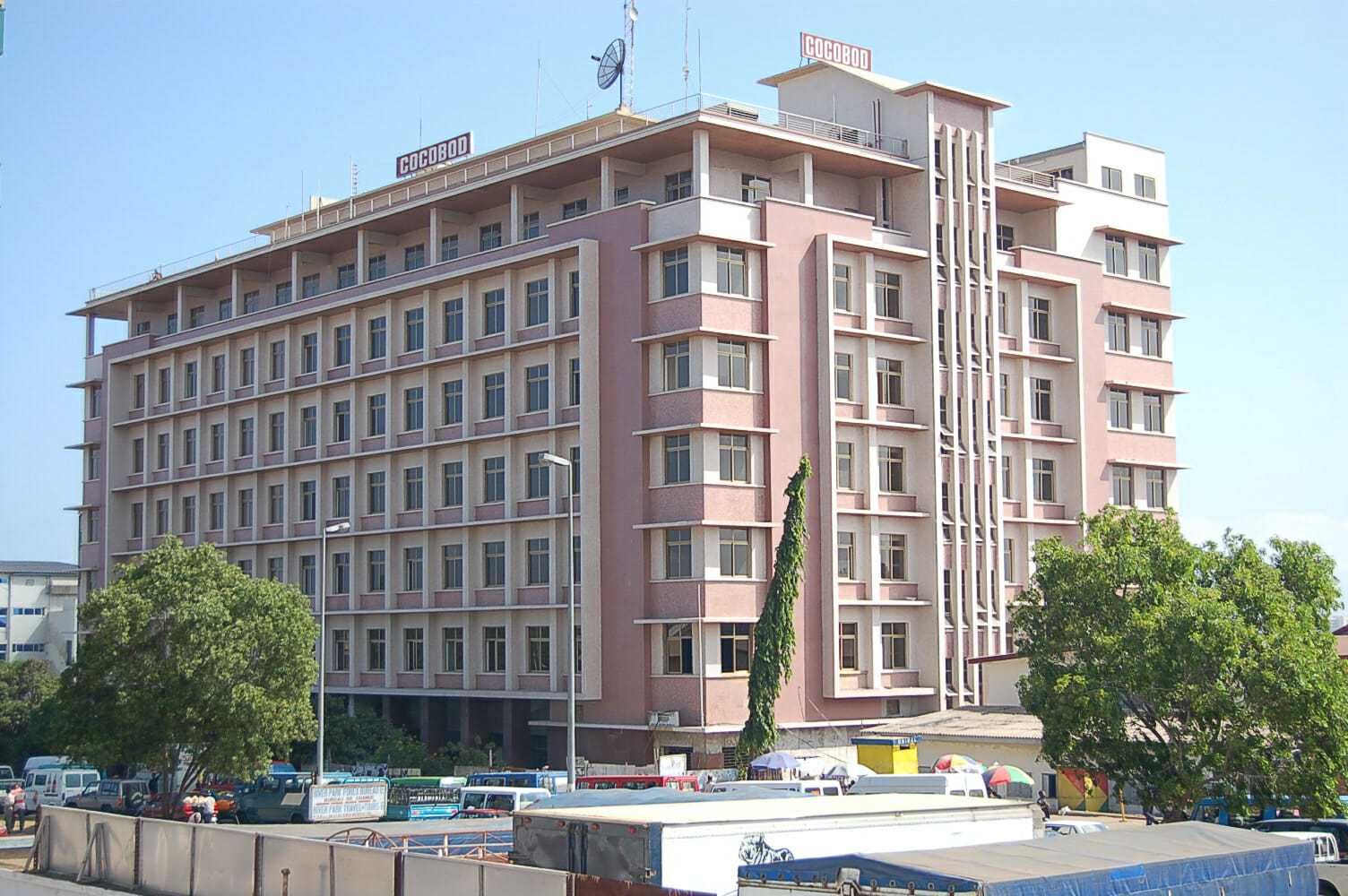
The Chief Executive of COCOBOD, Dr. Ransford Anertey Abbey, announced the policy shift when a delegation from the Ghana International Bank (GHIB) paid a courtesy call on the management of the cocoa regulator at Cocoa House to discuss the new financing arrangements.
Dr. Abbey said the more than three-decade-old syndicated loan model had become increasingly unsustainable due to its vulnerability to global cocoa price fluctuations and climate-related risks. He also noted that the financing arrangement had constrained efforts to expand domestic cocoa processing by tying up nearly 80 per cent of Ghana’s cocoa output.

“Indications are clear that Ghana can no longer rely entirely on the over three-decade-old cocoa syndicated loan facility,” he said, adding that the new approach forms part of the government’s broader reform agenda to strengthen the country’s cocoa industry.
According to him, COCOBOD has engaged fund advisers and managers to develop a framework for mobilising local capital through pension funds and cedi-denominated commercial papers and notes to finance cocoa purchases for the upcoming crop season. “The shift in policy forms part of the government’s wider cocoa sector reform agenda to raise money domestically for cocoa operations,” Dr. Abbey stated.
He disclosed that the new financing model is expected to be operational by August to support cocoa purchases for the 2026/27 crop year. He expressed confidence that the initiative would attract strong investor interest and raise the resources required to finance COCOBOD’s operations.

Beyond financing, Dr. Abbey outlined broader reforms aimed at increasing value addition within Ghana’s cocoa industry. He said COCOBOD intends to strengthen support for local cocoa processing companies to reduce the country’s dependence on exporting raw cocoa beans and increase earnings from processed cocoa products.
The COCOBOD Chief Executive also revealed ongoing efforts to deepen regional cooperation within West Africa’s cocoa sector. He said discussions were underway to bring Nigeria and Cameroon into the existing cocoa alliance between Ghana and Côte d’Ivoire, a move expected to enhance local processing while preserving the bloc’s control of about 70 per cent of global cocoa production.

He explained that expanding the alliance would strengthen the bargaining power of major cocoa-producing countries and support coordinated policies to increase value addition across member states. The visiting Ghana International Bank delegation welcomed the proposed reforms and commended COCOBOD’s management for what it described as open and constructive discussions on the future of cocoa financing.
The transition to domestic financing marks one of the most significant changes to Ghana’s cocoa funding model in decades and reflects the government’s efforts to reduce reliance on external borrowing while building a more resilient and self-sustaining cocoa industry.
Philbert Amiba Ayuusah.