

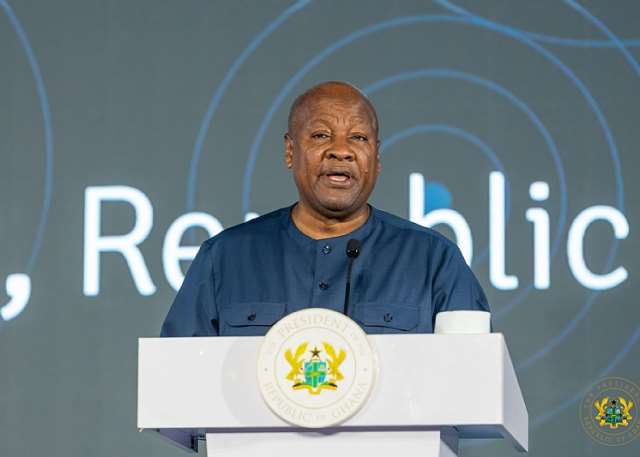
President John Dramani Mahama has issued a strong warning to Chief Executive Officers of state owned enterprises, stating that failure to submit audited financial accounts and annual reports within timelines set by the State Interests and Governance Authority will attract serious sanctions, including dismissal from office.
Speaking at the 2026 State Owned Enterprises Performance Contract Signing and Awards Ceremony in Accra, President Mahama stressed that accountability, transparency and financial discipline must become non negotiable standards across all public enterprises. He said state institutions that fail to provide audited accounts undermine public trust and weaken efforts to improve governance and economic performance.
According to the President, government cannot continue to tolerate delays in the submission of financial reports by state enterprises, especially at a time when the country is pursuing reforms aimed at strengthening fiscal responsibility and improving efficiency within public institutions. He emphasized that CEOs who fail to comply with reporting requirements would face consequences.

“Submit audited accounts or lose your job,” Mahama warned, making it clear that the era of impunity and weak compliance within state entities must come to an end.
The President noted that audited financial statements are essential tools for measuring performance, tracking the use of public resources and ensuring that enterprises operate in line with national development objectives. Without timely reporting, government and regulatory authorities are unable to accurately assess the financial health and operational effectiveness of state institutions.
Mahama explained that state owned enterprises play a critical role in Ghana’s economy and therefore must be managed with the highest standards of professionalism. He argued that taxpayers deserve transparency regarding how public institutions are performing and how resources entrusted to them are being utilized.
The warning comes as the government intensifies efforts to improve oversight of public enterprises through SIGA. Over the years, several state institutions have faced criticism for poor financial management, weak accountability systems and delays in publishing audited reports. These concerns have often contributed to operational inefficiencies and financial losses within some public entities.
Mahama indicated that his administration is determined to reverse that trend by ensuring that performance targets are monitored closely and that executives are held accountable for results. He stressed that leadership positions in public enterprises come with responsibilities that cannot be ignored.

The President also highlighted the importance of performance contracts signed between government and state enterprises, describing them as instruments designed to promote measurable outcomes and improve service delivery. He said public institutions must move beyond merely existing and instead focus on delivering value to citizens and contributing meaningfully to national development.
During the ceremony, government officials and enterprise leaders reviewed performance indicators aimed at improving productivity, profitability and governance standards across state institutions. Mahama reiterated that strong corporate governance practices would remain central to his administration’s economic agenda.
His comments align with broader government efforts to strengthen public sector efficiency and restore confidence in state institutions. Since returning to office, Mahama has repeatedly emphasized fiscal discipline, accountability and prudent management of public resources as key pillars of his administration’s governance strategy.
Analysts believe the warning signals a tougher stance toward underperforming public institutions and could increase pressure on CEOs to improve compliance with financial reporting obligations. Timely submission of audited accounts is also expected to support government efforts to attract investment, improve public sector credibility and ensure better monitoring of state assets.

The State Interests and Governance Authority has in recent years pushed for stricter enforcement of reporting requirements among state enterprises. The authority has argued that delays in financial reporting create governance gaps and make it difficult to assess the true performance of institutions under its supervision.
Mahama’s latest directive therefore reinforces SIGA’s mandate and sends a clear message that non compliance will no longer be tolerated. Government officials say the move is part of a broader effort to build a culture of accountability and performance across the public sector.
As Ghana continues to pursue economic reforms and strengthen public financial management systems, the President’s warning is expected to place renewed focus on transparency and responsible leadership within state owned enterprises. For many CEOs, the message was unmistakable: meeting reporting obligations is no longer optional, and failure to do so could cost them their positions.