

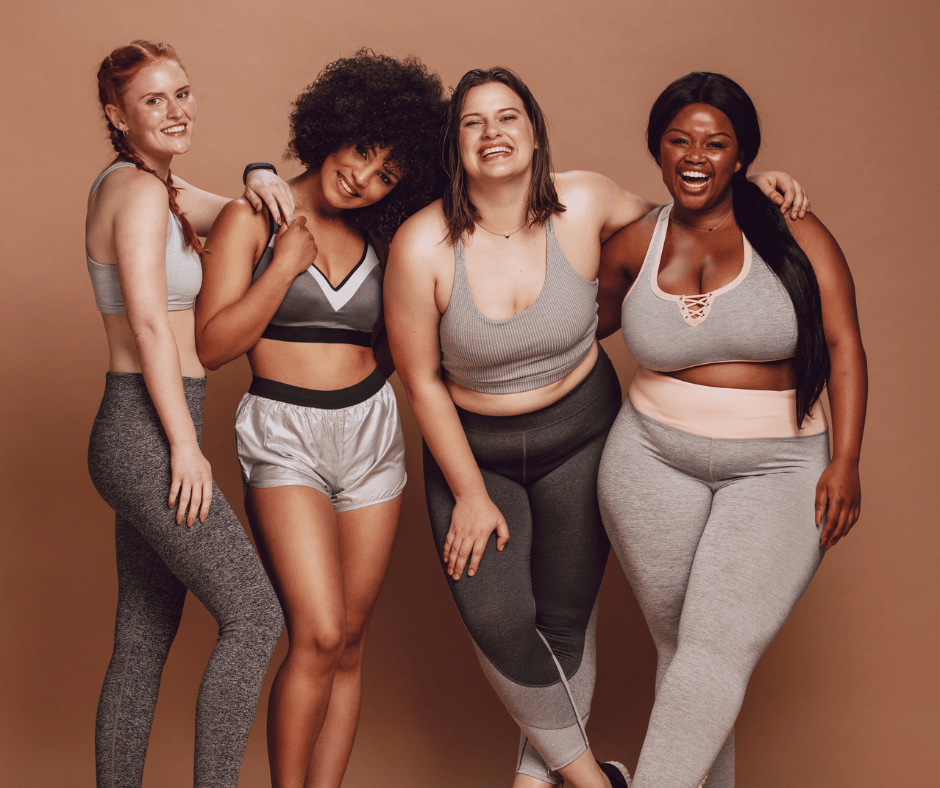
There is a body that Ghanaian culture has historically celebrated, and a body that Ghanaian culture has begun, more recently, to demand, and the distance between those two bodies is where a significant amount of quiet suffering is currently taking place.
The traditional Ghanaian aesthetic of fullness, of the woman described as “healthy” whose weight signalled prosperity and the capacity to sustain family, of the man whose size communicated success and abundance, has not disappeared. It sits alongside, and increasingly in uncomfortable tension with, a parallel set of pressures imported through social media, Western entertainment, and the global fitness and beauty industry, pressures that favour a different kind of body entirely. The result is a generation of young Ghanaians caught between two contradictory sets of expectations, with neither set offering a stable foundation for a settled relationship with their own physical self.
This is not a trivial matter. Body image, the internal picture a person holds of their physical self and the emotional valence attached to it, is one of the most significant predictors of mental health outcomes in adolescence and young adulthood. Negative body image is consistently linked to depression, anxiety, disordered eating, social withdrawal, and a reduction in the quality of life that cannot be addressed by any intervention that does not first acknowledge the struggle.

What the research says about Ghana specifically
The body image conversation in Ghana has historically been underdeveloped in public discourse, partly because the dominant cultural narrative held that Western body image problems did not apply here, that African aesthetic standards protected African young people from the pressures that drove eating disorders and body dysmorphia in Europe and North America. That narrative was always partially wrong, and the evidence has made it increasingly untenable.
Studies conducted among Ghanaian adolescents and young adults have found significant levels of body dissatisfaction, particularly among young women in urban areas with high social media exposure. Research published in peer-reviewed journals examining body image among Ghanaian university students found that a substantial proportion of female respondents reported dissatisfaction with their body size, with some desiring a thinner body than their current one and others, particularly those receiving cultural messaging about fullness as beauty, desiring a larger one. The bidirectional nature of the pressure, being simultaneously told they are too small and too large by different cultural audiences, is a specifically Ghanaian dimension of the body image burden.
A study examining eating attitudes among Ghanaian secondary school girls found that while clinical eating disorders as defined by Western diagnostic criteria were less prevalent than in Western samples, subclinical disordered eating behaviours, including restrictive eating, compensatory behaviours, and significant preoccupation with body size and food, were present at rates that challenge the assumption that African populations are protected from these concerns. The researchers noted that increased exposure to Western media was a significant predictor of disordered eating attitudes, a finding consistent with research across other sub-Saharan African countries.

The social media variable
The variable that has most dramatically accelerated body image pressure among Ghanaian youth is the same one that has accelerated it globally, with some locally specific dimensions.
Social media platforms, particularly Instagram and TikTok, present a continuous stream of bodies that have been selected for visual impact, filtered for aesthetic perfection, and in many cases digitally altered in ways that are not disclosed. The young Ghanaian woman scrolling through Instagram in Tema is receiving the same algorithmically curated body images as her counterpart in Toronto, but she is receiving them in a context that also includes traditional aesthetic expectations from her family, community-level commentary on her physical presentation, and a beauty industry that has historically offered her limited representation in its idealised imagery.
The beauty and body standards visible on globally dominant social media platforms have historically centred lighter skin tones, straighter hair textures, and body proportions that reflect the specific genetic heritage of a narrow demographic. The pressure this creates for young Ghanaian women is therefore not merely about thinness or weight. It is about skin tone, hair texture, facial features, and the fundamental question of whether the body they inhabit can be beautiful by the standards being relentlessly presented to them.
Skin bleaching, which has been documented extensively in Ghana, is one visible expression of this pressure. Studies have found that skin lightening product use among Ghanaian women is significantly associated with perceived social advantages attached to lighter skin, including professional opportunity, romantic desirability, and social status. While the practice has complex roots in colonial history and local colourism, the contemporary social media environment has created new channels through which lighter skin is presented as aspirational, reinforcing existing pressures and introducing them to younger generations with unprecedented reach.
The male dimension that rarely gets named
The body image conversation in Ghana, as in most of the world, has been conducted predominantly in the frame of female experience. The male dimension exists, is significant, and is almost entirely unacknowledged in Ghanaian public discourse.
The pressure on young Ghanaian men has two primary vectors. The first is the global gym culture aesthetic, which presents a specific muscular body type, large, lean, and defined, as the standard of male physical desirability and even competence. The young man who does not approximate this standard is subject to a set of social judgments about his discipline, his attractiveness, and by cultural extension his capacity to provide and protect, that are rarely named explicitly but operate continuously in social environments ranging from the gym to the campus to the workplace.
The second vector is the specifically Ghanaian association between male body size and success. In some social contexts, the man who has gained weight since his student years is assumed to be doing well. In others, particularly among the urban professional class consuming global wellness content, the same body signals a lack of discipline. The male body in Ghana in 2026 is navigating these contradictions without a language for the confusion they produce, partly because the cultural norm of masculine stoicism makes the acknowledgment of body-related vulnerability extremely difficult for most men to access.
Research on muscle dysmorphia, a body image disorder characterised by a preoccupation with being insufficiently muscular, has found it present in gym-going male populations in sub-Saharan Africa at rates that challenge the assumption that these disorders are culturally specific to the West. Among young Ghanaian men with high social media exposure and regular gym attendance, preoccupation with body size, supplement use beyond what performance requires, and significant distress about physique were documented at levels that researchers described as clinically noteworthy.

What families say and what it costs
One of the most specific and underappreciated sources of body image pressure among Ghanaian youth is the family home, where commentary on physical appearance is normalised in ways that would be considered inappropriate in other cultural contexts.
The Ghanaian auntie who greets a teenage niece with a remark about her weight gain, the uncle who observes that someone has “become fat” as a form of greeting, the grandmother who worries aloud that a granddaughter is too thin and will not attract a husband: these are not expressions of malice. They are expressions of a cultural style of engagement that treats the body as a legitimate subject of public commentary in ways that many Ghanaian young people experience as deeply distressing but feel unable to challenge because the intention is understood to be benign.
The cumulative effect of this commentary, delivered across years by the people whose opinions carry the most weight, is a relationship with the body that is perpetually mediated by external evaluation. The young person who has grown up having their body discussed, assessed, and opined upon by the extended family network has been trained to view their physical self through others’ eyes in a way that makes a secure, self-referential relationship with their own body extremely difficult to develop.
This does not mean Ghanaian families are damaging their children intentionally. It means that a cultural norm of physical commentary that was formed in one set of psychological and media conditions is now operating in a completely different set of conditions, in which young people are also receiving global beauty standards through their phones and navigating social media environments where their physical presentation is publicly evaluated by peers. The combination is more potent than either source of pressure alone.
Disordered eating in a culture that celebrates food

One of the specific challenges in identifying and addressing body image problems among Ghanaian youth is that disordered eating exists in profound cultural tension with Ghana’s relationship to food and communal eating. Refusing food at a family gathering is a social act with consequences. Not eating what is served is rude. The child who does not finish their plate is questioned. The adult who does not eat at a funeral or a celebration is noticed.
This cultural context does not cause disordered eating, but it does create an environment in which disordered eating is exceptionally difficult to practise without social detection, and equally difficult to disclose without social consequence. The young woman managing restrictive eating in a household where food is love expressed materially is navigating a contradiction that has no clean resolution, and she is typically navigating it alone because the language and the framework to name what she is experiencing are not yet widely available in Ghanaian cultural discourse.
Mental health professionals working in Ghana have noted that eating disorders present differently in Ghanaian clinical populations than in Western diagnostic frameworks, and that this has contributed to under-identification and under-treatment. Patients often present with somatic complaints or mood disturbances without the body image distortion component being probed, partly because clinicians have not been trained to look for it in African patients and partly because patients themselves do not frame their experience in terms that connect to available diagnostic categories. The result is that significant suffering goes unrecognised and untreated.
What a healthier conversation would look like
The body image problem among Ghanaian youth is not going to be resolved by a single intervention or a social media campaign, though both have their place. What it requires is a set of shifts that are cultural, familial, clinical, and educational simultaneously.

Families need new scripts for engaging with young people’s physical appearance, scripts that are not imported wholesale from a Western context that lacks cultural resonance, but that are developed from within Ghanaian values about respect, personhood, and the dignity of the body. The auntie who genuinely loves her niece can express that love in forms that do not include a running commentary on her niece’s weight.
Schools and universities need to build the literacy that allows young people to understand what social media actually is, how its images are constructed and why, and how to engage with it as a curated environment rather than a documentary one. This is not a simple media literacy lesson. It is a sustained practice of critical engagement that needs to be modelled and reinforced across environments.
Mental health services, which remain significantly under-resourced and under-accessed in Ghana, need clinical frameworks that are responsive to the specific presentations of body image distress in Ghanaian patients, and practitioners need training that equips them to recognise and address these presentations without defaulting to diagnostic frameworks that were developed in and for different populations.
And young Ghanaians themselves need, above everything else, the permission to name what they are experiencing without the expectation that it will be dismissed as a foreign problem that Africans do not have. The body they live in is real. The pressure they feel about it is real. The suffering that pressure produces is real. It does not require a Western framework to be legitimate. It requires, as all human suffering does, to be seen.
Nourish Your Body: 7 Healthy Foods To Eat During Your Period.