

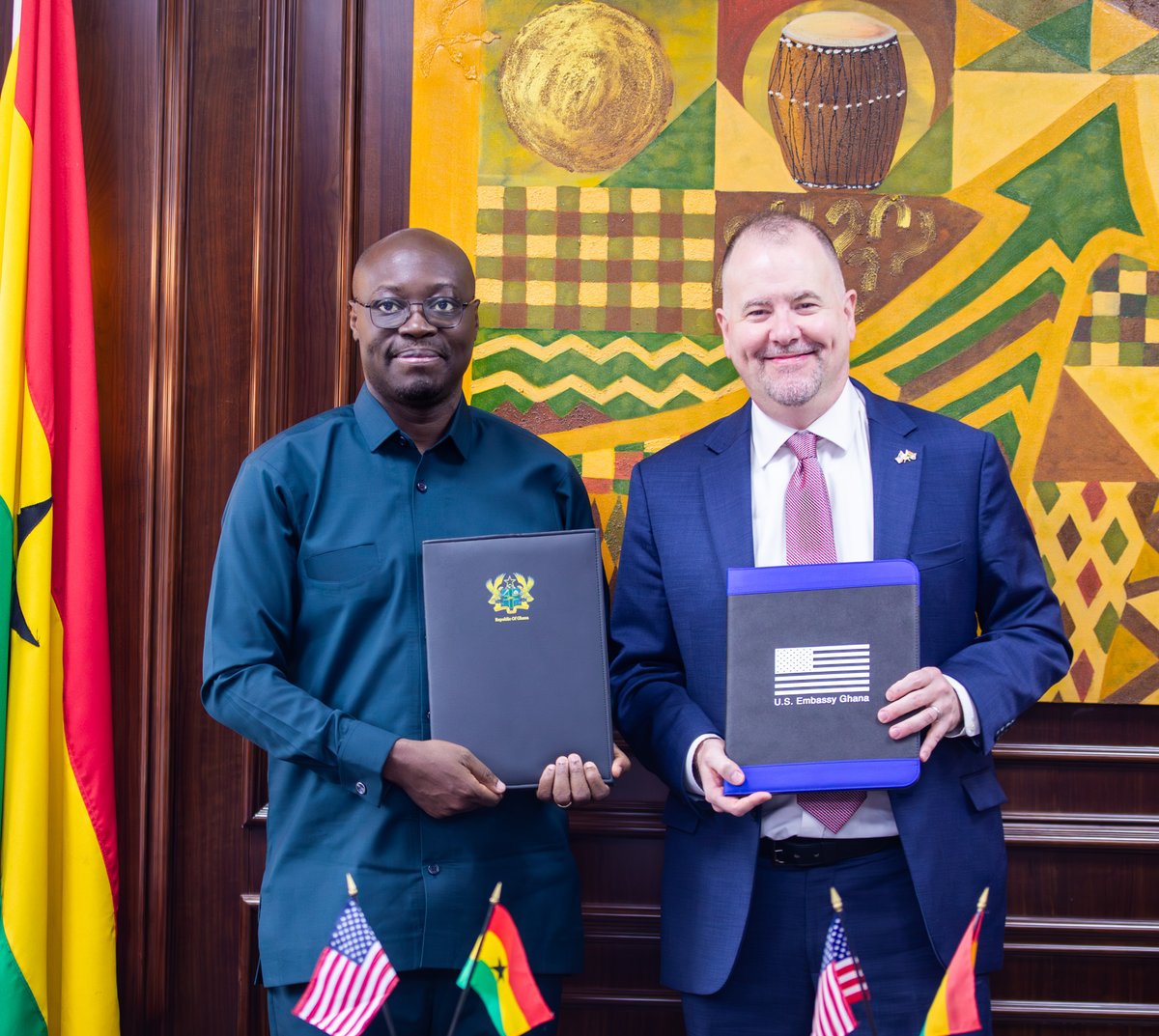
The United States and Ghana have signed a bilateral agreement to restructure Ghana’s sovereign debt owed to the Export-Import Bank of the United States, in a move aimed at stabilising financial relations and restoring confidence among American investors.
The agreement, signed on May 6, forms part of Ghana’s broader external debt restructuring efforts as the country continues to navigate the aftermath of its debt crisis and ongoing economic recovery programme.
Officials emphasised that timely repayment of obligations to U.S. institutions remains critical to sustaining business relations between the two countries. The U.S. side stressed that consistent servicing of restructured debt will play a key role in enabling continued financing, trade support, and investment flows into Ghana.

Beyond sovereign debt, the United States also raised concerns about outstanding arrears owed to American companies and higher education institutions. These include unpaid obligations linked to commercial transactions, services, and academic partnerships, which have become a point of friction in bilateral economic engagement.
From Washington’s perspective, resolving these arrears is essential to maintaining trust and ensuring that U.S. businesses can operate with confidence in Ghana’s market. Delays in payments can affect future investment decisions, access to credit, and the willingness of institutions to engage in long term partnerships.
For Ghana, the restructuring agreement represents a step forward in its efforts to restore macroeconomic stability. The country has been working with international partners, including bilateral creditors and multilateral institutions, to renegotiate debt terms, reduce repayment pressures, and create fiscal space for growth oriented spending.

The involvement of the Export-Import Bank is particularly significant because of its role in supporting trade and financing infrastructure and development projects. A stable repayment framework is expected to allow Ghana to continue accessing such support, which is often tied to broader economic cooperation.
Economists note that bilateral agreements like this are a key component of Ghana’s wider debt restructuring strategy, which aims to balance creditor expectations with the country’s capacity to pay. Successfully managing these relationships is critical not only for immediate financial relief but also for long term creditworthiness.
The agreement also reflects a broader trend in international finance, where creditor nations are placing increasing emphasis on transparency, accountability, and timely repayment as conditions for continued engagement. For Ghana, meeting these expectations will be essential in rebuilding its reputation in global financial markets.
At the same time, resolving arrears owed to private sector entities and educational institutions could unlock additional opportunities for collaboration, particularly in areas such as technology transfer, research partnerships, and investment in key sectors.

The deal underscores the interconnected nature of sovereign debt, trade, and investment. While restructuring provides short term relief, sustained progress will depend on Ghana’s ability to implement fiscal reforms, improve revenue mobilisation, and ensure disciplined financial management.
As both countries move forward, the focus will be on implementation. Delivering on repayment commitments and clearing outstanding obligations will determine whether the agreement translates into stronger economic ties and renewed investor confidence.