

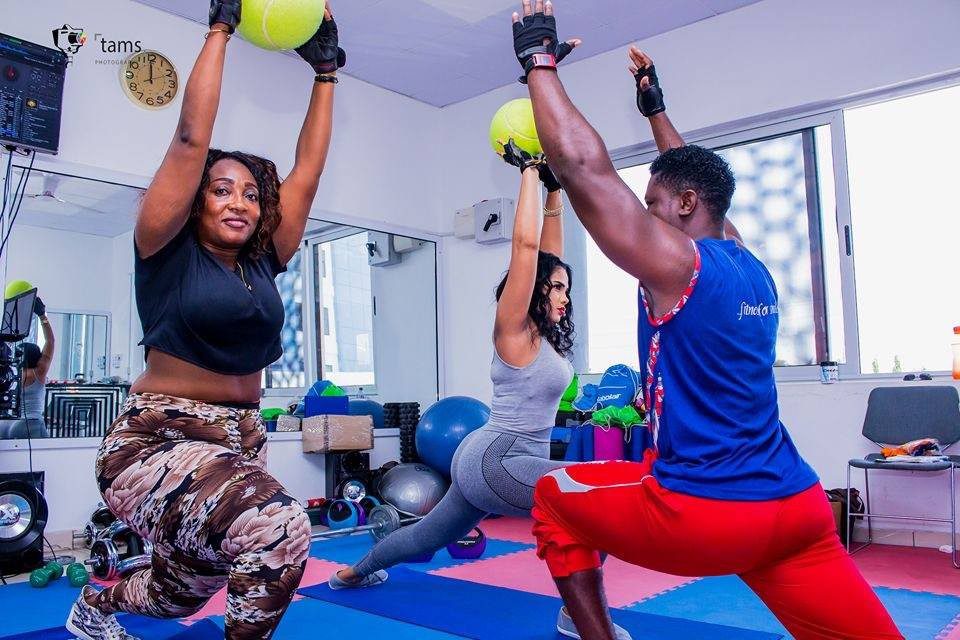
Walk past any of the growing number of gyms along the Spintex Road corridor, in Osu, East Legon, or Tema on any weekday evening between five and eight, and the picture that greets you would have been almost unimaginable a decade ago. Young professionals in co-ordinated workout sets, personal trainers running clients through structured programmes, group fitness classes with waiting lists, supplement bars doing steady business at the exit. The Instagram pages of Accra’s fitness community have hundreds of thousands of followers. Transformation videos rack up views. The phrase “gym bro” has entered Ghanaian everyday speech with enough frequency to suggest it is describing something real.
But Ghana has seen trends before. The question worth asking seriously is whether what is happening in the country’s fitness spaces represents a genuine and durable shift in how Ghanaians relate to their bodies, health, and daily habits, or whether it is a lifestyle aesthetic that will follow the arc of other imported cultural moments: visible, energetic at its peak, and eventually absorbed or abandoned as the novelty fades.
The answer, examined carefully, is more interesting than either a simple yes or no.
The numbers behind the growth

The expansion of Ghana’s fitness industry over the past five years has been measurable and substantial. The fitness and health club market in Africa is projected to grow at a compound annual growth rate of approximately 7.9% through 2030, driven by rising urbanisation, an expanding middle class, and increased health consciousness among younger demographics. Ghana is among the markets contributing to this growth, with Accra in particular seeing a proliferation of both boutique fitness studios and larger, fully-equipped commercial gyms.
The gyms opening are not all equivalent. At one end of the market are the large, well-equipped facilities in upscale areas, charging monthly membership fees that range from GH¢300 to GH¢800 (approximately $18 to $49) and targeting upper-middle-class professionals and the expatriate community. At the other end are the neighbourhood gyms, sometimes a converted container or a rented room with secondhand equipment, charging GH¢50 to GH¢150 per month and serving a far broader demographic. Between them sits a growing middle tier of mid-range studios offering group classes, personal training packages, and the kind of community-focused fitness experience that has driven gym culture globally.
The spread across these tiers matters because it suggests the interest is not confined to a narrow affluent segment. Young men in working-class neighbourhoods have been building makeshift outdoor gyms for decades, a fact that tends to get erased from the narrative of gym culture as a new, imported phenomenon. The tyre flipping, the pull-up bars constructed from welded pipes, the sand-filled bottles used as weights: these are not a recent development. What is new is the formalisation, the branding, the female participation, and the integration of fitness into a broader identity performance.
Why now: the forces driving the shift
Several converging forces explain why gym culture has accelerated in Ghana at this particular moment.
The first is demographic. Ghana’s population is young, with a median age of approximately 21 years, and this demographic bulge is now moving through its twenties and early thirties, the life stage at which gym participation globally reaches its peak. A large cohort of young people who grew up with smartphones and global social media are entering adulthood with both the aspiration and the exposure that earlier generations lacked.
The second is social media’s restructuring of body image and aspiration. Fitness content is among the most consumed categories on Instagram, TikTok, and YouTube globally, and Ghanaian content creators have built significant audiences in the fitness space. When a young woman in Kumasi can follow a Ghanaian fitness influencer who looks like her, trains in conditions she recognises, and speaks to the specific challenges of working out in a hot, humid climate while managing the dietary realities of Ghanaian food, the aspiration becomes more actionable than when it was mediated entirely through content produced in Los Angeles or London.
The third force is health anxiety, which has increased sharply in the post-pandemic period. Non-communicable diseases including hypertension, type 2 diabetes, and cardiovascular conditions have been rising steadily across urban Ghana, with the Ghana Health Service reporting that NCDs now account for a significant and growing share of hospital admissions and mortality. Hypertension alone affects an estimated 30% of Ghanaian adults, with rates higher in urban areas where sedentary work, processed food consumption, and chronic stress intersect. For a generation watching parents and uncles manage conditions that lifestyle intervention could have reduced or prevented, the gym has acquired a preventative logic that goes beyond aesthetics.

The fourth is the changing cultural meaning of the body in Ghana. Physical fitness has historically been associated in Ghanaian cultural imagination with manual labour, with the farmer, the trader, the builder, bodies shaped by work rather than by intention. The gym body, the body deliberately constructed through structured exercise, was an import with no clear local cultural script. That is changing. Fitness is being reframed not as vanity but as discipline, investment, and self-respect, a reframing that has proven persuasive particularly among young men navigating the pressures of economic competition and among young women reclaiming bodily autonomy in a culture that has had complicated and often controlling relationships with female physicality.
The barriers that remain real
Honest assessment requires acknowledging that for the majority of Ghanaians, the gym remains inaccessible, not because of cultural resistance but because of economic and logistical reality.
Time is the first barrier. The Ghanaian working day, particularly in Accra where commutes can consume two to four hours daily in traffic, leaves relatively little discretionary time for structured exercise. The professional who leaves home at 6am and returns at 8pm, having spent six hours on the road, is not choosing laziness over fitness. They are managing a time budget that has very little margin. The gym culture emerging in Ghana is, to a significant degree, a phenomenon of people whose working lives give them some structural flexibility, whether through proximity of workplace to home, flexible working hours, or the schedule autonomy that comes with self-employment or seniority.
Cost is the second barrier. Even at the lower end of the market, monthly gym membership represents a meaningful line item for someone earning Ghana’s national average wage. The supplement culture that has attached itself to gym participation, protein powders, creatine, pre-workout formulations, most of which are imported and priced accordingly, adds further cost to an already costly pursuit. The gym culture visible on social media, with its high-end facilities, branded activewear, and supplement stacks, is not the gym culture available to most working Ghanaians.
Safety and accessibility for women remain structural issues at many facilities. Reports of harassment, inadequate female-only spaces, and the social discomfort of exercising in male-dominated environments continue to deter female participation, particularly among older women and those from more conservative social backgrounds. The boutique studio model, with its smaller, curated memberships and intentional community culture, has partly addressed this, but the broader market has not yet solved it consistently.
What genuine lifestyle shift looks like
The distinction between trend and lifestyle shift is ultimately a question of behaviour change depth and durability. Trends change what people do in public. Lifestyle shifts change what people do when no one is watching, what they prioritise when resources are constrained, and what they pass on to the next generation.
By some of these measures, there is genuine lifestyle shift underway. The emergence of running communities in Accra, Kumasi, and Takoradi that meet consistently, regardless of weather or social calendar pressure, suggests something more durable than aesthetic fashion. The young Ghanaian professionals who have reorganised their daily schedules around workout time, who make food choices in service of performance goals, and who have built social communities around shared fitness practice are demonstrating the kind of value reorientation that characterises genuine shift.

The growing corporate wellness conversation, with more Ghanaian employers introducing fitness benefits, on-site gym access, or subsidised membership as part of compensation packages, also suggests institutional recognition that this is not passing fashion. Research consistently shows that physically active employees demonstrate lower rates of absenteeism, higher reported productivity, and better mental health outcomes, and Ghanaian HR departments are beginning to engage with this evidence in ways that were uncommon five years ago.
At the same time, there is a visible trend dimension that should not be confused with the deeper shift. The person who joins a gym in January with a three-month transformation goal, posts extensively about it for six weeks, and quietly stops attending by March is participating in a global pattern of fitness intention that does not constitute lifestyle change. Ghana has that population too, and it is probably larger than the community of genuinely committed long-term fitness practitioners.
The local and the global
One of the most interesting features of Ghana’s gym culture is the negotiation it is conducting between global fitness aesthetics and local reality. The workout that performs well on a Los Angeles TikTok page, filmed in an air-conditioned facility with premium equipment and optimised lighting, is being adapted, sometimes awkwardly and sometimes creatively, to conditions involving intense heat, outdoor spaces, limited equipment, and a food culture built around carbohydrate-dense staples that do not map neatly onto the macro-counting frameworks imported from Western fitness culture.
Ghanaian fitness content creators who are doing the most interesting work are the ones building frameworks that engage honestly with this negotiation: how to train effectively in heat and humidity, how to build muscle while eating banku and groundnut soup, how to manage rest and recovery in a work culture that does not validate rest, how to sustain a fitness practice without the supplement industry’s economic infrastructure. This localisation is where trend becomes culture, when the borrowed practice is sufficiently adapted to survive in its new environment without requiring the borrower to stop being who they are.
Ghana’s gym culture is neither purely trend nor fully arrived lifestyle shift. It is a genuine movement in transition, deep enough to be taken seriously, broad enough to be reshaping aspiration and behaviour across a significant demographic, but not yet sufficiently embedded across class and gender lines to be described as a societal norm. The trajectory, driven by demographics, health necessity, and a generation that has decided its body deserves intentional investment, points toward durability. Whether the infrastructure, economic accessibility, and cultural adaptation keep pace with the aspiration will determine whether what is happening in Accra’s gyms today becomes the baseline assumption of Ghanaian life in a decade.
Malaria deaths in Ghana drop by 98% as major public health gains emerge