

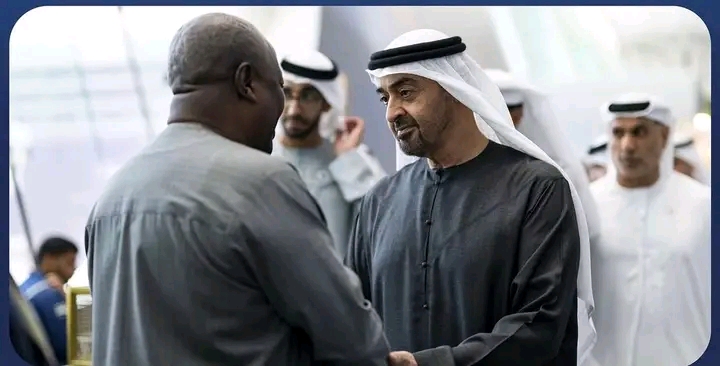
President John Dramani Mahama has moved to strengthen Ghana’s strategic energy ties with the United Arab Emirates following high level talks with Mohamed bin Zayed Al Nahyan on the sidelines of the Make it in the Emirates 2026 in Abu Dhabi.
The discussions centred on expanding cooperation in the energy sector, with both leaders agreeing on the need to deepen bilateral engagement in ways that support long term economic growth. A key proposal emerging from the meeting is the potential for UAE backed investment in oil and gas storage infrastructure in Ghana, a move that could significantly strengthen the country’s energy security and supply chain resilience.
Energy storage remains a critical gap in Ghana’s petroleum sector, where limited capacity can affect pricing stability and supply consistency. Investment from the UAE, which has extensive experience in energy logistics and infrastructure, could position Ghana as a more strategic hub for petroleum distribution within West Africa.
Beyond fossil fuels, both leaders placed strong emphasis on diversifying energy sources. They highlighted the importance of expanding into Liquefied Natural Gas and renewable energy, particularly solar power, as part of a broader strategy to reduce dependence on crude oil and enhance sustainability.

This shift reflects a global transition in energy policy, where countries are increasingly balancing traditional energy production with cleaner alternatives. For Ghana, integrating LNG and solar into its energy mix could help stabilise power generation, reduce emissions, and attract green investment.
The meeting also touched on geopolitical developments, particularly the ongoing tensions in the Middle East. Both leaders acknowledged the UAE’s complex position within the region and expressed hope for a swift resolution to tensions involving the United States and Iran. They noted that restoring stability would allow global attention to return to development priorities such as innovation, climate action, and economic growth.
Beyond energy, the talks explored broader areas of cooperation including trade, investment, technology, and artificial intelligence. These sectors are increasingly interconnected, with energy infrastructure often serving as a foundation for industrial expansion and digital transformation.
The UAE’s growing investment footprint in Africa has made it a key partner for several countries seeking capital and technical expertise. Ghana’s engagement signals a strategic effort to align with partners that can support both immediate infrastructure needs and long term development goals.

President Mahama’s approach appears to focus on positioning Ghana as an attractive destination for foreign investment by emphasising stability, governance, and economic potential. This was reinforced by remarks from the UAE leadership, which described Ghana as a reliable and peaceful partner with strong democratic credentials.
The historical relationship between Ghana and the UAE has evolved steadily over the years, particularly in trade and aviation. This latest engagement suggests a shift toward deeper economic integration, especially in high value sectors such as energy and technology.
For Ghana, the potential benefits are significant. Increased investment in energy infrastructure could improve domestic supply, support industrial growth, and create jobs. It could also enhance the country’s role in regional energy markets, particularly as demand for reliable energy sources continues to rise across West Africa.
However, the success of these discussions will depend on execution. Turning agreements into tangible projects requires clear frameworks, regulatory alignment, and sustained political commitment from both sides.

What is clear is that Ghana is actively seeking to reposition its energy strategy for the future, moving beyond reliance on crude exports toward a more diversified and resilient system. The partnership with the UAE could play a pivotal role in that transition.
As global energy dynamics continue to shift, collaborations like this will likely define how emerging economies navigate the balance between growth, sustainability, and energy security.
UAE Royal Group holds US$344m unrealized gain from bitcoin mining stash