

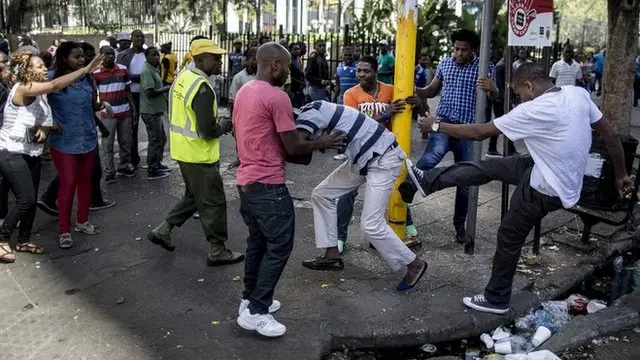
South Africa’s Ministry of Police has directed law enforcement agencies to immediately arrest and prosecute individuals involved in attacks against Ghanaian nationals, as authorities move to contain a growing wave of xenophobic violence.
The directive follows widespread outrage triggered by viral videos showing Ghanaians and other foreign nationals being harassed, assaulted, and in some cases forced to leave communities. The incidents have sparked diplomatic tension between the two countries and renewed concern about the safety of migrants in South Africa.
Officials have made it clear that such acts will not be tolerated. Authorities condemned the violence, describing it as unlawful and contrary to the country’s constitutional values of dignity, equality, and human rights. Law enforcement agencies have been placed on alert, with instructions to identify perpetrators and ensure they face the full force of the law.
The crackdown comes after Ghana formally protested the attacks. Samuel Okudzeto Ablakwa summoned South Africa’s envoy, demanding urgent action to protect Ghanaian citizens and prevent further escalation.

South African authorities have acknowledged the seriousness of the situation. Officials warned that violence, looting, and intimidation undermine the rule of law and threaten national stability. They have also called for calm, urging citizens to avoid taking matters into their own hands.
The situation has already had real consequences. Ghana has taken steps to evacuate at least one citizen following a widely circulated attack, highlighting the level of fear and insecurity among affected communities.
This is not the first time South Africa has faced xenophobic tensions. The country has experienced repeated outbreaks of anti foreign violence over the years, often linked to deeper socio economic pressures such as unemployment, inequality, and competition over limited resources. Analysts say these underlying issues continue to fuel resentment toward migrants, making the problem persistent rather than isolated.
However, the current response suggests a more assertive stance by authorities. By ordering arrests and prosecutions, the government is signaling that it intends to move beyond statements and enforce accountability.
There is also a broader regional implication. Incidents like these strain diplomatic relations and challenge the idea of African unity, especially at a time when initiatives like the African Continental Free Trade Area are pushing for freer movement of people and goods across the continent.

For now, the key issue is whether enforcement will match the strong rhetoric. Past incidents have often been followed by criticism that responses were slow or insufficient. Sustained action, not just immediate arrests, will be critical in restoring confidence among foreign nationals living in South Africa.
The situation remains fluid, with both governments continuing to engage diplomatically while security agencies work to prevent further attacks.
“No Room for Xenophobia” – President Mahama Reaffirms Ghana’s Commitment to Regional Unity