

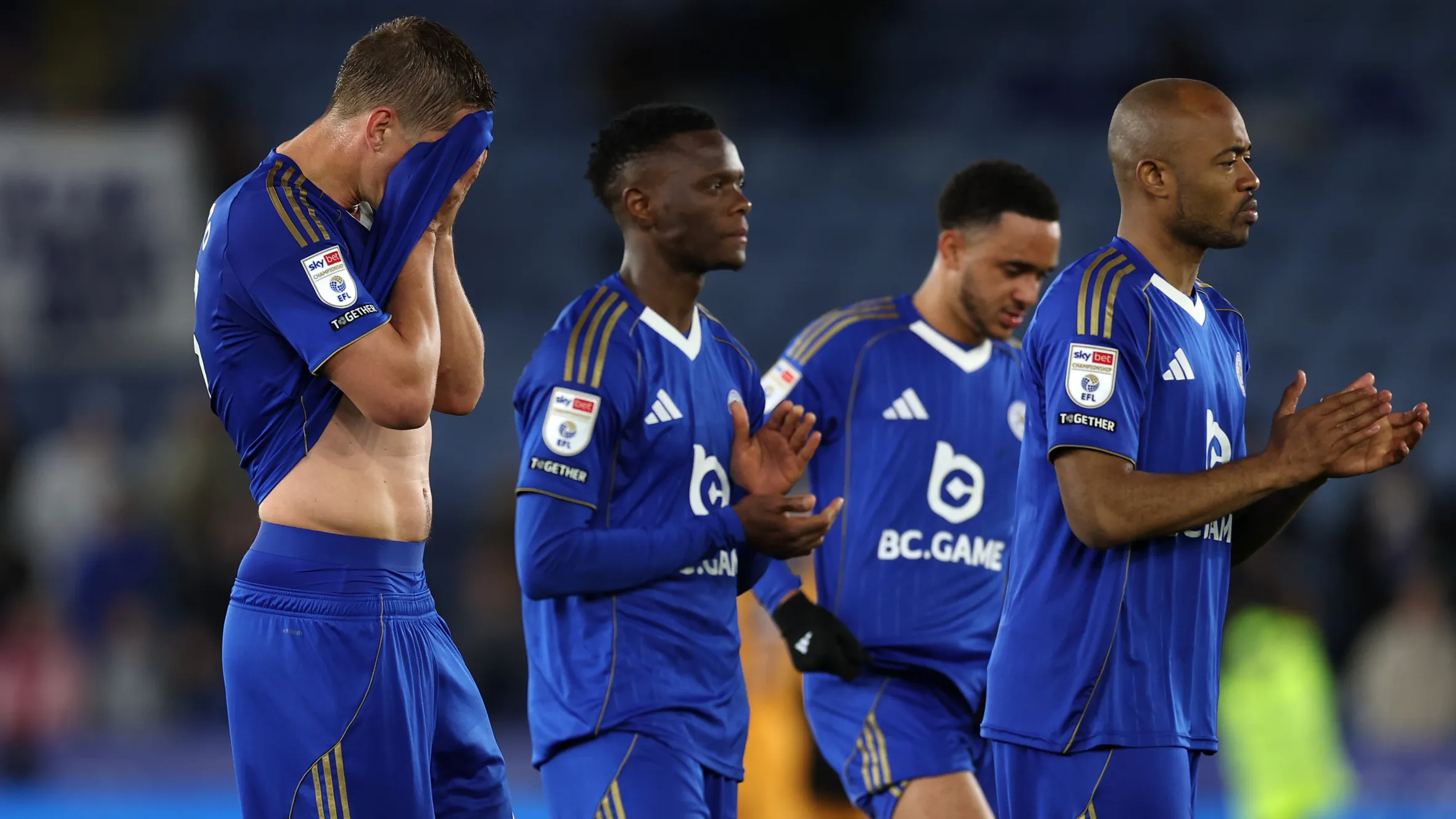
Leicester City’s dramatic fall from English football’s elite has reached a new low, with the club officially relegated to League One, the third tier of English football, in a shocking outcome that also impacts Ghanaian internationals Jordan Ayew and Abdul Fatawu Issahaku.
The relegation was confirmed after Leicester drew 2–2 with Hull City, a result that mathematically sealed their fate following a difficult campaign marked by poor form, financial setbacks, and instability within the club. The result leaves Leicester seven points from safety with only a few matches remaining, making survival impossible.
For a club that stunned the world by winning the Premier League in 2016, this moment represents one of the most dramatic declines in modern football history. Just ten years after that fairytale triumph, Leicester now finds itself preparing to compete in League One for only the second time in its 142 year existence.
The relegation also affects Ghana’s Jordan Ayew and Abdul Fatawu Issahaku, both of whom have been part of the squad during this turbulent period. Their futures are now uncertain as the club faces a major restructuring ahead of next season.

Leicester’s downfall has not been sudden. It has been building over the past two seasons. The club was relegated from the Premier League in the 2024 to 2025 campaign and failed to recover in the Championship. Instead of bouncing back, they suffered another drop, becoming one of the few clubs to endure back to back relegations from the top flight to the third tier.
A major factor behind their struggles has been financial mismanagement. The club was handed a six point deduction earlier in the season for breaching profit and sustainability rules, a penalty that pushed them closer to the relegation zone and ultimately contributed to their downfall.
Beyond financial issues, Leicester’s performance on the pitch has been equally concerning. The team managed only a handful of wins throughout 2026, with poor defensive organization and lack of consistency proving costly. Their inability to hold leads, as seen in the decisive draw against Hull, reflects deeper structural weaknesses within the squad.
Managerial instability has also played a role. Leicester went through multiple managerial changes in a short period, with Gary Rowett becoming the fourth manager of the season. This lack of continuity disrupted team cohesion and made it difficult to build a clear tactical identity.

Off the pitch, tensions have been boiling. Fans have openly expressed frustration with the club’s leadership, with protests and chants against the board becoming common during matches. The disconnect between management and supporters highlights a broader crisis within the club’s structure.
Analysts point to several underlying issues, including high wage bills, poor recruitment decisions, and the abandonment of the scouting model that once made Leicester successful. The club’s inability to adapt after the departure of key players and the decline of its core squad has further accelerated its fall.
The financial implications of relegation to League One are significant. Leicester is expected to lose substantial revenue from broadcasting rights and sponsorships, forcing the club to make difficult decisions, including player sales and wage reductions. For players like Ayew and Issahaku, this could mean potential transfers as the club looks to rebuild.
Despite the bleak situation, there is still a path forward. Leicester has previously shown resilience, and some observers believe the club can recover if it addresses its structural issues and adopts a long term rebuilding strategy. However, the road back to the Premier League will be far more challenging than before.
For Ghanaian fans, the relegation is particularly disappointing given the presence of Ayew and Issahaku, both key figures in the national team setup. Their experience in the coming months, whether in League One or elsewhere, will be closely watched.
Ultimately, Leicester’s relegation serves as a cautionary tale in football. Success, no matter how extraordinary, can quickly unravel without strong leadership, financial discipline, and strategic planning. The club that once inspired the world with its underdog story now faces one of the toughest rebuilding phases in its history.

Wolves Sack Vítor Pereira After Winless Premier League Start