


Fears of a major global economic shock are intensifying as Iran’s grip on the Strait of Hormuz tightens, with some of the world’s most senior financial officials warning that the worst is yet to come. The conflict, which escalated sharply following United States and Israeli air strikes on Iran on February 28, 2026, has effectively closed one of the world’s most critical energy chokepoints, setting off a chain of consequences that economists warn could push the global economy to the brink of recession.

Qatar’s Finance Minister Ali bin Ahmed Al Kuwari has issued one of the starkest warnings to date, saying the full economic consequences of the Iran war are likely to hit globally by May or June 2026. “The impact… it goes way beyond Gulf countries, even to the whole world and what we have seen so far is really the tip of the iceberg,” Al Kuwari said at the International Monetary Fund Spring Meetings in Washington. “The full-fledged impact is coming, and it’s not coming far away. I think in one month, two months’ time you’re going to see really a huge economic impact globally as a result of this war.”
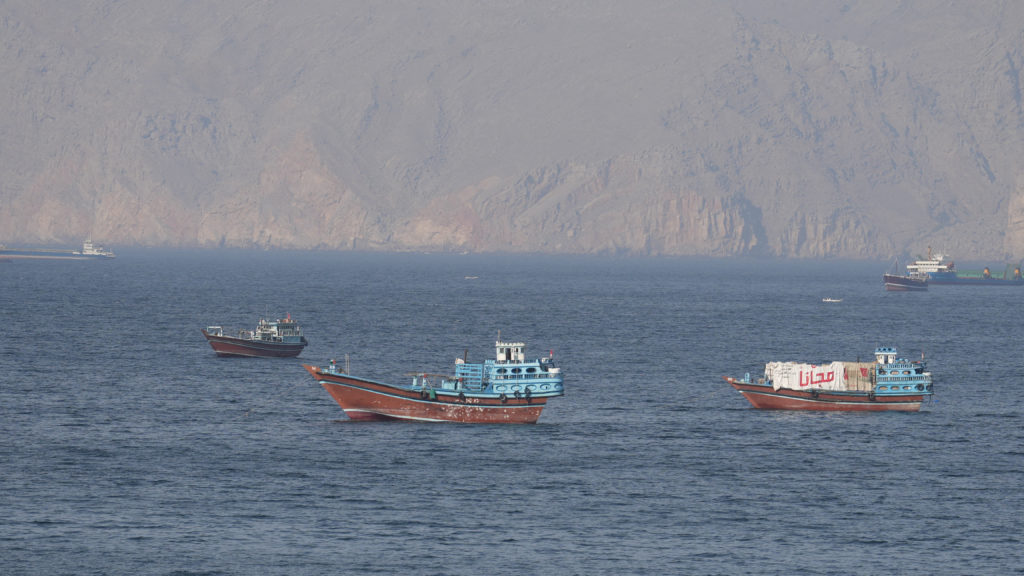
At the centre of the crisis is a waterway that the entire global economy runs through. The Strait of Hormuz carries roughly 27% of seaborne oil trade and 20% of global liquefied natural gas, and tanker traffic in the strait dropped around 90% in the first week of March. Iran has used its military presence to block or deter commercial vessels, with reports of CENTCOM claiming ten vessels have been turned back, while Iran disputed this, with state media citing satellite data showing four tankers successfully transiting in 24 hours. The competing claims illustrate the deep uncertainty surrounding the status of the strait, making it nearly impossible for markets to price risk accurately.
Qatar is among the nations most directly affected. Qatar’s Ras Laffan LNG facility, which supplies nearly a fifth of global LNG exports, sustained significant damage in March as the Iran war expanded. Al Kuwari said it might take about five years to restore the facilities and exports. Iranian hits on Ras Laffan took out about 12.8 million tons of LNG per year, while the first two new trains in the North Field expansion will add 16 million tons per year by year’s end.
The International Monetary Fund has responded by downgrading its global growth forecasts sharply. The reference forecast, which assumes a short-lived conflict and a moderate 19% increase in energy commodity prices in 2026, puts global growth at only 3.1% this year and headline inflation at 4.4%, a sharp deviation from the global disinflation trend in recent years. Before the conflict, the IMF said it would likely have upgraded its 2026 growth estimate to 3.4%. In an adverse scenario, assuming a sharper increase in energy prices this year coupled with rising inflation expectations and some tightening of financial conditions, growth falls to 2.5% this year and inflation rises to 5.4%. In a severe scenario where energy supply dislocations extend into next year and inflation expectations become markedly less anchored, global growth would decline to 2% this year and next, while inflation would exceed 6%.
The IMF noted that growth of around 2% would amount to “a close call for a global recession,” a threshold breached only four times since 1980. Global inflation is seen rising to 4.4% this year even under the more optimistic scenario.

The regional toll is particularly severe. Economic prospects in the Middle East and Central Asia have been hit hard, with war-driven disruptions to key energy and commodity exports alongside declines in sectors like tourism dragging 2026 growth down to 1.9%, a two-percentage-point downgrade. Several economies are projected to contract, including Iran, Qatar, Iraq, Kuwait, and Bahrain. Iran’s outlook saw one of the largest country-level revisions, with its 2026 growth forecast cut by 7.2 percentage points, resulting in a projected contraction of 6.1%.
The damage goes well beyond oil and gas. Around a third of global fertiliser trade passes through Hormuz, raising the risk of disrupted planting seasons and a wider food crisis. Qatar, which accounts for roughly 30% of global helium supply, also warned that shortages could hit healthcare and semiconductor industries. The Hormuz blockage has crippled global supply of aluminium, fertiliser, helium, petrochemicals, and other industrial inputs, with Iran’s attacks on Qatar’s LNG facilities compounding a separate round of strikes on aluminium smelters, hollowing out a supply chain that was already stressed.
The oil price surge is already being felt in everyday life. Petrol prices have continued to rise in the US, with the average price for a gallon at $4.11, up from $2.98 on February 28 when the US and Israel attacked Iran. For every $10 sustained increase in oil prices per barrel, experts expect a decrease in GDP growth of about 0.4%, meaning a sustained $60 increase above the average price would put the US firmly in recession territory, according to Babak Hafezi, professor of international business at American University. Oxford Economics predicts that Brent crude will average around $113 per barrel in the second quarter, with world consumer price index inflation peaking at 4.4%.
Other governments are speaking out with increasing alarm. Australian Finance Minister Jim Chalmers warned that the global economy faced a “really dangerous time” as a result of the Middle East war, adding: “Australians didn’t choose the circumstances of this war in the Middle East, but they are paying a hefty price for it.”
The IMF describes the crisis as a classic supply shock, with rising oil and gas prices lifting production costs across transport, food, chemicals and manufacturing. That risk becomes more dangerous if firms and workers begin raising prices and wages in anticipation of future inflation, creating a second-round inflation spiral. The IMF has compared the dynamics to the 2022 commodity surge that followed Russia’s invasion of Ukraine, but has noted there are reasons to doubt the same soft landing can be achieved this time.

Diplomatically, the picture remains volatile. Although the US and Iran agreed to a two-week ceasefire, temporarily halting military attacks, traffic through the Strait of Hormuz has continued to be restricted. After marathon talks aimed at a more definitive end to the war failed over the weekend, President Donald Trump announced a US naval blockade of Iranian ports, a move that Iranian officials said could be considered a ceasefire violation. Iran has sought to institutionalise its control of the strait, possibly through a toll system after the conflict ends, while Trump has suggested the US could charge its own fees for transit.
IMF chief economist Pierre-Olivier Gourinchas said: “The global economy was on a steady growth trajectory, and we were looking to upgrade our projections. The war has stopped that momentum.” He added that with the right policies, including a swift cessation of hostilities and the reopening of the Strait of Hormuz, the damage can remain limited. “International financial institutions such as the IMF were born out of a vision, forged in the aftermath of war and great destruction, to advance economic and financial cooperation and integration for the benefit of all. Today, those principles are more vital than ever to preserve global prosperity.”
For now, the world is in a waiting game, aware that each passing week of continued closure compounds the pressure on supply chains, prices, and growth. As Qatar’s finance minister made clear in Washington, what the world has seen so far may only be the beginning.
Trump Iran talks spark market relief