


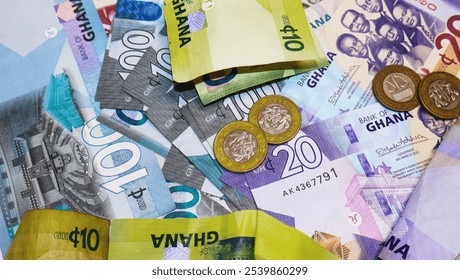
Ghana’s external trade position strengthened significantly toward the end of 2025, with the country recording a trade surplus of $4.2 billion in the fourth quarter, a sharp increase from the $1.5 billion surplus posted in the third quarter. The figures reflect a sustained improvement in Ghana’s export performance and a broader recovery in macroeconomic stability following years of economic turbulence.
Data from the Bank of Ghana and related economic trackers show that the country’s trade balance has been on a strong upward trajectory throughout 2025, supported largely by robust export earnings, particularly from gold, cocoa, and oil. By December 2025, Ghana’s monthly trade surplus alone had reached approximately $3.9 billion, marking one of the highest levels recorded in recent years.
This surge is not happening in isolation. Earlier in the year, Ghana had already posted a trade surplus of about $6.2 billion within the first eight months, before climbing to around $8.5 billion by October 2025. These cumulative gains point to a consistent trend where export growth has significantly outpaced import expansion, strengthening the country’s external buffers.

At the core of this performance is Ghana’s gold sector. Gold exports alone generated an estimated $20 billion in earnings in 2025, more than doubling previous levels and playing a decisive role in pushing the trade balance into surplus territory. High global gold prices, combined with increased production and improved regulatory oversight, have made the commodity the backbone of Ghana’s export economy.
Cocoa exports have also contributed steadily, alongside oil exports, which continue to benefit from global demand despite price volatility. On the import side, although Ghana’s import bill rose to about $17.4 billion in 2025, the growth was relatively contained compared to export earnings, allowing the surplus to widen further.
The strong trade position has had ripple effects across the broader economy. Ghana’s current account also recorded a significant surplus in the fourth quarter of 2025, estimated at over $4.5 billion, reflecting improved foreign exchange inflows and a more stable balance of payments position. This has contributed to relative stability in the cedi and strengthened foreign reserves, giving policymakers more room to manage inflation and support growth.
From a structural standpoint, the widening trade surplus signals a shift toward a more export-driven economy. Ghana has historically struggled with trade deficits, driven by heavy import dependence and limited value addition in exports. However, recent reforms and global commodity trends appear to be tilting the balance in favour of exports.
Yet, the numbers do not tell the full story. Analysts caution that Ghana’s trade surplus remains heavily dependent on a narrow range of commodities, particularly gold. This concentration exposes the economy to external shocks, especially fluctuations in global commodity prices. A downturn in gold prices or disruptions in production could quickly reverse the gains seen in 2025.
Additionally, while exports are rising, questions remain about the level of value addition within Ghana’s export sectors. Much of the country’s gold and cocoa exports are still shipped in raw or semi-processed form, limiting the full economic benefits that could be derived from downstream industries such as refining and manufacturing.

There is also the issue of import structure. Ghana continues to rely heavily on imports for essential goods, including refined petroleum products, machinery, and consumer goods. While the current surplus indicates a positive balance, long-term sustainability will depend on reducing import dependency through industrialisation and local production.
Policy direction will therefore be critical. Initiatives such as the proposed Gold Board, aimed at streamlining gold purchasing and reducing smuggling, could further boost export revenues and enhance transparency in the sector. At the same time, efforts to diversify exports and expand non-traditional sectors will be key to maintaining a stable and resilient trade position.
In the short term, however, the numbers are hard to ignore. The jump from $1.5 billion in the third quarter to $4.2 billion in the fourth quarter underscores a strong finish to the year and signals growing momentum in Ghana’s external sector.
For a country emerging from one of its most challenging economic periods in decades, the trade surplus is more than just a statistic. It represents a critical pillar of recovery, a source of confidence for investors, and a foundation upon which future growth strategies can be built.
Cameo partners TikTok to revive growth with creator monetisation push