

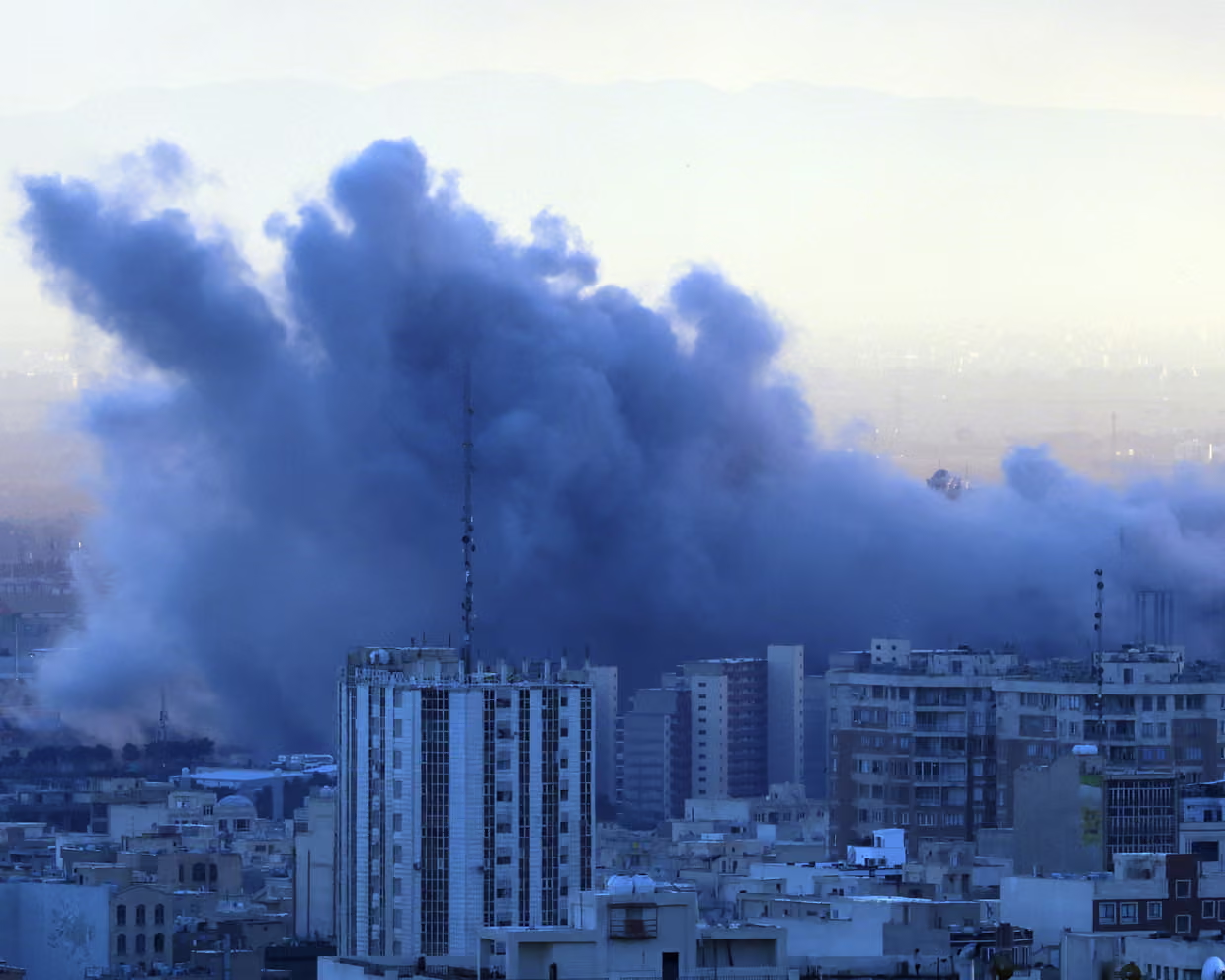
The already volatile conflict between Israel and Iran has dramatically intensified, entering its fifth day with a significant expansion of hostilities that now span multiple fronts and involve a growing array of regional and global actors. On Wednesday, Israeli forces intensified air operations against Iranian strategic targets in Tehran, while launching coordinated attacks against Hezbollah positions in Beirut. In response, Tehran has vowed a sweeping retaliation, threatening “complete destruction” of military and economic infrastructure belonging to the United States and its allies across the Middle East and beyond.
Broadening the war: Strikes inside Iran and Lebanon
According to official military sources, the Israeli Defence Forces (IDF) carried out extensive airstrikes on Iranian security facilities, including buildings associated with the elite Islamic Revolutionary Guard Corps (IRGC), Basij volunteer units, and internal security forces. These strikes extended beyond typical military installations, targeting sensitive IRGC linked structures believed to play key roles in Iran’s internal command and control apparatus. Israeli air operations also hit Hezbollah controlled areas in southern Beirut, including residential suburbs and sites close to major political landmarks, as part of efforts to suppress Iran backed militant operations.

In Lebanon, strikes on towns south of Beirut have inflicted civilian casualties and damage, with local health authorities reporting dozens of deaths and injuries. Several residential complexes and a hotel in the Hazmieh district were struck during early morning operations, exacerbating a humanitarian crisis that has already displaced tens of thousands.
Iran’s expansive retaliation
Iran has responded to the sustained offensive with an unprecedented campaign of missile and drone strikes extending beyond its own borders. Iranian forces have launched waves of rockets and drones toward multiple U.S. military bases and allied positions in the Gulf states, including Bahrain, Qatar, Kuwait, and the United Arab Emirates, as well as into Israel itself. The conflict’s scope now covers a broad geographical area, with attacks reported as far afield as Cyprus and Sri Lankan waters, where a U.S. submarine reportedly sank an Iranian warship, amplifying the war’s international reach.
Measures by Iranian commanders have explicitly called for U.S. and Israeli strategic assets in the region to be targeted, asserting that foreign military presence in places like the Gulf and Levant constitutes direct involvement in attacks on Iranian sovereignty. This shift underscores Tehran’s broader strategic posture of treating allied forces in host nations as legitimate targets within the context of the ongoing conflict.
Human and strategic costs
The human toll of the intensifying conflict has been severe. Estimates from international sources place Iranian fatalities in the thousands, with casualty figures continuing to rise as airstrikes persist. Mass displacement across southern Lebanon has pushed civilians into precarious conditions, with families fleeing to safer regions as urban areas become battlegrounds. The strike patterns in Beirut and across northern Israel have also generated widespread alarm among civilians, prompting urgent calls for evacuation in certain zones and significant stress on emergency response systems.

From a strategic perspective, the United States and Israel claim to have inflicted significant damage on Iran’s missile sites, air defence systems, and military infrastructure. Joint operations have reportedly targeted hundreds of Iranian facilities, aiming to degrade Tehran’s offensive capabilities and ability to coordinate proxy responses across the region. U.S. military officials have described the campaign against Iranian assets as one of the most extensive coordinated strikes in the region in decades, citing the destruction of key weapon caches and personnel networks.
Global and regional implications
The widening conflict has triggered global concerns, particularly over the security of key maritime routes such as the Strait of Hormuz, a critical chokepoint for global energy supplies. Iran has threatened to close or retaliate if its strategic interests are further compromised, leading to significant fluctuations in global oil markets and heightened tensions among international diplomatic circles.
Meanwhile, diplomatic channels appear strained. Tehran has dismissed overtures for negotiation, signalling a determination to pursue military responses irrespective of international pressure. Conversely, U.S. and Israeli leadership have affirmed that military objectives remain focused on neutralising Iran’s capacity to project power through missiles, drones, and proxy forces, although long term goals continue to draw debate among policymakers.
Leadership and internal dynamics in Iran
Compounding the geopolitical turbulence, Iran is undergoing a period of political uncertainty following the death of Supreme Leader Ayatollah Ali Khamenei. The funeral proceedings were delayed amid the conflict, and clerical figures are reportedly considering appointing his son, Mojtaba Khamenei, as successor. This potential leadership transition could further harden Iran’s strategic stance and consolidate IRGC influence over decision making during this period of crisis.
As the conflict evolves, the interplay between military escalation and political realignment in the Middle East could reshape regional dynamics for years to come. Ongoing hostilities, civilian hardship, and international involvement underscore the profound challenges ahead in seeking both de escalation and lasting security.