

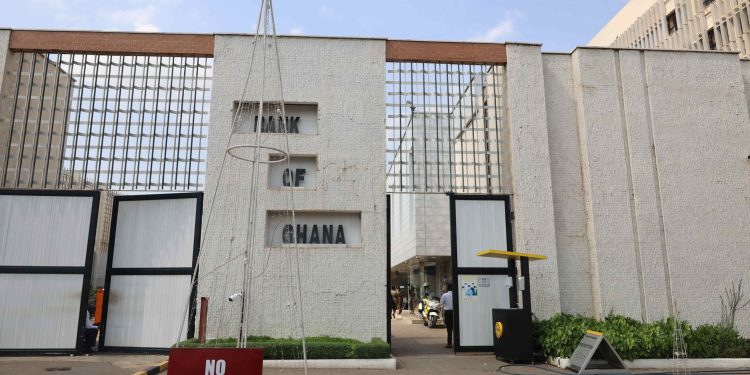
In a significant development for Ghana’s financial sector, the Ghana Reference Rate (GRR) the cornerstone interest rate benchmark used by commercial banks to determine loan pricing has tumbled to 11.71 percent for March 2026, down sharply from 14.58 percent in February. This drop represents one of the most pronounced monthly declines in recent memory and is widely expected to catalyse notable reductions in commercial lending rates across the economy.
What the Ghana Reference Rate is
The GRR was established in 2017 through a collaborative effort between the Bank of Ghana (BoG) and the Ghana Association of Banks to replace the opaque base-rate lending system that preceded it. Its purpose is to offer transparency and consistency in how banks price credit for both corporate and retail borrowers, anchoring lending costs to observable money market and policy metrics rather than opaque internal bank calculations.
Why the rate fell
Analysts and market participants attribute the steep slide in the GRR primarily to a sharp easing of Treasury bill yields, which have plunged into single-digit territory over recent months. This dynamic was compounded by a modest decline in the interbank lending rate, reflecting improved liquidity conditions within Ghana’s banking system.
The reduction in government paper yields is partly a function of the government’s fiscal consolidation agenda, which has sought to rein in domestic borrowing and reduce pressure on short-term money markets. Excess liquidity a by-product of tightening fiscal policy alongside a sustained easing cycle by the central bank has also played a role in compressing yields.
Moreover, the Bank of Ghana’s monetary stance has been notably accommodative. The central bank’s Monetary Policy Rate (MPR) was cut to multi-year lows earlier in 2026, creating conducive conditions for broader interest rate easing across the economy.
Implications for borrowers
At present, many commercial banks in Ghana price loans at benchmarks around 22 percent or higher rates that have long been viewed as a drag on private sector activity. With the GRR now sitting at 11.71 percent, lending costs are expected to come down substantially as banks adjust their pricing models.
Industry sources say that some financial institutions are already offering bespoke facilities to their most creditworthy clients at rates significantly below the benchmark, in some cases pricing loans at the GRR minus five percentage points. This means highly credit-rated borrowers could secure financing at single-digit interest rates a first in years for Ghana’s credit market.
For borrowers with variable-rate loans signed in February, adjustments in the coming weeks could reduce repayments and ease debt servicing pressure. However, those with fixed-rate contracts will generally not benefit automatically, unless they renegotiate terms with their lenders.
Potential economic impact
The expectation among market watchers is that the sharp drop in the GRR will translate into meaningful cuts in commercial lending rates when banks formally recalibrate their pricing ahead of the next review window in early April. Lower borrowing costs could stimulate credit demand, enhance investment activity, and improve cash flows for businesses that have struggled under a high-interest-rate environment.
For households, cheaper loans could make consumer credit more accessible and potentially buoy mortgage financing an important consideration in expanding housing finance. In the corporate sector, lower financing costs improve the viability of expansion projects and can support job creation.

Despite these promising signs, some stakeholders urge caution. Stephane Miezan, President of the Ghana National Chamber of Commerce and Industry, has noted that while a lower benchmark rate is encouraging, access to credit remains constrained by cautious bank lending practices and risk aversion, particularly among small and medium-sized enterprises. Tight credit availability, he argues, has been a significant factor in the closure of some firms in recent years, underscoring that rate cuts alone may not immediately resolve broader credit challenges.
The GRR’s descent from nearly 30 percent in early 2025 to below 12 percent in March 2026 highlights how far Ghana’s interest rate environment has shifted in a relatively short period. This trend mirrors broader macroeconomic improvements including steep declines in inflation and greater money market stability that have allowed the central bank leeway to adopt an easier monetary stance.
As Ghana navigates this transition, the pace and extent to which banks pass through lower benchmark costs to borrowers will be pivotal in reshaping the credit landscape and supporting sustainable economic growth going forward.