

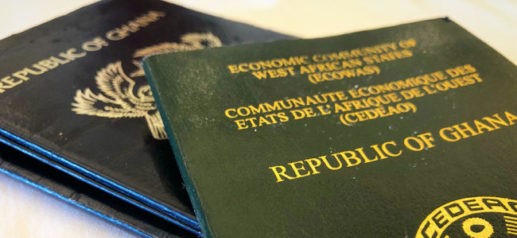
The Ghana passport mobility outlook in 2026 reveals a widening disconnect between diplomatic progress and the lived travel realities of citizens. Despite incremental gains in visa-free and visa-on-arrival access, Ghana remains ranked 69th globally in the Henley Passport Index 2026, placing it firmly in the lower half of world rankings and far behind Europe, Asia, and parts of the Middle East.
While access to 68 destinations without a visa signals improvement, it does little to offset deeper structural barriers that continue to restrict movement for Ghanaians. These constraints shape not only personal travel but also business expansion, education, and global competitiveness, making mobility an economic issue rather than a symbolic one.
Ghana Passport Mobility and Structural Barriers
At the heart of the Ghana passport mobility challenge are persistent systemic obstacles. The Global Mobility Report 2026 highlights shorter visa validity periods, heavier documentation requirements, increased scrutiny, and significantly higher rejection risks for Ghanaian applicants.
Eurostat data underscores this imbalance, showing Schengen visa rejection rates for African applicants rising to 26.6 percent. These outcomes are not random; they reflect tightening immigration policies in advanced economies that disproportionately affect African nationals, even as outbound demand for travel continues to grow.
The result is a two-tier mobility system, one that rewards already privileged passport holders while imposing higher friction costs on others.
Recent improvements in Ghana passport mobility have been driven largely by diplomatic engagements. The report credits Ghana’s Foreign Ministry for expanding visa-free and visa-on-arrival access, noting the country’s growing reputation as a stable democracy and credible economic partner.
These gains reflect enhanced diplomatic capital and Ghana’s active participation in multilateral forums. However, the report is clear that progress does not equal parity. Ghana’s improvements still lag far behind African peers such as Seychelles and Mauritius, whose passports provide access to 154 and 147 destinations respectively.
In mobility terms, Ghana is improving, but not fast enough to close the global gap.
How Mobility Constraints Affect Businesses
For businesses, weak Ghana passport mobility has direct operational consequences. Executives, entrepreneurs, and professionals face delays, uncertainty, and higher compliance costs when attempting to travel for trade negotiations, conferences, or regional expansion.
This unpredictability undermines competitiveness. While firms in countries with strong passports can plan seamlessly across borders, Ghanaian businesses must build contingencies around visa risks, raising costs and slowing decision-making.
Over time, limited mobility reduces Ghana’s attractiveness as a base for regional headquarters and international partnerships.
Household Impact: Education, Work, and Opportunity
The Ghana passport mobility gap also weighs heavily on households. Students pursuing education abroad face longer processing times and higher rejection risks, while families experience emotional and financial strain navigating complex visa systems.
For professionals, mobility barriers limit access to short-term contracts, global networks, and skills acquisition opportunities. Even when financial resources are available, administrative hurdles often derail plans, reinforcing inequality between citizens of high- and low-mobility countries.
Mobility, in this context, becomes a gatekeeper to opportunity rather than a neutral administrative process.

The Henley Passport Index 2026 paints a stark picture of global mobility inequality. Singapore remains the world’s strongest passport, offering access to 192 destinations, while Afghanistan sits at the bottom with access to just 24.
In Africa, Seychelles leads the continent at 24th globally, followed by Mauritius at 27th. South Africa ranks 48th with access to 101 destinations, still significantly ahead of Ghana.
Meanwhile, countries like the UAE and China have demonstrated that sustained diplomatic strategy and inbound openness can dramatically reshape passport strength over time.
Rethinking Mobility as Strategy
The report argues that in today’s fragmented world, Ghana passport mobility cannot be treated as a standalone issue. “Optionality is power,” it notes, urging globally minded individuals and business leaders to rethink mobility planning as a resilience strategy rather than a travel convenience.
Second citizenships and alternative residencies are increasingly viewed as tools for business continuity, access to services, and protection against geopolitical shocks. While such options remain out of reach for most citizens, the trend highlights how mobility has become a form of economic insurance.
Ghana’s 2026 mobility profile reflects meaningful diplomatic effort but limited structural change. The passport is stronger than before, yet still constrained by global systems that favour a small group of countries.
Until Ghana passport mobility improves in a way that reduces rejection risks and administrative burdens, households and businesses will continue to bear the hidden costs of restricted movement, even as official rankings show gradual progress.