

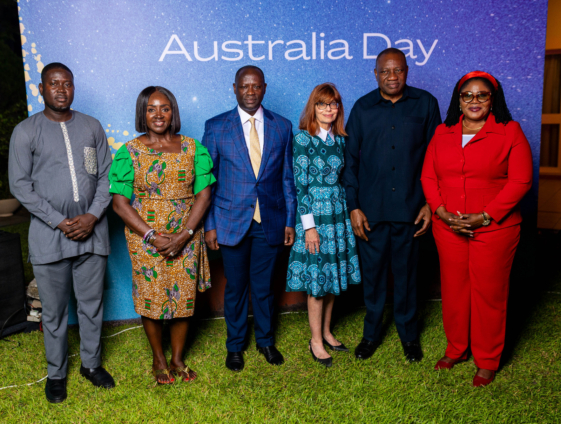
The Ghana 24-hour economy proposal marks a strategic shift in how the country plans to drive growth, productivity, and job creation amid slowing global demand and domestic fiscal constraints. By studying Australia’s experience with multi-shift labour systems, Ghana is signaling its intention to expand economic activity beyond traditional working hours rather than rely solely on new capital injections.
This matters because Ghana’s current growth model is heavily constrained by limited productive hours, infrastructure bottlenecks, and rising unemployment pressures, especially among urban youth. A 24-hour economic structure, if carefully implemented, could unlock latent capacity in existing assets such as factories, ports, logistics hubs, and service industries.
Ghana 24-Hour Economy and Productivity Gains
At the core of the Ghana 24-hour economy concept is productivity expansion through time utilisation. Australia’s success in running extended-hour systems across mining, logistics, healthcare, and services shows how output can be increased without necessarily expanding physical infrastructure.
For Ghana, this approach could ease congestion in transport systems, improve turnaround times at ports, and raise output per unit of capital. Multi-shift operations also allow firms to spread fixed costs, such as machinery and rent, over longer operating hours, improving efficiency and profitability.
However, productivity gains will depend heavily on energy reliability, labour protections, and transport availability during off-peak hours.
Australia’s relevance to the Ghana 24-hour economy lies not only in its industrial experience but also in regulatory discipline. Extended working hours in Australia are supported by strong labour laws, occupational safety standards, and wage premiums for night shifts.
These safeguards ensure that productivity does not come at the expense of worker welfare. For Ghana, adopting a similar model would require updates to labour regulations, stronger enforcement capacity, and dialogue with trade unions to avoid social pushback.
Without these safeguards, a 24-hour system risks becoming exploitative rather than transformative.
Implications for Businesses
For businesses, the Ghana 24-hour economy presents both opportunity and risk. Manufacturing firms, logistics operators, and service providers could significantly increase output by adopting shift-based operations. Retail, hospitality, healthcare, and digital services are particularly well-positioned to benefit from extended-hour demand.
Yet, operating around the clock raises costs in the short term. Firms must invest in lighting, security, staff rotation, and compliance with labour standards. Smaller enterprises may struggle to absorb these costs without targeted incentives or tax relief.
If poorly coordinated, the policy could widen the gap between large firms and small businesses rather than create inclusive growth.
Jobs, Income, and Social Costs
From a household perspective, the Ghana 24-hour economy could expand employment opportunities, particularly for shift workers, students, and informal sector participants seeking flexible hours. Higher labour demand may also strengthen bargaining power and improve income stability.
However, night work carries social and health trade-offs. Disrupted sleep patterns, childcare challenges, and transport safety concerns disproportionately affect lower-income households. Without complementary investments in public transport, healthcare access, and community safety, the benefits of a 24-hour economy may be unevenly distributed.
Households stand to gain, but only if social infrastructure keeps pace with economic ambition.
The planned launch of the Australian Centre for International Agricultural Research office in Accra adds a strategic layer to the Ghana 24-hour economy agenda. Agriculture, food processing, and cold-chain logistics could benefit significantly from extended-hour operations, reducing post-harvest losses and stabilising food supply.
Collaboration on climate adaptation and agricultural innovation also supports sustainability, ensuring that increased production does not worsen environmental stress. This alignment suggests Ghana is framing the 24-hour economy not as a short-term fix, but as part of a broader development strategy.
Diplomacy and Economic Confidence
The growing Ghana–Australia partnership reflects shared values around rules-based cooperation and sustainable growth. In an era of global uncertainty, Ghana’s outreach to Australia signals confidence-building rather than dependency.
Australia’s emphasis on diplomacy and multilateral engagement reinforces Ghana’s positioning as a stable investment destination, an essential factor if extended-hour operations are to attract foreign and domestic capital.
The Ghana 24-hour economy has the potential to reshape productivity, employment, and competitiveness without excessive new borrowing. But ambition alone will not deliver results.
Success will depend on energy stability, labour protections, transport systems, and coordinated private-sector participation. If these foundations are weak, the policy risks becoming symbolic rather than structural.
If done right, however, Ghana could transform time itself into a growth asset.
Ghana and USA deepen security cooperation in new bilateral agreement