

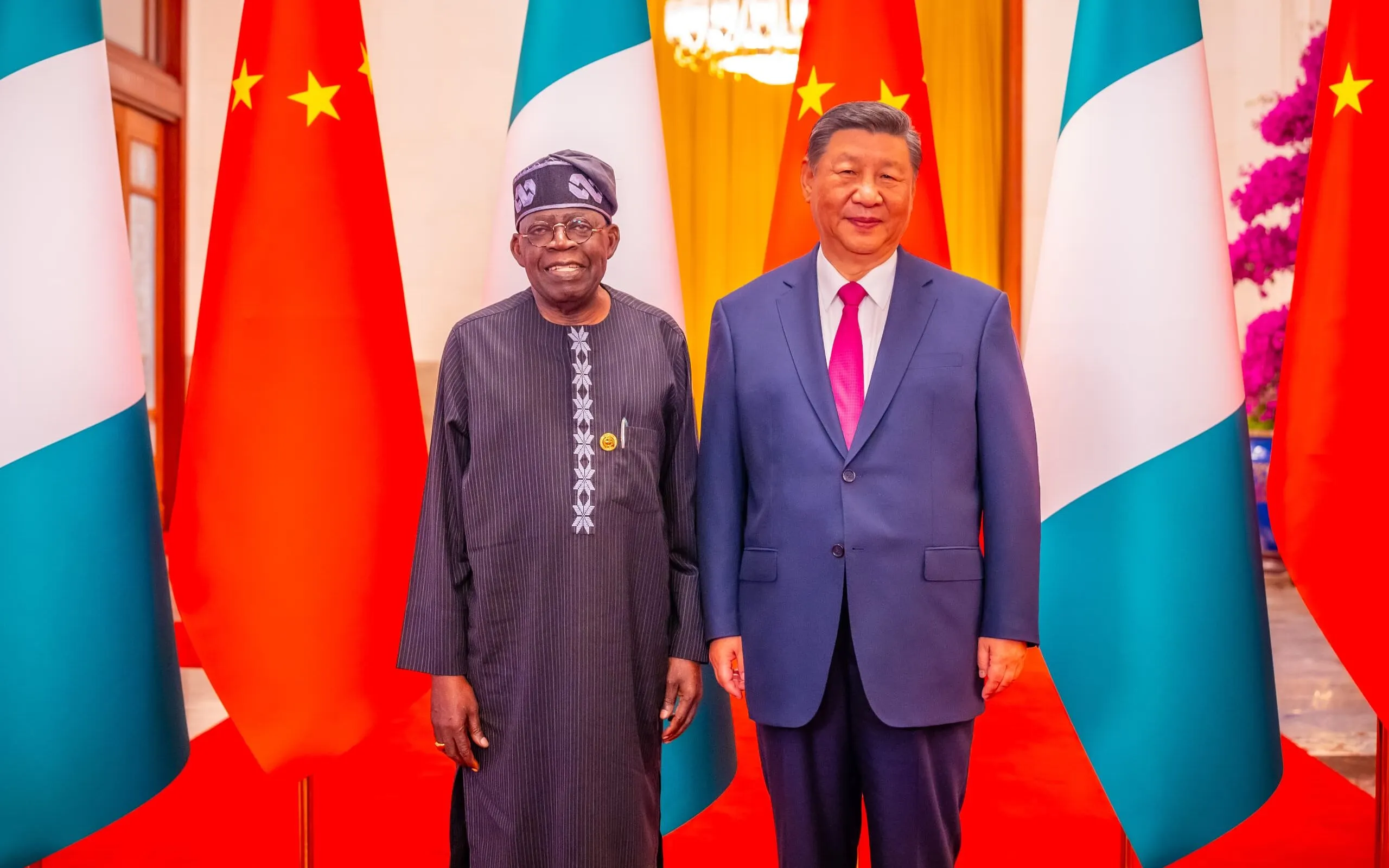
Nigeria’s Belt and Road Initiative in 2025 has emerged as one of the most consequential developments in Africa’s infrastructure and industrial landscape, following China-backed construction commitments estimated at $24.6 billion tied to the Ogidigben Gas Revolution Industrial Park (GRIP). The scale of the project not only places Nigeria at the centre of Beijing’s recalibrated Africa strategy but also elevates gas-led industrialisation as a defining economic pathway for the country.
Unlike earlier Belt and Road investments spread across transport and public works, the GRIP project signals a sharper focus on energy-linked industrial ecosystems with long-term commercial returns. This strategic shift matters because it reflects changing priorities on both sides: Nigeria’s push to reduce dependence on crude oil exports, and China’s preference for fewer but higher-value infrastructure commitments with clearer revenue prospects.
Why Nigeria’s Belt and Road Initiative in 2025 matters for economic strategy
At its core, Nigeria’s Belt and Road Initiative in 2025 represents a structural attempt to transform natural gas from a wasted by-product into a driver of manufacturing, exports, and employment. GRIP is designed to convert Nigeria’s vast gas reserves into fertilisers, petrochemicals, methanol, and refined fuels, products that support domestic industries and reduce import dependence.
For policymakers, this shift is significant. Nigeria has long suffered from the paradox of resource abundance alongside weak industrial capacity. Gas-based industrialisation offers a pathway to diversify revenue sources, stabilise foreign exchange inflows, and create linkages across power, transport, and manufacturing sectors.
Business implications of Nigeria’s Belt and Road Initiative in 2025
For businesses, Nigeria’s Belt and Road Initiative in 2025 opens opportunities well beyond construction contracts. The industrial park model creates demand for logistics services, energy infrastructure, financial intermediation, insurance, engineering services, and skilled labour. If local content frameworks are enforced effectively, domestic firms could integrate into global value chains anchored around gas processing and exports.
Foreign investors, meanwhile, may view GRIP as a signal that Nigeria is repositioning itself as a serious industrial destination rather than a pure commodity exporter. However, confidence will hinge on contract transparency, regulatory stability, and credible protection of investments.
Despite its promise, Nigeria’s Belt and Road Initiative in 2025 carries unresolved risks, chief among them security in the Niger Delta. Previous attempts to launch GRIP were delayed by community tensions, armed groups, and extortion threats that drove away potential investors and stalled progress for years.
These disruptions are not merely political issues; they have direct economic consequences. Project delays increase financing costs, weaken investor appetite, and slow job creation. For households in host communities, insecurity translates into lost income opportunities and prolonged underdevelopment. Ensuring durable peace and local inclusion will therefore be essential to the project’s success.
At the household level, Nigeria’s Belt and Road Initiative in 2025 has the potential to reshape livelihoods, particularly in Delta State. Large-scale industrial projects typically generate thousands of direct and indirect jobs, improve infrastructure, and stimulate local economies through supply chains and services.
However, the benefits are not automatic. Without strong environmental safeguards and inclusive development policies, industrialisation can deepen inequality and environmental stress. Gas processing facilities must therefore balance economic gains with environmental responsibility, particularly in communities already affected by decades of oil-related pollution.
From China’s perspective, Nigeria’s Belt and Road Initiative in 2025 illustrates a broader evolution of the Belt and Road Initiative across Africa. Beijing is increasingly prioritising projects that align commercial viability with strategic energy interests, rather than funding dispersed public infrastructure with limited returns.
Nigeria’s large domestic market and gas reserves offer strategic depth in West Africa, allowing China to strengthen long-term economic ties while competing with Western and Gulf investors for influence in Africa’s energy future.
Debt sustainability and long-term value creation
The scale of Nigeria’s Belt and Road Initiative in 2025 will inevitably reignite concerns about debt sustainability, transparency, and value retention. While GRIP is positioned as a commercially driven project, Nigerian authorities face pressure to ensure that financing structures do not create hidden fiscal risks.
Long-term success will depend on whether the project delivers technology transfer, skills development, and durable industrial capacity rather than enclave-style extraction.
Ultimately, Nigeria’s Belt and Road Initiative in 2025 stands as a defining test of whether Nigeria can convert strategic infrastructure investment into inclusive and sustainable growth. If successfully executed, GRIP could redefine Nigeria’s industrial base and establish a new benchmark for Belt and Road projects in Africa.
Failure, however, would reinforce long-standing doubts about governance, security, and execution capacity, costs that would be borne not only by investors, but by Nigerian households and future generations.