

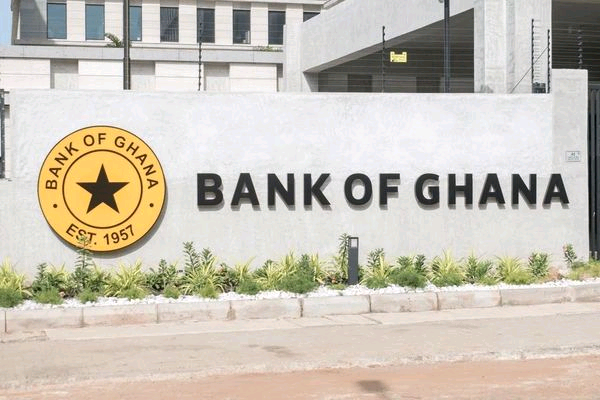
The renewed emphasis on the BoG lending rate target of 10 percent by 2028 reflects a deliberate recalibration of Ghana’s monetary policy priorities as inflation pressures ease and macroeconomic stability gradually improves. By restating this ambition, the central bank is sending a strong signal to markets, businesses, and households that the era of exceptionally tight credit conditions may be approaching a turning point. This matters because lending rates sit at the core of economic activity, influencing investment decisions, consumer spending, and overall confidence in the financial system.
While the target remains medium-term, the BoG lending rate target provides an anchor for expectations at a time when borrowing costs remain historically high. Even incremental progress toward that benchmark could significantly reshape economic behaviour, particularly in interest-sensitive sectors such as manufacturing, construction, and trade.
Why the BoG lending rate target matters for monetary credibility
The credibility of the BoG lending rate target lies in the context in which it has been articulated. Ghana has only recently emerged from a period of severe inflationary pressure and currency instability. By coupling the lending rate ambition with a commitment to protect disinflation gains, the central bank is signalling that affordability of credit will not come at the expense of monetary discipline.
Recent easing in average lending rates and short-term government yields suggests that the BoG lending rate target is not merely aspirational. Declining money market rates indicate improving liquidity conditions and reduced inflation expectations, both of which are prerequisites for sustained reductions in commercial lending rates. This gradual approach helps preserve investor confidence while preparing the ground for broader credit expansion.

Household implications of the BoG lending rate target
For households, the BoG lending rate target has direct implications for affordability of loans and financial inclusion. High lending rates have historically constrained access to mortgages, personal loans, and consumer credit, particularly for middle- and lower-income earners. A credible path toward lower borrowing costs could ease debt servicing burdens and encourage responsible household borrowing.
As lending rates decline, households may experience improved access to financing for housing, education, and small-scale enterprise. The BoG lending rate target therefore has the potential to support consumption-led growth, especially if wage growth stabilises alongside lower inflation. However, the benefits will depend on how quickly commercial banks transmit lower policy and market rates to end borrowers.
Business impact of the BoG lending rate target
The BoG lending rate target is particularly significant for businesses, many of which have struggled to operate under prolonged high interest rates. Elevated borrowing costs have discouraged capital investment, limited expansion plans, and forced firms to rely on internal financing or short-term trade credit.
A sustained move toward the BoG lending rate target could unlock pent-up investment demand, especially among small and medium-sized enterprises that are most sensitive to financing costs. Lower lending rates improve project viability, raise expected returns, and enhance firms’ ability to manage working capital. Over time, this could translate into higher output, job creation, and improved competitiveness.
For banks, the adjustment may require a rebalancing of business models. While lower rates could compress interest margins, higher loan volumes driven by the BoG lending rate target may partially offset this effect, provided credit risk remains contained.
External buffers strengthen confidence in the BoG lending rate target
The credibility of the BoG lending rate target is reinforced by improvements in Ghana’s external position. Stronger international reserves provide the central bank with greater capacity to manage currency volatility and respond to external shocks. This buffer reduces the likelihood that exchange rate pressures will force abrupt policy tightening, which has historically disrupted lending conditions.
With stronger reserves, the BoG lending rate target becomes more attainable because macroeconomic stability lowers risk premiums embedded in lending rates. In practical terms, this supports a gradual reduction in both sovereign and private-sector borrowing costs.
Risks and constraints facing the BoG lending rate target
Despite positive signals, the BoG lending rate target is not without risks. Global financial conditions, fiscal discipline, and domestic credit risk will all influence the pace at which lending rates can fall. If inflation reaccelerates or fiscal pressures intensify, the central bank may be forced to prioritise stability over credit expansion.
Moreover, structural issues within the banking sector, including high non-performing loans and elevated operating costs, could slow transmission of the BoG lending rate target to borrowers. Addressing these constraints will be critical if the ambition of affordable credit is to translate into tangible economic benefits.
Why the BoG lending rate target matters for Ghana’s recovery
Ultimately, the BoG lending rate target represents more than a numerical benchmark. It is a signal of policy intent aimed at restoring credit as an engine of growth rather than a constraint on economic activity. For households, it offers hope of affordable financing. For businesses, it promises relief from cost pressures. For the broader economy, it underscores a cautious but deliberate shift toward recovery anchored in monetary stability.
Ghana’s inflation decline to 5.4% signals a critical turning point