

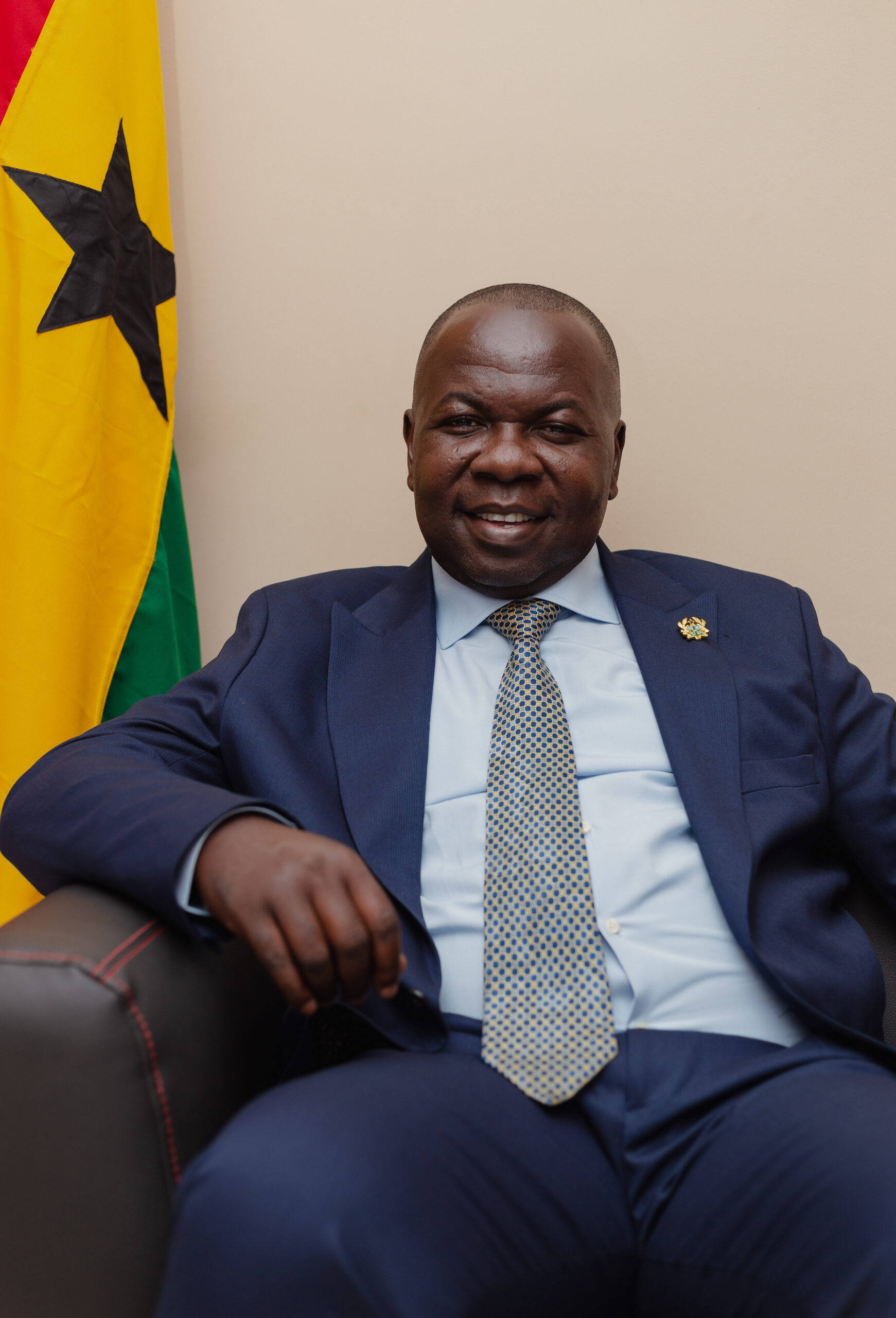
A Member of Parliament from the governing New Patriotic Party (NPP), Frank Asiedu Bekoe, has triggered widespread discussion after making a controversial statement about individuals he believes are encouraging President John Dramani Mahama to seek a third term in office. His remarks, delivered in a highly charged political context, have drawn both criticism and support and have led to broader reflections on political discourse and constitutional norms in Ghana.
Mr. Asiedu Bekoe, who represents the Suhum constituency, spoke during a parliamentary session where discussions naturally touched on political dynamics ahead of future elections. Although Ghana’s Constitution explicitly limits a president to two terms, speculation and commentary about whether prominent political figures might seek to extend their political influence beyond traditional limits have periodically surfaced in public discourse. It is within this backdrop that the Suhum legislator made his controversial remarks.
In strong language, he expressed intense disapproval of anyone he perceived to be advocating for a third term for Mr. Mahama. He described those promoting such ideas as misguided and, in a forceful appeal, said he prays they be afflicted with incurable malaria a statement that immediately drew public attention. Mr. Asiedu Bekoe framed his words as a “prayer” rather than a threat, but the severity of the sentiment resonated widely and acted as a catalyst for debate on the boundaries of political expression.
Critics from across the political and civic spectrum were quick to condemn the language used by the MP. Many argued that invoking illness or harm upon others regardless of political disagreements was inappropriate, unbecoming of a lawmaker, and harmful to the health of public debate. Civil society actors and legal experts emphasised that political disagreement should be expressed respectfully and within the bounds of democratic norms, rather than through statements that could be interpreted as ill-wishing.
Supporters of Mr. Asiedu Bekoe, however, defended his right to express strong opposition to what they consider unconstitutional rhetoric. They maintain that any suggestion that Ghana’s two-term presidential limit could be disregarded invites confusion and undermines constitutional safeguards that have been central to Ghana’s democratic stability. In their view, the Suhum MP’s comments reflect frustration with rhetoric that could be interpreted as challenging the established constitutional framework.
The controversy touches on broader national sensitivities about executive tenure, constitutionalism, and the role of elected representatives in shaping political narratives. Ghana’s 1992 Constitution clearly restricts a president to a maximum of two terms in office, a provision that is unambiguous and binding. President Mahama himself has in past remarks acknowledged this constitutional limit, and leaders within his party have repeatedly reiterated that discussions about a third term are speculative and not grounded in any official stance.
Despite these clarifications, rumours and conjecture occasionally surface in public fora, primarily on social media and in informal discussions, suggesting that some supporters may wish for continued political influence or leadership beyond prescribed limits. Such discourse often becomes a flashpoint for partisan debate, as opponents seize upon it to criticize rival parties and their supporters.
The MP’s remarks have also sparked reflection on the use of religious language in politics. Ghana is a deeply religious country in which faith and spirituality often intersect with public life. Politicians frequently invoke religious motifs to express moral convictions or aspirations for the nation. Nevertheless, there is growing consensus among commentators that while faith-based language can be powerful and meaningful, it should not be used to wish harm on others, regardless of their political views.
Legal analysts have weighed in, underscoring that Ghana’s democratic institutions must be protected from rhetoric that could incite division or encourage harmful sentiments. They argue that political leaders have a duty to model decorum and uphold civil discourse, particularly when addressing contentious issues. Statements that focus on negative outcomes for opponents risk eroding trust in democratic processes and exacerbating polarization.
Citizens and civic groups have also voiced concern that the incident highlights the need for greater emphasis on political education and responsible communication. For many observers, the episode is a reminder that democratic engagement should prioritise constructive debate over personal attacks or inflammatory language. They argue that robust disagreement over policies, leadership qualities, and election strategies is healthy in a democracy, but this must be balanced with respect for individual dignity and adherence to the rule of law.
The reaction to Mr. Asiedu Bekoe’s remark has prompted voices from within both major political parties to call for a tempering of rhetoric and a return to substantive discussions about national issues. Among these concerns is the need to focus public attention on pressing socioeconomic challenges, governance reforms, and the policies that will shape Ghana’s future.
As discussions continue, some analysts believe this incident could serve as a catalyst for broader reflection on political civility and communication standards among public officials. They argue that the quality of political discourse matters not only for electoral politics but also for social cohesion and national unity.
In the weeks ahead, public conversations are likely to expand beyond the specific language used by the MP to encompass deeper questions about political culture, constitutional respect, and the responsibilities of elected representatives. Many hope that this controversy will lead to more thoughtful engagement on how politicians and citizens alike can participate in national debates in ways that are respectful, constructive, and reflective of Ghana’s democratic values.