


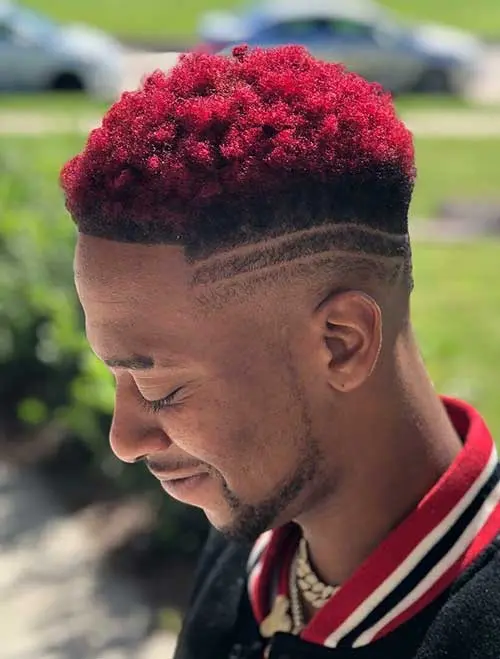
Hair dyeing has become a powerful statement of identity, confidence, and self-expression. From the men at Ghanaian barbershops who darken their hairlines to get that crisp, youthful finish, to the women who apply black dye to maintain a radiant look or cover premature greys, dyeing has grown into more than a beauty practice; it’s a social and cultural phenomenon. Yet, beneath its aesthetic appeal lies a scientific reality: dyeing alters the chemistry of your hair. The long-term effects depend on what’s used, how often it’s applied, and how your hair and scalp respond to those chemicals.
Hair dyes generally fall under three main categories: permanent, semi-permanent, and natural. Permanent dyes are the strongest and most popular for long-lasting color. They work by using chemicals such as ammonia and hydrogen peroxide to open up the hair’s cuticle and deposit pigment deep within the strand. This process can change your hair’s structure, leaving it drier and more porous over time. Semi-permanent dyes, on the other hand, only coat the outer layer of the hair, making them less damaging but also less durable, they usually fade after a few washes. Natural dyes, like henna or indigo, are plant-based and gentler on the hair. However, they come with limited color options and take longer to apply, which is why many people skip them despite their safety benefits.
For men in particular, hair dye has taken on a unique role in grooming culture. The trend of using black dye to “shape up” or darken receding hairlines has spread widely in Ghana’s barbershops. Some barbers use temporary sprays or semi-permanent dyes to give the illusion of fuller edges or sharper contours. While this can look clean and confident, the frequent application of these dyes, especially those with harsh chemical bases, can irritate the scalp and weaken the delicate hair at the front. Over time, this may cause thinning along the hairline or trigger itching, burns, and flaking. When dye is applied too close to the scalp, especially on sensitive skin, the repeated irritation can slow hair regrowth, giving the impression of permanent hair loss even if follicles are still alive.
The same applies to women who frequently use permanent dyes to achieve uniform dark tones. Many Ghanaian women, including older generations and even some younger ones in cultural or religious circles, use black dyes regularly as part of beauty routines or identity expressions. Among certain queer mothers, for instance, the consistent use of black dye is not just aesthetic, it symbolizes pride, leadership, and solidarity. Yet, even within these cultural expressions, the biological reality remains the same: the hair shaft can weaken, the scalp can become inflamed, and the long-term texture of the hair can change dramatically.

Scientifically, hair dye doesn’t stop hair from growing at the root, it’s not that powerful. Growth happens inside the follicle, beneath the scalp, where the dye doesn’t penetrate. What actually happens is that dyeing roughens the cuticle layer and reduces the hair’s ability to retain moisture. Once the strands lose their natural oils and elasticity, they become more prone to breakage. When hair breaks at the mid-length or close to the root, it looks like thinning or slowed growth even though the follicles are still active. This illusion of “non-growth” often leads people to blame dye for baldness, but in reality, it’s the damage to the shaft and scalp health that creates the problem.
Allergic reactions are another common side effect, especially from dyes containing paraphenylenediamine (PPD), a chemical widely used in darker hair colors. People allergic to PPD may experience redness, swelling, itching, or even blistering on the scalp or forehead. In more severe cases, this inflammation can lead to follicle scarring, which can stop hair growth in those specific areas permanently. Unfortunately, most people don’t do a patch test before applying dye, a safety measure that could prevent such reactions.
Beyond individual reactions, environmental conditions in Ghana can also influence how dyes affect the hair. The country’s heat and humidity increase the rate at which dye fades, forcing users to reapply frequently. The more often you re-dye, the more you expose your hair to chemical stress. Additionally, the widespread presence of counterfeit or low-quality dyes in local markets worsens the problem. Some of these unregulated products contain higher concentrations of ammonia or metallic salts that are not suitable for scalp use. They might give a strong initial color but leave the hair brittle, dry, and lifeless after just a few weeks.
Culturally, dyed hair continues to carry mixed meanings. For older generations, especially women in conservative settings, jet-black hair represents dignity and vitality. It’s a way to maintain youthfulness and respectability. Among younger people, however, dyeing is a fashion statement, blondes, reds, silvers, and even blues are now seen as expressions of creativity and confidence. But regardless of the reason, frequent exposure to strong dyes comes with similar consequences: the more chemical manipulation, the weaker the hair becomes.
Dermatologists explain that when the scalp is irritated repeatedly, its natural barrier weakens, leading to chronic dryness or eczema-like symptoms. This condition makes the hair follicles more sensitive and prone to shedding. Men who dye their beards or hairlines too often often notice this first, it starts with itching, then flaking, then visible thinning at the edges. In women, the signs show through hair that breaks easily when combed or washed. Over time, the natural shine fades, and even the best conditioners struggle to restore the original texture.

Still, not all dyeing experiences end badly. With the right care and intervals, hair can remain healthy despite occasional color treatments. The key lies in moderation and maintenance. Using quality products, moisturizing deeply after every dye session, and spacing out applications can help preserve hair strength. Natural alternatives like henna or coffee-based dyes can also give rich tones without heavy damage. And for those who dye for symbolic or cultural reasons, small adjustments, such as applying protective oils before dyeing or avoiding contact with the scalp, can significantly reduce harm.
The truth is, dyeing your hair won’t automatically make you bald or destroy your follicles. But when done carelessly or too frequently, it can compromise the very foundation of your hair’s health. It’s not about whether dyeing is good or bad, it’s about how you do it, what you use, and how often you let your hair recover. Hair is living fiber at its root but dead keratin on its surface; once damaged, it doesn’t heal, it only breaks. So if you must dye, do it smartly. Choose gentler formulas, protect your scalp, and remember that no color is worth sacrificing your natural strength. Beauty should enhance confidence, not cost you your crown.
Breast Cancer: The Myth vs the Facts