

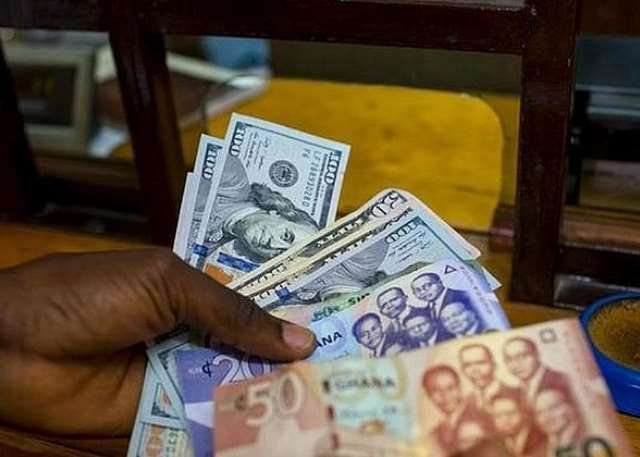
Ghana’s economic recovery could face renewed currency pressures in 2027, with international research firm Fitch Solutions projecting that the Ghanaian cedi will average GH¢12.40 against the US dollar next year. Ownership & Funding
The forecast suggests that the relative stability recorded by the local currency in recent months may come under pressure as changing global commodity prices, foreign exchange reserve accumulation and domestic economic conditions influence the supply and demand for dollars.
Fitch Solutions Associate Director Mike Kruiniger presented the projection at PwC Ghana’s 2027 Post Budget Forum in Accra on Monday, November 16, 2026.
His assessment highlighted concerns about the potential reduction in foreign currency inflows and the consequences this could have for the cedi and domestic prices.
According to reports, Kruiniger said the expected moderation in international gold prices, combined with the government’s efforts to rebuild foreign exchange reserves, could reduce the amount of foreign currency available in Ghana’s domestic market.

He explained that these developments could create additional pressure on the exchange rate, potentially reversing some of the recent gains made by the local currency.
The projection comes at a time when Ghana is working to consolidate its economic recovery following years of currency depreciation, high inflation and financial difficulties.
Falling gold prices could affect foreign exchange supply
One of the major factors informing Fitch Solutions’ outlook is the possibility of softer international gold prices in 2027.
Gold remains one of Ghana’s most important export commodities and a significant source of foreign exchange. Higher international prices can increase export earnings and strengthen the country’s ability to meet demand for foreign currency. Corrections Policy
However, if global gold prices moderate, the amount of foreign exchange generated from gold exports could face pressure, depending on production volumes and other market conditions.
Kruiniger noted that Ghana had benefited from favourable gold market conditions, but the expected change in the international commodity environment could reduce some of that support.
The potential impact is particularly important because foreign exchange availability plays a major role in determining the cedi’s performance against major international currencies.
Reserve accumulation could influence dollar availability
Another factor identified by Fitch Solutions is the government’s commitment to rebuilding Ghana’s foreign exchange reserves through the Ghana Accelerated National Reserve Accumulation Programme (GANRAP).

The programme is intended to strengthen the country’s external financial position by increasing the level of international reserves available to support economic stability and meet external obligations. Editorial Ethics & Independence
While stronger reserves can improve investor confidence and provide a buffer against external shocks, the process of accumulating foreign currency may also affect the amount available in the domestic market in the short term.
Kruiniger explained that the combination of lower expected gold prices and the government’s reserve accumulation efforts could result in reduced foreign currency flows into the market.
He warned that this could create additional pressure on the cedi in 2027.
The situation presents policymakers with the challenge of balancing the need to strengthen national reserves with the importance of maintaining adequate foreign exchange liquidity for businesses and importers.
Weaker cedi could increase inflationary pressures
Fitch Solutions also warned that a weaker cedi could contribute to renewed inflationary pressures, particularly through the cost of imported goods and raw materials.
Ghana depends on international markets for several essential products, including fuel, machinery, pharmaceutical supplies, industrial inputs and food commodities.
When the cedi loses value against the dollar, importers generally require more local currency to purchase the same quantity of goods, unless international prices or other costs decline.
These additional expenses can eventually be transferred to consumers through higher prices, affecting household budgets and business operating costs. Editorial Standards
At the forum, Kruiniger cautioned that the expected depreciation could bring back important price pressures in the coming year.
He also identified movements in the US dollar as a significant external risk. A stronger dollar could place additional pressure on international gold prices, potentially affecting Ghana’s export earnings and weakening the cedi further.
Fitch identifies wider economic risks for 2027
The currency projection forms part of a broader assessment of Ghana’s economic outlook.
In a separate report on the forum, 3News highlighted Fitch Solutions’ expectations of higher capital expenditure and a possible return of inflation above 10 per cent during the second half of 2027.
The research firm also expects capital spending to rise to approximately 5 per cent of GDP, which would represent the highest level in about 16 years.
These projections point to a potentially challenging economic environment in which increased public investment, global commodity movements and domestic price developments could influence monetary and fiscal policy. Newscard
Food imports are another concern. Disruptions to international agricultural production, including those associated with El Niño weather conditions, could increase the prices of imported staples such as wheat and rice.
For Ghana, higher international food prices combined with currency depreciation could make imported commodities more expensive and place additional pressure on inflation.
What the forecast means for households and businesses
Fitch Solutions’ projection does not mean the cedi will necessarily trade at GH¢12.40 against the dollar on every day of 2027. It is an expected annual average, based on the research firm’s assessment of economic and market conditions.

Actual exchange rates will depend on developments in gold and other export markets, foreign exchange supply, monetary policy, investor confidence and the government’s ability to maintain fiscal discipline.
For businesses that depend heavily on imported goods, the forecast highlights the importance of preparing for possible exchange-rate fluctuations when planning purchases, pricing and operating budgets. Privacy Policy & Terms
Households could also feel the effects if currency depreciation contributes to higher prices for imported food, fuel and other essential products.
Ultimately, the forecast presents an important warning for Ghana’s economic managers. While rebuilding foreign exchange reserves remains necessary for long term stability, maintaining adequate dollar liquidity and controlling inflation will also be essential.
The performance of the cedi in 2027 will therefore depend on how effectively policymakers manage these competing priorities while protecting the economic gains achieved during the recovery.