

Finance Minister Dr Cassiel Ato Forson has called for a major transformation of Ghana’s economy, arguing that the country must move away from temporary employment programmes and embrace a production-driven model capable of creating sustainable jobs for its growing youth population.
He said initiatives such as the National Builders Corps (NABCO) and the Youth Employment Agency (YEA) had provided temporary relief and valuable work experience for beneficiaries but could not offer a lasting solution to the country’s unemployment challenges. Corrections Policy
According to the Finance Minister, Ghana needs an economic structure that generates dependable livelihoods through increased production, industrial development and private-sector expansion rather than relying heavily on short-term employment interventions.
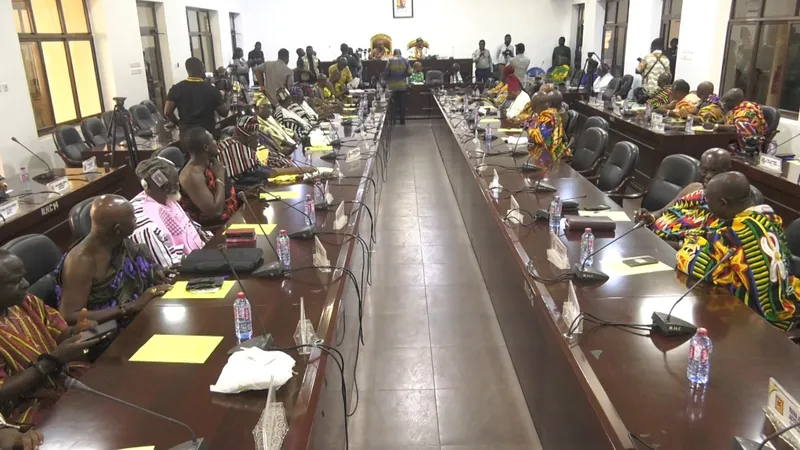
Dr Forson made the remarks when he addressed the National House of Chiefs on Monday, November 9, 2026, as part of engagements ahead of the presentation of the 2027 national budget scheduled for Thursday, November 12.
During the meeting, he outlined government’s proposed four year New Economy programme, which is expected to serve as the foundation for transforming Ghana’s economic structure and creating more sustainable employment opportunities.
The Finance Minister explained that the country’s population had increased by approximately 16 million since 2001, creating significant pressure on the economy to provide employment for an expanding workforce.

He observed that although Ghana had made considerable progress in expanding access to education and developing human capital, the availability of productive employment opportunities had not grown at the same pace.
This situation, he suggested, had left many educated young people struggling to secure dependable jobs after completing their education.
“Our population has grown faster than the opportunities available to many of our young people, unfortunately. Their future cannot depend on moving from one temporary opportunity to the next,” Dr Forson stressed.
His comments highlight a broader concern about the relationship between education, economic growth and employment creation in Ghana.
While successive governments have introduced initiatives to provide temporary work opportunities, the Finance Minister believes the country must now focus on building industries that can continuously absorb skilled and unskilled workers.
Under the proposed New Economy agenda, government intends to strengthen domestic production, encourage local manufacturing and increase the value derived from Ghana’s natural resources.
Dr Forson argued that the country could no longer depend on exporting raw materials while importing finished products that could potentially be manufactured locally.
He believes expanding domestic processing and industrial capacity would help retain more economic value within Ghana while creating additional employment opportunities.
The strategy is also expected to encourage private-sector investment, with businesses playing a central role in expanding production and generating jobs.
Government, he indicated, would focus on providing the necessary infrastructure, investment support and economic environment to enable local enterprises to grow.
The Finance Minister’s latest remarks are consistent with earlier explanations of the New Economy initiative.
In September 2026, he told members of the Association of Ghana Industries that Ghana needed to produce more of the goods it consumes instead of depending excessively on imports.
Priority areas identified in previous engagements include commercial agriculture, mining value addition, energy and transport infrastructure.
These sectors are considered important because of their potential to support industrial activity, strengthen local supply chains and create employment across different regions.
The programme also seeks to address longstanding structural weaknesses in the economy by encouraging businesses to move beyond trading and importation towards manufacturing and value addition.
However, Dr Forson cautioned that the consequences of failing to address youth unemployment could extend beyond economic difficulties. Editorial Ethics & Independence
He warned that the growing employment gap could develop into serious social challenges if urgent measures were not introduced.
“If we fail to act, today’s employment challenge could grow into explosive social crises. We must act now to turn our youth’s ability into production and turn hope into opportunity for our young people,” he cautioned.
He also assured traditional authorities that government remained committed to fiscal discipline and prudent management of public resources, emphasising the importance of ensuring value for money in public expenditure.
Dr Forson appealed to the National House of Chiefs to support the proposed economic transformation agenda, noting that traditional authorities could help mobilise communities and encourage participation in national development initiatives.
The President of the National House of Chiefs, Ogyeahoho Yaw Gyebi II, welcomed government’s efforts to stabilise the economy but urged the Finance Minister to prioritise sustainable employment opportunities for young people in the upcoming budget.

He expressed hope that the 2027 Budget would contain practical measures capable of expanding economic opportunities and addressing unemployment.
The engagement comes at an important time as government prepares to outline its economic priorities for the coming year.
The proposed New Economy programme is expected to feature prominently in the 2027 Budget, providing further details about how the administration intends to translate its production focused vision into practical interventions.
For Ghanaian businesses, workers and young graduates, the success of the initiative will ultimately depend on implementation, investment and the ability to create jobs that offer long-term security. Editorial Standards
Moving from temporary employment programmes to a production driven economy represents an ambitious shift in economic policy.
Its impact will be measured not simply by the number of initiatives announced but by the industries established, businesses expanded and sustainable employment opportunities created for ordinary Ghanaians.