

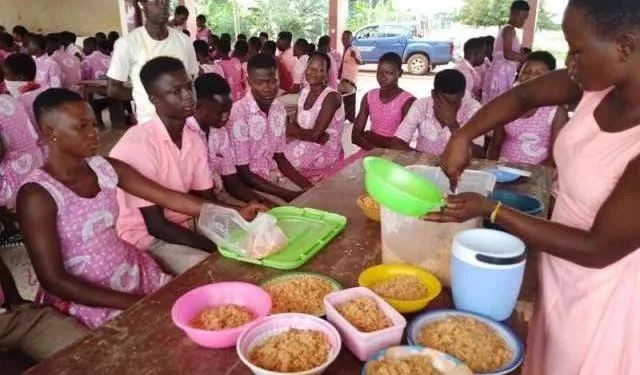
Food suppliers operating under Ghana’s Free Senior High School (Free SHS) programme have announced plans to embark on a five-day peaceful demonstration in Accra to demand payment for food items they say were delivered to senior high schools in 2024. Editorial Standards
The Controlled Food Suppliers Association (CFSA) says its members will picket the premises of the Ghana Commodity Exchange (GCX) from Monday, November 16, to Friday, November 20, 2026, in protest against what it describes as prolonged delays in settling outstanding payments.
The planned action follows several unsuccessful attempts by the association to secure payment for supplies made under the programme.
In a formal notice to the management of the Ghana Commodity Exchange, the CFSA said its members had exhausted previous engagement efforts and were left with little option but to take their concerns to the public.
According to the association, it issued a two-week ultimatum to the GCX on October 7, 2026, requesting that the outstanding debts be settled.
The deadline expired on October 21 without the payments being made, prompting the decision to organise the demonstration.
The association’s Administrative Secretary, Cornelius Korku Logo, said in the notice that its leadership had consistently pursued the matter through formal channels and acted in good faith in seeking payment for its members.

The CFSA maintains that the continued delay, despite repeated follow-ups and the earlier notice, has created serious difficulties for suppliers who fulfilled their obligations under the Free SHS food supply arrangements.
The association has previously estimated the outstanding payments at approximately GH¢250 million. It says the debts relate to non-perishable food items supplied during the 2024/2025 academic year, including grains, beans, gari and cooking oil.
These supplies were distributed through arrangements involving the National Food Buffer Stock Company (NAFCO) and the Ghana Commodity Exchange.
For many suppliers, the payment dispute goes beyond delayed business income. Some reportedly relied on commercial bank loans, credit facilities and arrangements with farmers to purchase food items and fulfil supply contracts.
They expected reimbursement within the agreed payment period, allowing them to repay lenders and settle their obligations to producers.
The prolonged delay has therefore placed pressure on their businesses, particularly those operating with borrowed capital. Corrections Policy
Suppliers say some have struggled to meet loan repayments and other financial commitments while waiting for payments for goods already delivered.
The situation also has implications for farmers and other businesses within the food supply chain.
Where suppliers cannot pay for produce purchased on credit, the effects can extend to farmers, aggregators, transport operators and traders who depend on timely transactions to maintain their operations.
The CFSA has argued that resolving the arrears is necessary not only to support its members but also to restore confidence in the arrangements used to procure and distribute food under the Free SHS programme.

The Ghana Commodity Exchange is at the centre of the planned demonstration because the association is directing its demand to the institution.
However, the broader supply arrangements also involve other public institutions, including NAFCO and the ministries responsible for education and finance.
This makes clarity over the respective responsibilities of the institutions important.
Suppliers need to know which agency is responsible for verifying deliveries, reconciling invoices, authorising payments and providing a definite settlement schedule.
A transparent explanation of the payment process could help address uncertainty and prevent similar disputes from affecting future supply contracts.
The Free SHS programme remains an important government intervention aimed at expanding access to secondary education by removing approved tuition and related costs for eligible students in public senior high schools.
Reliable food procurement is a critical part of its implementation because students depend on regular meals while attending school.
Although the suppliers’ planned demonstration concerns outstanding payments rather than an announced disruption of food deliveries, prolonged disagreements between suppliers and public institutions could create challenges for the programme’s supply chain if left unresolved.
For that reason, timely engagement between the association and the relevant authorities will be important in preventing the dispute from escalating. Editorial Ethics & Independence
A clear payment timetable, supported by verified records of deliveries and outstanding invoices, could provide a practical basis for resolving the disagreement.
The association has indicated that the five-day picket is intended to increase pressure on the authorities to address the arrears.
It is not yet clear whether the parties will reach an agreement before November 16 or whether the planned demonstration will proceed as scheduled.
The immediate concern for affected suppliers is the recovery of payments for food they say has already been delivered.
For government institutions, the challenge will be to establish the outstanding obligations, communicate clearly with the affected businesses and ensure that procurement arrangements remain credible.
As the proposed protest approaches, attention will turn to whether the Ghana Commodity Exchange and other relevant institutions will engage the association and provide a concrete response to its demands.
The dispute highlights the importance of efficient payment systems in public procurement.
Government programmes depend not only on the delivery of goods and services but also on the ability of public institutions to meet their contractual obligations within agreed timelines.
For the suppliers, the five-day demonstration is intended to make that demand difficult to ignore.