

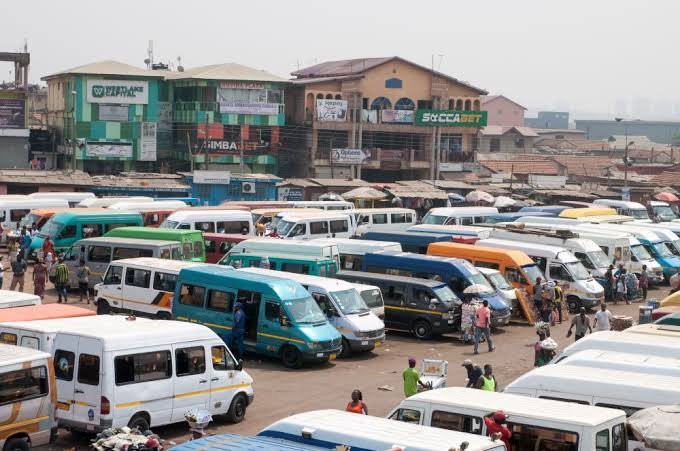
Five transport unions in Ghana have announced a nationwide suspension of commercial vehicle operations on Wednesday, November 4, 2026, over what they describe as the government’s failure to enforce regulations prohibiting trading at designated bus stops and pedestrian walkways. Editorial Standards
The planned shutdown is expected to disrupt commercial road transport services across the country, affecting thousands of commuters who depend on trotros, commercial buses and other privately operated vehicles for their daily journeys.
In a joint statement dated November 1, 2026, the unions directed commercial drivers to park their vehicles on Wednesday until further notice, insisting that their concerns have not received the necessary attention from government authorities.
The announcement was jointly endorsed by the Ghana Private Road Transport Union (GPRTU) of the Trades Union Congress (TUC), Commercial Transport Operators of Ghana, True Drivers Union, Ghana Committed Drivers Association and Concerned Drivers Association of Ghana.
According to a report, the unions say the decision follows what they consider persistent government inaction over the occupation of designated bus stops and pedestrian walkways by traders.
Transport Unions Challenge Government Over Bus Stop Trading
The unions have expressed frustration over the continued use of designated passenger loading and unloading areas for commercial trading activities.
They argue that bus stops are essential for the safe and orderly movement of passengers and commercial vehicles.
However, the presence of traders and hawkers at these locations has made it increasingly difficult for drivers to pick up and drop off passengers at approved spaces.
The groups maintain that drivers should not be expected to comply with traffic regulations when the designated areas provided for their operations are occupied by traders.
They also questioned why authorities continue to penalise commercial drivers through the TRAFFITECH-GH automated traffic enforcement system without first addressing the reported obstructions. Editorial Ethics & Independence

The unions contend that the situation creates an unfair environment in which drivers face fines for traffic violations while the activities preventing them from using approved bus stops remain largely unaddressed.
They are therefore demanding stronger enforcement of the relevant road traffic regulations and the removal of traders from designated transport areas.
TRAFFITECH-GH Enforcement Dispute Escalates
The planned shutdown comes amid growing disagreements between commercial transport operators and authorities over the implementation of the TRAFFITECH-GH digital traffic enforcement system.
The system, developed by the Ghana Police Service, uses technology such as cameras and sensors to detect selected road traffic violations, including speeding and running red lights.
It is intended to improve road discipline, strengthen enforcement and reduce road crashes by identifying motorists who violate traffic regulations.
However, transport operators have raised concerns about the fairness of its implementation, arguing that authorities must also address road conditions and obstructions that affect commercial drivers.
A source reported that commercial transport operators had threatened to withdraw their services over the rollout of the system, insisting that the government and police had not done enough to clear traders and hawkers from designated bus stops and pedestrian walkways.
The National Public Relations Officer of the Concerned Drivers Association, David Agboado, argued that traffic enforcement must be implemented comprehensively rather than focusing only on drivers. Corrections Policy

The unions’ latest announcement indicates that the disagreement has escalated into a planned nationwide industrial action.
Earlier Warning to Government
The November 4 shutdown follows previous warnings from transport operators calling on government institutions to address the occupation of bus stops.
In an earlier report published indicated that the GPRTU and Commercial Transport Operators of Ghana had given the Ministries of Trade, Interior, and Local Government one week to ensure that traders were removed from designated bus stops and pedestrian walkways.

GPRTU Deputy Public Relations Officer Samuel Amoah identified transport hubs including Kaneshie, Accra CMB, Circle, Madina, Kasoa, Kejetia and Takoradi Market Circle as locations where trading activities had allegedly taken over spaces intended for public transport operations and pedestrian movement.
The operators argued that these activities were creating difficulties for drivers and exposing passengers and pedestrians to safety risks.
Chairman of the Concerned Drivers Association, Paa George Williams, also questioned the fairness of imposing penalties on drivers who were unable to access approved bus stops.
The latest announcement suggests that the unions believe their earlier appeals have not produced the desired results.
Commuters Warned to Prepare for Disruption
The planned withdrawal of commercial vehicles could significantly affect transportation across Ghana, particularly in major urban centres where many residents rely on trotros and commercial buses to get to work, school, markets and other destinations.
Workers, students, traders and business owners may experience delays or difficulties travelling if the unions fully implement the shutdown.
The transport groups have apologised to the public for the inconvenience, explaining that the decision was taken after what they described as unsuccessful attempts to resolve their concerns through other channels.
Commuters have consequently been advised to take note of the announcement and make alternative transportation arrangements ahead of Wednesday. Privacy Policy & Terms
Employers and institutions may also need to consider the potential effect of the disruption on staff and students who depend on commercial transport.
Government Faces Pressure to Resolve the Dispute
The planned shutdown presents another challenge for government authorities as they seek to strengthen traffic enforcement while maintaining the smooth operation of public transport services.
Resolving the disagreement may require coordinated action involving the relevant ministries, the Ghana Police Service, metropolitan and municipal assemblies, transport unions and trader representatives.
Authorities will need to address the occupation of designated bus stops while ensuring that enforcement measures are applied fairly to all road users.
The dispute also raises broader questions about urban planning, the management of roadside trading and the availability of properly designated spaces for commercial activities.
With November 4 approaching, commuters will be watching closely for any engagement between the unions and government that could prevent the disruption.
For now, the five transport unions maintain that commercial drivers should keep their vehicles off the road until their concerns receive the necessary attention.