

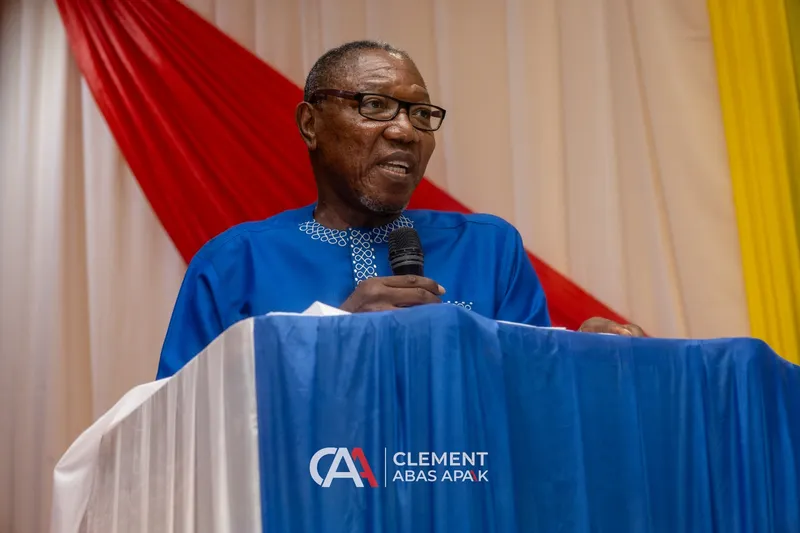
Deputy Education Minister Dr Clement Abas Apaak has warned education directors against shielding teachers and headteachers accused of sexual abuse, insisting that officials who conceal such cases will be held accountable for failing to protect learners. Editorial Ethics & Independence
His warning follows allegations of sexual abuse involving the headteacher of Obuasi Senior High Technical School (SHTS), a case that has renewed concerns about how complaints of abuse are handled within Ghana’s education system.
Dr Apaak stressed that the safety and welfare of students must take priority over the reputation of schools or the status of staff members facing allegations.
He delivered the warning at the 33rd Conference of Directors of Education held at the GNAT Hall in Bolgatanga in the Upper East Region.
The conference brought together education administrators to discuss leadership, teaching quality and the implementation of policies across the country.
According to reports, Dr Apaak directed education directors to ensure that all allegations of sexual abuse involving learners are reported promptly through the appropriate channels. He also said accused persons must be removed from contact with learners while investigations are ongoing.
The Deputy Minister cautioned directors against treating reports from students or parents as issues to be handled quietly to avoid reputational damage.
He emphasised that attempts to protect an institution’s image by suppressing complaints could expose other children to potential harm.
Dr Apaak said directors must not allow personal relationships, professional connections, seniority or community influence to affect their response to allegations.
He warned that officials who fail to carry out their responsibilities could themselves face accountability.

His remarks underline the important role education directors play in ensuring that child-protection policies are enforced beyond the national level.
While government policies may establish standards for safeguarding learners, their effectiveness depends on how consistently school leaders and district officials apply them.
The case involving Obuasi Senior High Technical School has brought the issue into sharper focus. Dr Apaak referred to the allegations during his address but declined to discuss the specific details, noting that the matter was, or ought to be, under investigation.
The allegations should not be treated as proof of guilt. Any investigation must establish the facts, protect the rights of those involved and follow the applicable procedures. Corrections Policy
At the same time, safeguarding measures are necessary to reduce the risk of further harm while a complaint is being investigated.
Removing an accused staff member from contact with learners during an investigation is a protective measure and should not automatically be interpreted as a final determination of guilt.
Authorities must ensure that such steps are implemented appropriately while investigations proceed without interference.
The Deputy Minister’s directive also highlights the importance of making reporting channels accessible to learners and their families.

Students may be reluctant to report abuse if they fear retaliation, disbelief, stigma or pressure from school authorities. Parents may also hesitate if they believe complaints will be ignored or handled internally without proper scrutiny.
Education directorates and school administrators therefore need clear procedures for receiving complaints, documenting reports, referring cases to the appropriate authorities and keeping relevant information confidential.
Learners should know where to seek help and should not be required to confront an accused person directly to have their concerns taken seriously.
Effective safeguarding also requires coordination among education authorities, law-enforcement agencies, child-protection services and counselling professionals. Where allegations indicate possible criminal conduct, school level disciplinary procedures should not replace referral to the relevant authorities.
Beyond reporting abuse, education directors have a broader responsibility to ensure that schools provide safe environments for learning.
This includes supervising school management, reinforcing professional codes of conduct, supporting teachers to understand their responsibilities and ensuring that complaints are addressed consistently.
The conference was held under the theme, “From Policy to Classroom: District Leadership for Quality Learning Outcomes and 21st Century Skills for National Development.”
Dr Apaak urged directors to translate government policies into practical action at district, circuit and school levels.
His message was that educational leadership must be measured not only by academic performance and administrative efficiency but also by the protection and well-being of learners.
Schools cannot deliver quality education if students and parents do not have confidence that concerns about abuse will be taken seriously.
The latest warning places renewed pressure on education authorities to demonstrate that safeguarding requirements are being enforced.
Transparent reporting, impartial investigations and appropriate protective measures will be essential to building trust and preventing complaints from being concealed. Editorial Standards
Ultimately, protecting learners requires more than public assurances. It demands consistent action from every level of the education system, from classroom teachers and school heads to district directors and national officials.
Dr Apaak’s directive makes clear that education authorities must respond to allegations responsibly and that protecting children cannot be sacrificed to preserve the reputation of individuals or institutions.