

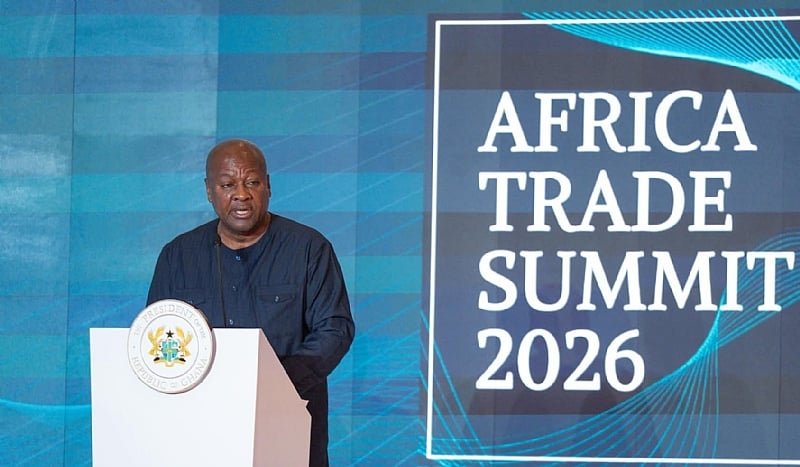
President John Dramani Mahama has urged the United Kingdom to support efforts to make development financing more affordable and accessible to African countries, arguing that high borrowing costs and declining foreign aid are limiting the continent’s ability to fund its development priorities. Editorial Standards
He made the call during the Financial Times Africa Summit in London on October 22, 2026, where African leaders, investors, policymakers and international financiers gathered to discuss economic growth and investment opportunities amid changes in the global financial landscape. The summit’s theme was “Mobilising Growth in a New Global Order.”

President Mahama’s appeal forms part of a broader push for reforms to the international financial system, which he says places African economies at a disadvantage compared with wealthier countries.
He has argued that African governments often face disproportionately high interest rates when borrowing, leaving them with fewer resources to invest in healthcare, education, infrastructure and job creation.
The President’s position is that international partners, including the UK, should help establish a financing environment that supports long-term development rather than deepening debt pressures.
This would require more equitable access to capital, stronger investment partnerships and financing arrangements that reflect the actual development needs and economic potential of African countries.
At the summit, Mahama criticised the disparity between borrowing costs faced by African countries and those available to advanced economies.
According to the Presidency’s account of his remarks, he said some African governments borrow at interest rates as much as eight times those paid by Western countries.
He argued that this imbalance is particularly difficult for countries that need to finance climate adaptation and other essential development programmes despite contributing relatively little to global greenhouse gas emissions.
For many African governments, expensive borrowing can create a difficult cycle: countries take on debt to build infrastructure and strengthen public services, but rising debt-servicing costs subsequently reduce the money available for those same priorities. Editorial Ethics & Independence
Mahama’s call for affordable financing therefore centres on ensuring that access to capital supports economic transformation without creating unsustainable financial obligations.
The President also connected the financing debate to declining official development assistance. He said Ghana had lost approximately US$154 million in annual assistance following the withdrawal of funding from the United States Agency for International Development (USAID), with about US$74 million previously supporting healthcare interventions.
The reductions, he argued, underline the risks of relying heavily on external donors to fund essential services. When financing decisions are made abroad, countries receiving support can find themselves exposed to changes in donor governments’ policies and spending priorities.
Mahama has therefore advocated a shift towards stronger domestic financing and partnerships in which African countries have greater control over their development agendas.
His Accra Reset initiative, which began as a response to declining health assistance, has developed into a wider framework for strengthening economic resilience and giving countries in the Global South greater ownership of development decisions.
The President has stressed that international cooperation remains important, but external support should align with the priorities of the countries receiving it. Corrections Policy
He has argued that governments cannot fully own development outcomes if they have limited influence over the decisions and financing arrangements that shape those outcomes.
Beyond reforming access to capital, Mahama believes Africa must strengthen its ability to generate wealth from its natural resources. He has called on African countries to move away from exporting raw materials while importing finished products, urging greater investment in local processing, manufacturing and industrial development.
He cited opportunities in Ghana’s gold, cocoa and bauxite industries, where expanding domestic value addition could create jobs, build industrial capacity and retain a greater share of export earnings within the country.
Ghana has outlined ambitions to increase local gold refining, process more cocoa domestically and attract investment in an alumina refinery to strengthen the bauxite-aluminium value chain.
Such initiatives, if successfully implemented, could help expand the country’s productive base and create new opportunities for private investors.
The President’s message to international partners is that fairer financing and stronger African industries should be pursued together.
Affordable capital can help governments and businesses invest in factories, infrastructure, energy systems and other projects that generate employment and increase productivity.
For the UK, the appeal presents an opportunity to deepen its economic relationship with African countries through trade, investment and development partnerships.
However, translating the call into meaningful change would require practical measures, including improved access to long-term capital, investment that supports local industries and cooperation on the structural barriers that raise borrowing costs.
Mahama’s remarks come as African governments face competing demands to service public debt, finance development and create opportunities for rapidly growing populations. Newscard

His argument is that the continent needs more than traditional aid: it needs a fairer financial system and partnerships that support sustainable economic growth.
Ultimately, the President wants Africa to be treated as a strategic economic partner rather than a permanent recipient of assistance. He has maintained that stronger African economies would benefit not only the continent but also international investors and trading partners.
His appeal to the UK forms part of that wider agenda: securing more affordable financing, strengthening domestic production and ensuring African countries have a greater role in determining their economic future.