

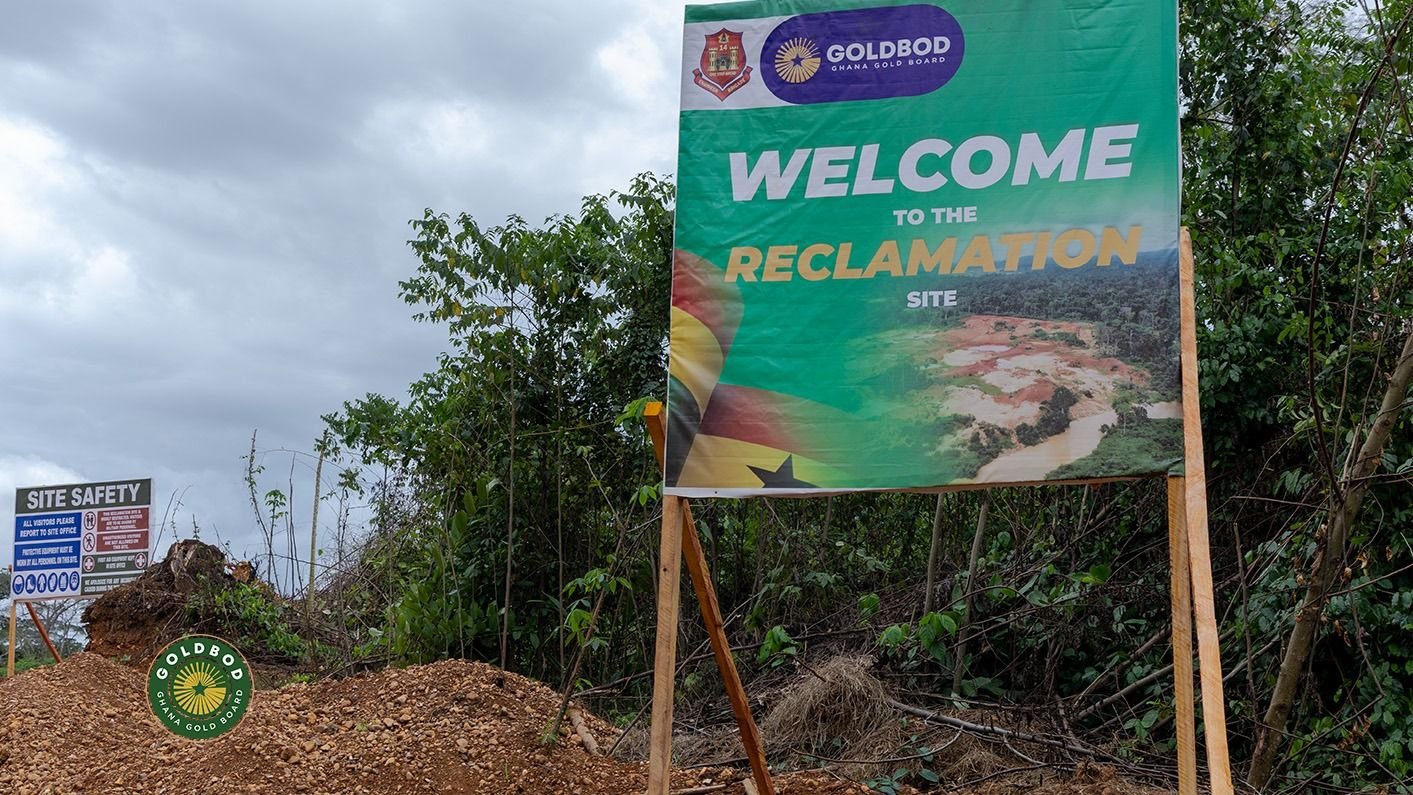
The Ghana Gold Board (GoldBod) has invested GH¢35 million in a land reclamation project aimed at restoring areas of the Tano Nimiri Forest Reserve in the Western North Region that have been severely damaged by illegal mining. Editorial Standards
The initiative seeks to rehabilitate degraded land, improve environmental conditions and prepare the affected areas for reforestation.
It forms part of efforts to address the ecological consequences of galamsey while promoting more responsible management of Ghana’s mineral resources.
According to a report, the project is focused on reclaiming 60 hectares of degraded land in Compartment 161 of the reserve.
The Ghana Armed Forces Engineer Regiment is leading the major engineering works in collaboration with GoldBod, while the Forestry Commission is expected to oversee the subsequent reforestation phase.
The project comes amid growing concerns about the damage illegal mining continues to cause to forests, water bodies and agricultural lands across the country.
It also highlights the need for coordinated action to restore areas where environmental destruction has made natural recovery difficult.
Illegal mining leaves lasting damage
The Tano Nimiri Forest Reserve has experienced significant environmental degradation following illegal mining activities between 2021 and 2024.
Project information indicates that approximately 192.4 hectares of woodland were destroyed during the period, leaving behind deep excavations, unstable terrain and damaged vegetation.
Samuel Danso, Sustainability Manager at Samatex Company Limited, explained that a major invasion by illegal miners in 2022 severely affected the area’s biodiversity and timber concessions previously managed by the company.
The consequences extend beyond the loss of trees. Mining pits can create dangerous conditions for people and wildlife, while disturbed soil may be vulnerable to erosion.
Excavations and poorly managed runoff can also carry sediment into nearby rivers, potentially affecting water quality and aquatic habitats. Editorial Ethics & Independence
Such damage can make it difficult for forests to regenerate naturally. Where the soil structure has been substantially altered and vegetation removed, simply planting trees may not be enough to restore the landscape.
The Tano Nimiri project therefore combines engineering interventions with plans for ecological rehabilitation, recognising that the recovery of a damaged forest requires attention to both the physical condition of the land and the long-term health of its ecosystem.
Military engineers undertake reclamation works
The Ghana Armed Forces Engineer Regiment is carrying out the heavy earthmoving and civil engineering component of the project under the operational command of Major Shem Adolinama.
The work includes filling dangerous mining pits, reshaping the land, stabilising disturbed soil and constructing drainage channels to manage surface water.
Engineers are also blending wet mud with dry soil to improve ground conditions and prepare the site for future vegetation growth.
According to project information, the engineering team identified 10 major pits during its assessment, alongside numerous smaller excavations containing large volumes of water. Corrections Policy
Backfilling these pits is an important step towards making the affected land safer and more suitable for restoration.
Levelling the terrain can also help reduce erosion, while drainage channels are intended to control water movement and limit the amount of sediment entering the Tano River.
The engineering phase is nearing completion, with the site being graded and prepared for the next stage. The reclaimed area is expected to be handed over to the Forestry Commission in the coming weeks.
The military’s involvement demonstrates how engineering expertise can support environmental recovery when mining activities have significantly altered the natural landscape.
Forestry Commission to lead reforestation
Once the engineering works are completed, the Forestry Commission is expected to lead efforts to restore vegetation and support the recovery of the forest ecosystem.

The next phase will involve planting trees and encouraging the regeneration of indigenous plant species.
Restoring native vegetation is important because forests provide habitats for wildlife, help regulate local water systems and contribute to soil stability.
However, successful reforestation depends on more than the number of trees planted.
The survival of seedlings, the suitability of species selected for the site and the protection of young vegetation against further disturbance will all influence the outcome.
Long-term monitoring will therefore be essential. Assessing tree survival, vegetation growth, soil stability and water quality can help authorities determine whether the reclaimed land is recovering as intended. Newscard
The Forestry Commission’s role will be particularly important in ensuring that the project moves beyond repairing visible mining damage to rebuilding the ecological functions of the reserve.
GH¢35 million investment supports environmental restoration
GoldBod’s investment represents a significant commitment to addressing the environmental consequences of illegal mining.
The reclamation initiative forms part of a broader effort to demonstrate that mineral development and environmental protection must be pursued together.
GoldBod’s national land reclamation programme was established through cooperation with the Ghana Armed Forces and the Forestry Commission.
An earlier announcement by the Forestry Commission in June 2026 put the cost of the Tano Nimiri project at approximately GH¢35 million, covering reclamation and restoration activities.
The initiative also creates an opportunity to develop practical experience that could inform future rehabilitation projects in other degraded areas.
Nevertheless, the impact of the investment will depend on effective implementation, transparent oversight and continued protection of the reclaimed land.
Preventing renewed illegal mining will be crucial if the restored area is to retain its ecological value.
A broader response to Ghana’s galamsey problem
The Tano Nimiri project highlights an important aspect of Ghana’s fight against illegal mining: enforcement must be accompanied by measures to repair the damage already done.

Stopping unauthorised mining can prevent further destruction, but restoring damaged forests requires funding, technical expertise and sustained cooperation among public institutions. It also requires measures to ensure that reclaimed areas are not invaded again. Privacy Policy & Terms
GoldBod’s collaboration with the military engineers and Forestry Commission provides a coordinated approach to these challenges, combining land rehabilitation with plans for reforestation.
Ultimately, the success of the GH¢35 million initiative should be measured by the condition of the forest in the years ahead.
If the land stabilises, native vegetation returns and the area remains protected, the project could become a useful example of how Ghana can address environmental damage while strengthening responsible natural resource management.