

Ghana has called for a new approach to international mining cooperation, urging foreign partners to prioritise local mineral processing, technology transfer and industrial development rather than focusing mainly on extracting and exporting raw materials. Editorial Standards
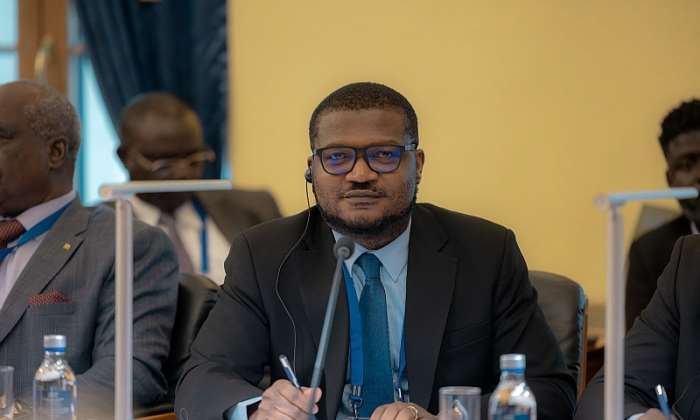
The position was presented by Minerals Commission Chief Executive Officer Isaac Tandoh on behalf of the Government of Ghana at the ministerial roundtable of the Second Russian-African Raw Materials Dialogue in Saint Petersburg, Russia, on October 14, 2026.
According to a report, Tandoh stressed that future mining agreements must be built on mutual respect, shared benefits and the recognition of Ghana’s sovereignty over its natural resources. He argued that international partnerships should leave the country with stronger technical expertise, industrial capacity and the ability to process more of its mineral wealth locally.
His remarks reflect Ghana’s broader ambition to increase the economic benefits it derives from its natural resources by moving beyond the export of unprocessed commodities.
Ghana calls for value addition in mineral development
Ghana is one of Africa’s leading gold producers, but the country continues to face the challenge of capturing more value from its mineral resources before they enter international markets.
During the dialogue, Tandoh highlighted the imbalance between Africa’s mineral wealth and its limited domestic processing capacity. He noted that eight of the world’s 20 leading gold-producing countries are African, yet only about two per cent of the continent’s natural resources are processed locally.
The figures underscore the need for African countries to strengthen their mineral processing industries and participate more actively in the higher-value stages of global supply chains.
For Ghana, expanding local processing could create opportunities for industrial growth, employment and skills development. Rather than exporting minerals primarily in their raw or minimally processed form, the country could retain a greater share of the economic value generated through refining, manufacturing and related industrial activities.
However, achieving this objective will require substantial investment in infrastructure, reliable energy supplies, technical expertise and access to markets. Partnerships with countries possessing advanced mining and processing technologies could help address some of these requirements, provided the agreements deliver measurable benefits to the Ghanaian economy.
Technology transfer and local expertise take centre stage
Tandoh indicated that Ghana remained open to cooperation with Russia and other technologically advanced countries.

However, he emphasised that such arrangements must be structured to strengthen local institutions and equip Ghanaian professionals with practical, lasting capabilities.
He called for a shift away from conventional arrangements centred mainly on resource extraction towards partnerships between countries that engage as equals. Corrections Policy
Under this approach, technology transfer would need to involve more than the introduction of foreign equipment or the provision of technical services. It should also support training, research, knowledge sharing and the development of Ghanaian engineers and other specialists.
Building domestic expertise is important because long-term industrial development depends on a country’s ability to operate, maintain and improve the technologies used in its industries.
Ghanaian universities, technical institutions and research organisations could play a central role by working with international partners on specialised training and applied research.
Such collaboration would help ensure that knowledge gained through foreign investment remains useful to the country beyond the duration of individual projects.
The emphasis on local capacity also raises the importance of including clear training targets, technology-sharing arrangements and measurable outcomes in future mining agreements.
Ghana expands focus beyond gold
Although gold remains central to Ghana’s mining industry, the country is also exploring opportunities in other mineral resources, including lithium, iron ore and bauxite.
Tandoh pointed to state-backed development institutions, including the Ghana Integrated Iron and Steel Development Corporation (GIISDEC) and the Ghana Integrated Aluminium Development Corporation (GIADEC), as part of the broader framework supporting the development of these resources.
The institutions are relevant to efforts to establish stronger domestic value chains around iron ore and bauxite, creating opportunities for further industrial processing and related manufacturing activities.
Developing these sectors could help diversify Ghana’s mineral economy and reduce its dependence on exporting a narrow range of commodities. It could also create demand for specialised skills across engineering, logistics, metallurgy and industrial production.
Nevertheless, turning mineral deposits into commercially viable industries will require careful planning, substantial capital investment and a clear understanding of global market conditions. Government policy, private-sector participation and infrastructure development will all be important to achieving these ambitions.
Digital systems to strengthen mining regulation
The Minerals Commission has also highlighted the role of technology in improving the oversight of mining activities.
Tandoh referenced the Commission’s digital Mining Cadastre Administration System (MCAS) and geofencing technology as tools supporting the management of mineral rights and the monitoring of mining operations.
Digital systems can improve access to information, strengthen administrative processes and help authorities identify activities that may fall outside approved boundaries. Their effectiveness, however, depends on reliable data, consistent enforcement and the capacity of regulators to respond to violations.
Effective oversight is particularly important as Ghana seeks to attract investment while ensuring that mineral development complies with established regulations and serves the interests of the country. Editorial Ethics & Independence
Strong regulatory institutions can also improve investor confidence by making procedures clearer and reducing uncertainty surrounding mineral rights and operating requirements.
Proposed Ghana-Russia framework to guide cooperation
At the dialogue, Tandoh called for a formal Ghana-Russia Mining Cooperation Framework based on reciprocity and mutual benefit rather than dependency.

He observed that Russia’s demand for critical minerals could complement Ghana’s resource base, creating opportunities for cooperation in mineral development, processing, technical education and industrial capacity building.
A formal framework could provide a structure for identifying shared priorities, coordinating projects and ensuring that commitments translate into practical outcomes.
Its value would depend on the details of any eventual agreement, including the investment involved, technology-sharing provisions, local participation and mechanisms for measuring progress.
The Second Russian-African Raw Materials Dialogue, organised by Russia’s Ministry of Foreign Affairs, the UNESCO International Competence Centre for Mining Engineering Education and Saint Petersburg Mining University, brings together government representatives, academics and industry experts to discuss cooperation in natural resource management, technological innovation and engineering education.
The event runs from October 12 to 16, 2026, with participants from more than 40 African countries.
Ghana’s position at the meeting signals its intention to pursue international mining relationships that go beyond access to mineral deposits.
The central challenge will be translating these principles into agreements that expand local processing, strengthen technical expertise and generate lasting economic benefits for Ghanaians.