

President John Dramani Mahama has called on churches, families and community leaders to strengthen mentorship and guidance for young people as they navigate the growing pressures of modern society. Editorial Standards
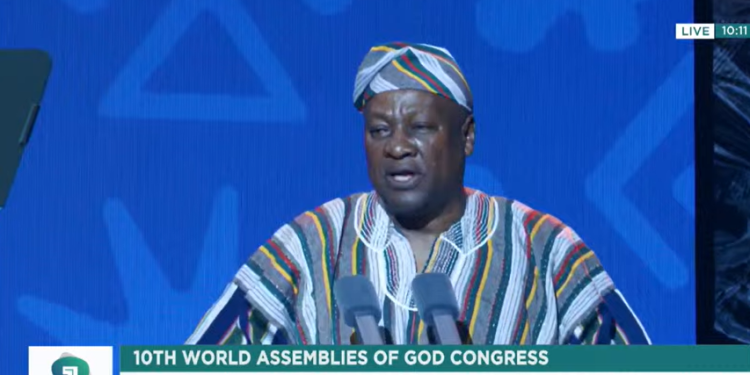
Speaking at the 10th World Assemblies of God Congress at the Accra International Conference Centre on Wednesday, October 14, 2026, the President said young people were growing up in a world significantly different from the one experienced by previous generations.
He stressed that although the modern world offers extraordinary opportunities, it also exposes young people to pressures that require responsible guidance and support.
According to a report, Mahama highlighted the influence of misinformation, social comparisons and competing expectations about personal identity and the future.
He urged adults to become trusted mentors who can listen to young people, understand their concerns and help them develop their abilities.
The President’s remarks were delivered during the congress, held under the theme “Commissioned: One Mandate, Every Nation.”
His message placed particular emphasis on the responsibility of churches and households to provide environments where young people can ask questions freely, receive thoughtful advice and discover their purpose.
Mahama Highlights the Pressures of Modern Life
Mahama observed that technological advancement has transformed how young people communicate, access information and understand the world around them.
Digital platforms now connect individuals across continents, providing opportunities for learning, networking and personal development.
However, these developments have also introduced challenges that can influence young people’s decisions, expectations and sense of identity.
In his address, the President pointed to the constant exposure to social comparisons, misinformation and competing messages about who young people should become.
Such pressures can make it difficult for some to distinguish reliable information from misleading claims or develop a clear understanding of their personal goals. Editorial Ethics & Independence
Mahama also noted that many young people were searching for purpose while carrying anxieties they might struggle to express openly.
Drawing on his experience as a father who has raised children of the current generation, he underscored the importance of understanding the realities confronting young people today.
His message suggests that adults must recognise that the experiences of younger generations have changed and that effective guidance requires patience, understanding and a willingness to listen.
Churches and Families Urged to Strengthen Mentorship
The President called on churches and households to take a more active role in mentoring young people, emphasising that support should go beyond giving instructions or correcting mistakes.
He encouraged adults to listen to young people’s concerns, create opportunities for them to serve and demonstrate the integrity and values they would want the next generation to emulate.

This approach places responsibility on adults to lead by example. Young people often learn not only from what parents, teachers and religious leaders say but also from how they behave, handle disagreements and respond to difficult situations.
Churches, in particular, have opportunities to create supportive environments where young people can discuss personal challenges, develop leadership skills and participate meaningfully in community activities. Corrections Policy
Mahama also urged religious institutions to recognise the abilities of younger members and entrust them with meaningful responsibilities.
Giving young people opportunities to contribute can help them build confidence, develop practical skills and feel connected to their communities.
The President stressed that the future of the World Assemblies of God Fellowship would depend partly on how effectively it nurtures the younger generation.
Supporting Young People Beyond Words
The President’s appeal also highlights the importance of turning mentorship into practical action.

While guidance can help young people make informed choices, meaningful support requires adults and institutions to create opportunities for participation, learning and personal growth.
Families can contribute by maintaining open communication and encouraging young people to discuss their concerns without fear of being dismissed.
Schools and other educational institutions can strengthen counselling services, career guidance and programmes that help students develop critical thinking skills.
Religious organisations can complement these efforts by offering mentorship programmes, leadership opportunities and activities that encourage responsibility and service.
Equally important is helping young people develop the ability to evaluate information, manage social pressures and make decisions based on their values and long-term goals.
Rather than simply telling them what to do, mentors can equip them with the skills to assess situations independently.
These efforts are particularly relevant in an environment where information spreads rapidly and young people encounter competing opinions about success, relationships and personal development.
Nurturing the Next Generation of Leaders
Mahama’s remarks reinforce the idea that preparing young people for the future is a shared responsibility involving families, religious institutions and society as a whole.
The challenge is not simply to protect young people from the difficulties of modern life but to equip them with the confidence, judgment and resilience needed to navigate those difficulties. Newscard
By listening to their concerns, recognising their abilities and providing opportunities for meaningful participation, adults can help young people develop into responsible citizens and future leaders.
The President’s message at the congress serves as a reminder that mentorship must be built on trust, practical support and consistent example.
As society continues to change, the ability of adults and institutions to understand and guide younger generations will remain important to their personal development and the country’s future.