

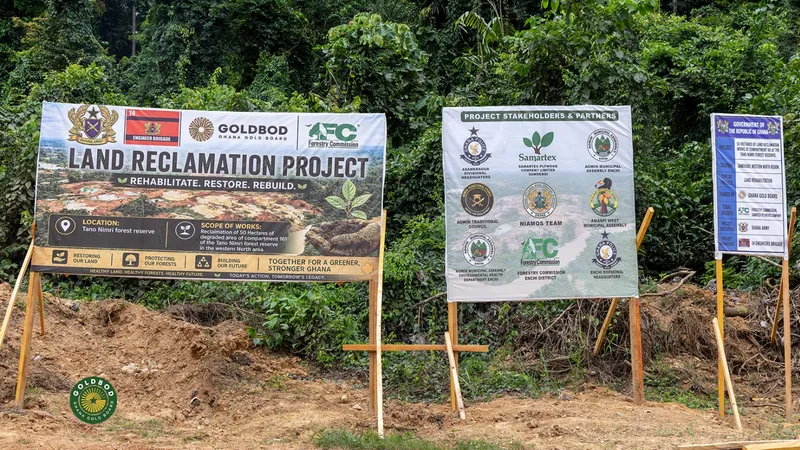
The Ghana Gold Board (GoldBod) has partnered with military engineers in an initiative aimed at reclaiming the Tano Nimri Forest Reserve, an environmentally sensitive area affected by illegal small scale mining, popularly known as galamsey.
The collaboration highlights growing efforts to address the environmental damage caused by illegal mining while promoting the restoration of degraded forest landscapes. Editorial Standards
The initiative is significant for Ghana’s wider fight against illegal mining, which has contributed to deforestation, soil degradation, water pollution and the destruction of natural habitats in several parts of the country.
By bringing together GoldBod and military engineering expertise, the project is expected to support efforts to rehabilitate affected areas and strengthen the protection of the forest reserve.
Illegal mining remains a major environmental challenge for Ghana, particularly where mining activities take place without proper authorisation or adequate safeguards.
Forest reserves are especially vulnerable because mining operations can remove vegetation, expose topsoil and alter natural drainage systems.
These changes can leave the land unsuitable for farming and threaten the survival of wildlife and other organisms that depend on the forest ecosystem.
The Tano Nimri Forest Reserve is therefore an important focus for restoration efforts. Reclaiming land damaged by galamsey requires more than stopping illegal mining activities.
It also involves assessing the extent of the destruction, stabilising disturbed ground, restoring vegetation and monitoring the recovery of the affected ecosystem.
GoldBod’s involvement places the institution within a broader national conversation about responsible gold production and the need to address the environmental consequences associated with the mining industry.
Although gold remains an important contributor to Ghana’s economy, its long term benefits can be undermined when extraction activities destroy forests, contaminate water bodies and damage land that communities depend on for their livelihoods.
The partnership with military engineers is particularly relevant because restoring severely degraded land can require technical planning, machinery and coordinated field operations.
Depending on the project’s approved scope, engineering support may assist with land preparation, the management of damaged terrain and the implementation of measures to make affected areas suitable for ecological rehabilitation.
However, the success of any reclamation programme will depend on the quality of the restoration plan, the availability of resources and consistent monitoring after the initial work is completed.
Simply filling excavated pits or levelling damaged ground may not be enough to return a forest reserve to a healthy ecological condition.

Long term recovery may require the reintroduction of native plant species, erosion control, protection of watercourses and measures to prevent illegal miners from returning to reclaimed sites.
The environmental consequences of galamsey extend beyond the boundaries of mining locations. The removal of trees reduces the forest’s capacity to support biodiversity, retain moisture and protect the soil against erosion. Editorial Ethics & Independence
Where mining activities affect streams and rivers, sediment and other pollutants can threaten aquatic life and increase the difficulty of providing safe water for surrounding communities.
These impacts make forest restoration an important part of Ghana’s environmental protection agenda. Healthy forests provide habitats for wildlife, contribute to climate regulation and support ecological processes that benefit both rural and urban populations.
Protecting them is therefore not simply a conservation concern, it is also an investment in public welfare and sustainable economic development.
The GoldBod and military engineers partnership could also reinforce the need for a coordinated approach to combating illegal mining. Enforcement operations are essential to stopping unauthorised activities, but they must be supported by practical rehabilitation measures and systems that prevent renewed encroachment.
Cooperation among environmental agencies, security services, local authorities and surrounding communities can help ensure that restored land remains protected.
Community involvement will be particularly important if reclamation efforts are to produce lasting results. Residents who depend on the surrounding environment can help identify new threats, report illegal activity and support efforts to protect restored vegetation.
Public education and alternative livelihood opportunities may also help reduce the economic pressures that encourage some people to participate in illegal mining.
Authorities will need to communicate clear information about the project’s timeline, the size of the affected area, the resources committed and the expected restoration outcomes.
Regular progress reports and independent environmental assessments would help the public determine whether the intervention is delivering measurable improvements.
For Ghana, the broader challenge is to reconcile the economic value of gold with the responsibility to protect natural resources. Sustainable mining requires effective regulation, accountability and rehabilitation wherever extraction activities damage the environment.

Without these safeguards, the short-term gains from mineral production can create long-lasting costs for communities and future generations.
The effort to reclaim the Tano Nimri Forest Reserve therefore represents an opportunity to demonstrate that damaged landscapes can be addressed through coordinated action.
Its lasting impact will depend not only on the initial reclamation work but also on whether the restored land is protected, monitored and allowed to recover over time. Corrections Policy
As the initiative progresses, attention will turn to the practical results achieved on the ground.
Successful restoration would provide an important example of how technical expertise, responsible resource management and environmental protection can work together in Ghana’s continuing effort to tackle galamsey and safeguard its forest reserves.