

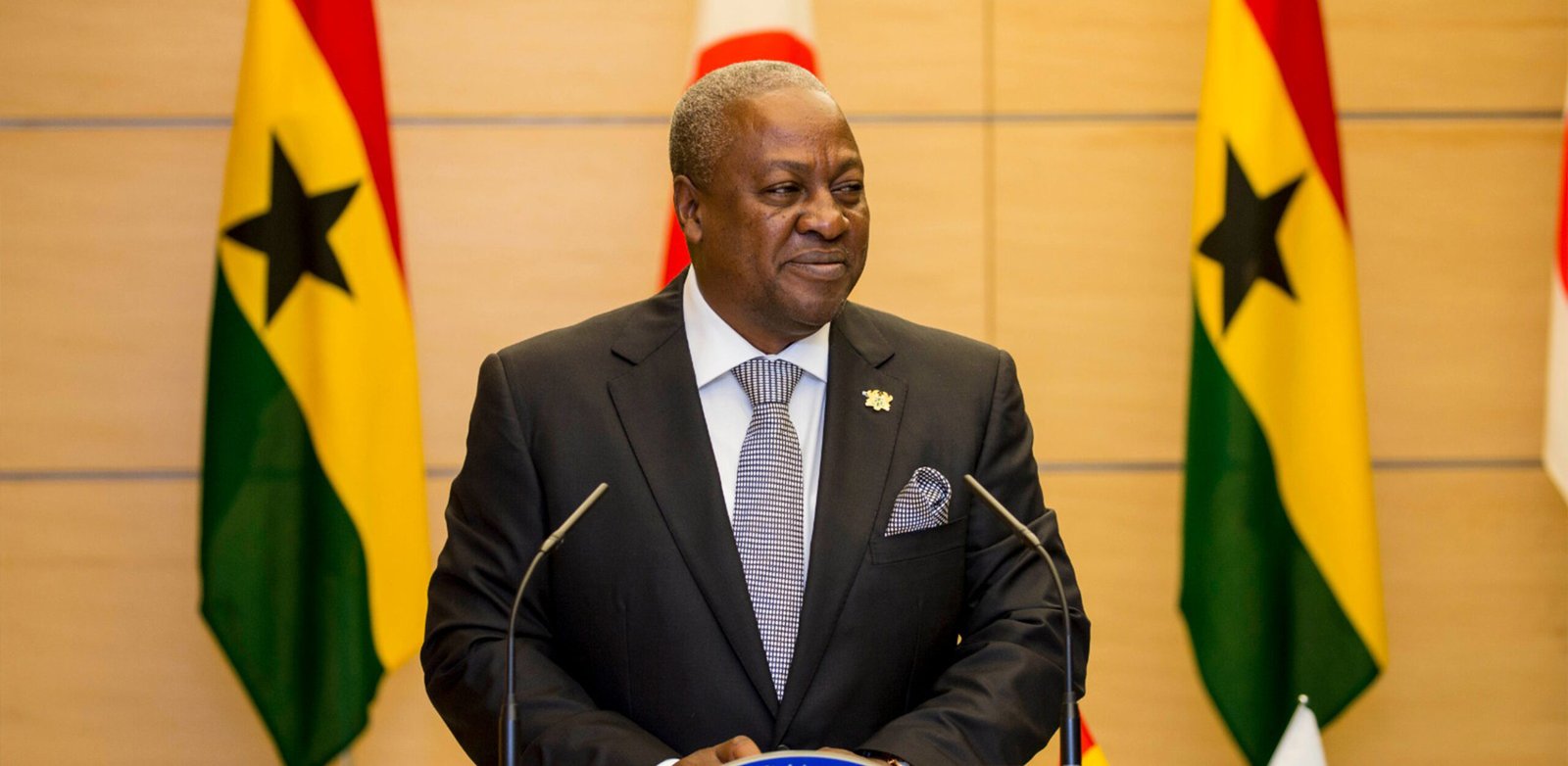
President John Dramani Mahama has urged Ghana’s newly sworn-in Deputy Chairpersons of the Electoral Commission (EC) to uphold impartiality in the discharge of their duties, insisting that neither his government nor the National Democratic Congress (NDC) should receive preferential treatment from the country’s electoral management body. Editorial Standards
The President made the remarks on Monday, October 12, 2026, during the swearing-in ceremony of Emelia Afi Agbenyo and Dr Joseph Kwaku Asamoah in Accra.

He called on the two officials to place the interests of Ghana and its citizens above political considerations while protecting the credibility of the electoral process.
President Mahama emphasised that the Commission’s responsibility was to the people of Ghana and that its officials must treat every political party and candidate equally under the law.
“Ensure that every eligible citizen can participate in our electoral process and that every valid vote counts and reflects the will of the people,” he said.
He added that he did not expect the Commission to favour him, his administration or his political party, stressing that electoral officials must be prepared to make fair decisions regardless of which political interests might be affected.
The President’s message reinforces the importance of institutional independence in Ghana’s democratic system.
As an institution responsible for organising and supervising elections, the EC is expected to carry out its mandate without undue influence from the government, opposition parties or other political actors.
The Commission’s credibility depends not only on the accuracy of election results but also on the transparency and consistency of the processes used to produce them.
Voter registration, electoral arrangements, the conduct of polling and the management of complaints all contribute to public perceptions of fairness. Editorial Ethics & Independence
When political parties and citizens believe that electoral rules are applied equally, confidence in democratic institutions can improve.
Conversely, allegations of favouritism or inconsistent enforcement can undermine trust, even where the outcome of an election has been officially declared.
President Mahama therefore urged the new Deputy Chairpersons to demonstrate professionalism and fairness as they assume their responsibilities.
His remarks also underline the principle that electoral institutions must serve the country as a whole rather than the interests of the political party in power.
The two appointments bring different professional experiences to the Commission’s leadership.
Emelia Afi Agbenyo previously served as Deputy Director of Operations at the Ghana TVET Service, where her responsibilities involved public administration and operational coordination.
Dr Joseph Kwaku Asamoah, a law lecturer at the Kwame Nkrumah University of Science and Technology (KNUST), has previously worked within the Electoral Commission.
His past positions include Director of Finance, Director of the Training Centre and Head of Audit.
Their appointments followed changes in the Commission’s senior leadership. Dr Bossman Asare, who was responsible for Corporate Affairs, resigned effective July 31, 2026, to return to academia at the University of Ghana.
Samuel Tettey, the former Deputy Chairperson responsible for Operations, retired after reaching the mandatory retirement age.
The new officials are expected to contribute their respective experience to the Commission’s administrative and electoral responsibilities.
However, the effectiveness of their leadership will ultimately depend on how consistently they uphold the law, manage their duties and respond to concerns raised by political parties and the public.
President Mahama also highlighted the need to protect the participation rights of eligible citizens. Ensuring that voters can take part in elections without unnecessary barriers is essential to making the electoral process inclusive and representative.

For the EC, this requires more than conducting elections on schedule. It also involves communicating procedures clearly, addressing legitimate concerns promptly and ensuring that electoral rules are applied consistently.
Transparent explanations of important decisions can help prevent misunderstandings and strengthen public confidence. Corrections Policy
The Commission must also be prepared to respond professionally when its decisions are challenged.
An independent electoral institution should be able to explain its actions using the law and established procedures rather than political arguments. This standard should apply whether a decision benefits the governing party or its opponents.
Political parties, civil society organisations, the media and citizens also have a role in supporting credible elections by engaging constructively with the Commission, scrutinising its work responsibly and using established channels to raise concerns.
Ultimately, President Mahama’s message places the responsibility for electoral fairness firmly on the new Deputy Chairpersons and the wider Commission.
His declaration that his own government and party should receive no special treatment sets out the standard he expects the institution to uphold.
As Agbenyo and Asamoah begin their work, their ability to demonstrate impartiality, transparency and accountability will be important to maintaining confidence in Ghana’s electoral system. Newscard
The central test will be whether every party and candidate is treated according to the same rules, ensuring that the democratic choices of Ghanaian voters remain at the heart of the electoral process.