

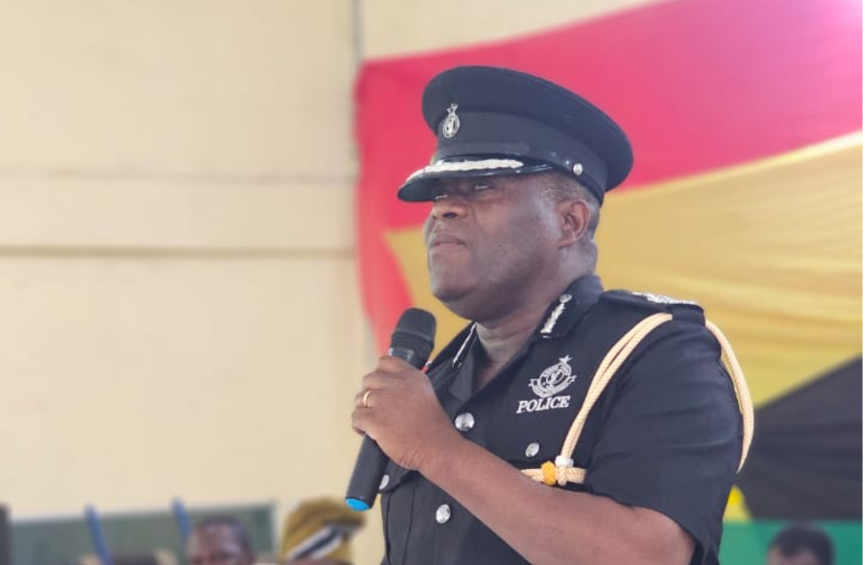
The Upper East Regional Police Command has appealed to traditional authorities, community leaders and other stakeholders in the Kusaug Traditional Area to support efforts to retrieve firearms from civilians as part of measures to curb rising crime in the area. Corrections Policy
The appeal was made by the Upper East Regional Police Commander, DCOP John Ferguson Dzineku, amid concerns over reported cases of armed robbery and killings in parts of Garu, Tempane and Bawku.
According to the Police Commander, although relative calm has returned to Bawku and surrounding communities, the continued presence of firearms among civilians remains a significant security concern.
He said removing such weapons from circulation would be important to sustaining peace and preventing criminal elements from using firearms to perpetrate violent crimes.
DCOP Dzineku made the appeal during engagements with residents and traditional authorities as part of the Upper East Regional Minister’s Accounting to the People tour of the Tempane and Garu districts. Chiefs in the two areas had raised concerns over increasing incidents of armed robbery and killings within their communities.
The Police Commander stressed that the responsibility for improving security cannot rest solely on the police. He called for cooperation among traditional leaders, residents, community groups and other stakeholders to help identify and retrieve firearms that may have found their way into civilian hands.
His position reflects the wider importance of community participation in maintaining peace in areas where security challenges have historically been complicated by the availability of firearms.
The proliferation of small arms and light weapons can make criminal activity more dangerous and can also escalate disputes that might otherwise be resolved without violence.
In communities experiencing tensions or a history of conflict, the continued circulation of firearms can create additional security risks even when open conflict has subsided.
The Police Commander therefore urged stakeholders to take advantage of the relative calm in parts of the Kusaug area to support efforts aimed at reducing the availability of firearms.
He also assured residents that the police were actively investigating reported criminal incidents and would approach their operations professionally. According to him, the Police Command would conduct the necessary investigations before making arrests and would not target innocent residents.
“The police are on the ground and investigations are ongoing. We will not arrest innocent persons. We will do due diligence and ensure that only culprits are brought to book,” he assured residents.
The assurance comes against the background of concerns raised by local communities over violent crime. For residents, the ability of the police to investigate incidents thoroughly while protecting innocent people is critical to maintaining confidence in law enforcement.
Police-community trust can also play an important role in intelligence gathering. Residents are often in a position to provide information about suspicious activities, criminal networks or the movement of weapons, but effective information-sharing depends heavily on confidence in security institutions.
Recent security efforts in the Upper East Region have included intelligence-led operations targeting armed robbery groups.
Earlier this year, police reported dismantling a robbery gang and recovering firearms, ammunition and stolen motorbikes in the region. Other operations have also resulted in the retrieval of weapons connected to suspected robbery networks. Editorial Ethics & Independence
The developments reinforce the concern expressed by the Regional Police Commander that firearms in circulation can contribute to violent crime. However, authorities face the challenge of distinguishing between legally held firearms and weapons that are illegally possessed or used in criminal activities.
The appeal to retrieve firearms should therefore be accompanied by lawful procedures and clear engagement with communities.
Authorities and traditional leaders can help educate residents about applicable firearm laws and encourage people who possess unauthorised weapons to surrender them through appropriate channels.
Ghana has previously undertaken national initiatives aimed at reducing the number of illicit firearms in circulation.
The National Commission on Small Arms and Light Weapons, in collaboration with the Ministry of the Interior and the Ghana Police Service, has promoted firearm surrender initiatives as part of broader efforts to reduce gun-related violence and improve public safety.
The security situation in Bawku and its environs also remains subject to government measures. In September 2026, the Ministry of the Interior renewed a curfew covering Bawku Municipality and its environs and maintained a ban on carrying arms, ammunition or offensive weapons in the affected area.
The Ministry warned that persons found carrying such items could be arrested and prosecuted.
Against this background, the Police Command’s latest call for the retrieval of firearms forms part of a broader effort to prevent the resurgence of violence and strengthen security in the Kusaug area.
Another significant development announced by DCOP Dzineku is the planned creation of a separate Police District for Tempane.

The proposal follows an appeal by the Divisional Chief of Tempane, Naba Alasbuudi Cletus Abugri IV, for the area to be separated from the Garu Police District.
According to the Regional Police Commander, plans are already advanced to establish the new district. He said the move is expected to strengthen police presence, reduce response times and improve the ability of the security service to respond to crime in Tempane.
The establishment of a dedicated police district could be particularly significant for communities that currently depend on policing structures covering a wider geographical area. Faster response times can be crucial during incidents such as armed robbery, violent attacks and other emergencies.
Beyond policing, however, the call for firearms to be retrieved highlights the need for a coordinated approach to security. Traditional authorities, local government officials, youth leaders, civil society organisations and residents all have roles to play in supporting peacebuilding and preventing crime.
For the police, access to reliable information from communities can help identify criminal networks and locate illegal weapons. For traditional leaders, sustained engagement with residents can help discourage the concealment or misuse of firearms. Residents, meanwhile, can contribute by reporting suspicious activity through safe and appropriate channels.
The Upper East Regional Police Command’s appeal ultimately centres on preventing firearms from becoming instruments of renewed violence. With relative peace returning to parts of Kusaug, authorities appear keen to use the opportunity to address the underlying security risks that could undermine that progress.
The success of the initiative will depend not only on police operations but also on the willingness of communities and traditional authorities to cooperate with lawful efforts to remove illegal firearms from circulation. Editorial Standards
As investigations into recent cases continue and plans for stronger police presence in Tempane advance, the authorities are expected to maintain their focus on protecting residents while ensuring that enforcement measures respect due process.
For the people of Kusaug, the immediate objective remains clear, preserve the fragile gains in peace, prevent violent crime and create a security environment that allows communities in Bawku, Garu and Tempane to pursue development without the persistent threat posed by criminal use of firearms.