

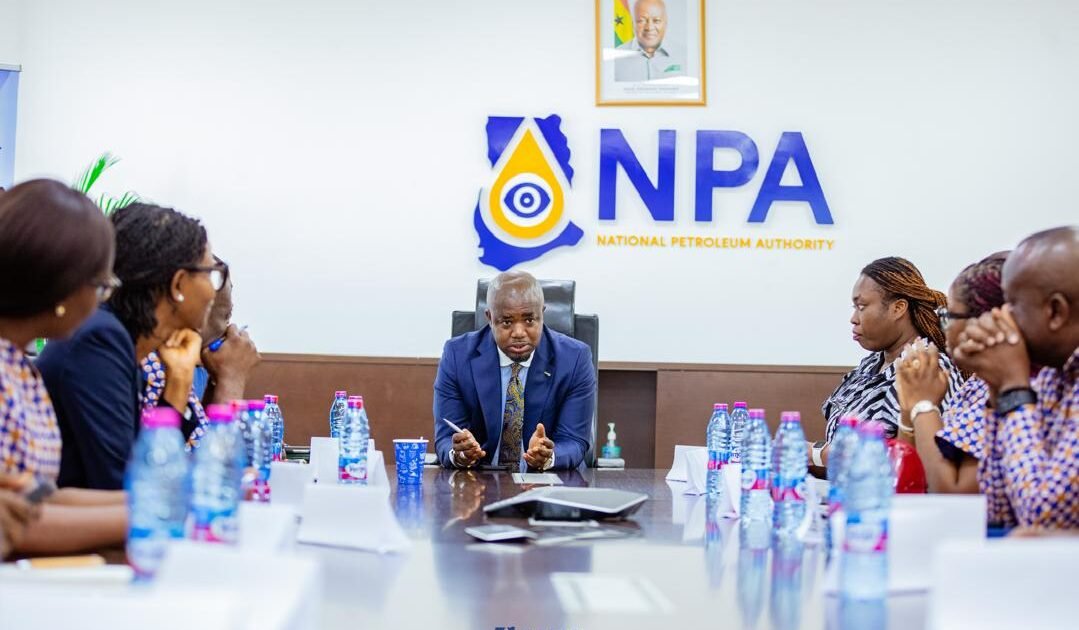
The Chief Executive Officer of the National Petroleum Authority (NPA), Godwin Kudzo Tameklo, has assured the Ghana National Petroleum Tankers Drivers Union (GNPTDU) that the Authority will work to address longstanding concerns over drivers’ working conditions and welfare. Editorial Standards
The assurance followed an emergency meeting between the NPA chief and members of the union on Wednesday, September 30, 2026, after a series of strike actions by tanker drivers over challenges affecting their operations.
According to a report, the industrial action, which has since been suspended, was linked primarily to the poor condition of the Tema Oil Refinery (TOR)-Kpone Road and the deteriorating state of the Bulk Oil Storage and Transportation (BOST) yard, where drivers park their trucks.
The meeting provided an opportunity for the drivers to present their grievances directly to the downstream petroleum regulator and discuss possible solutions to the problems affecting their work.
Mr. Tameklo said the NPA would make efforts to investigate the concerns raised and work with the relevant stakeholders to find lasting solutions.
However, the specific timelines for implementing the proposed interventions were not immediately announced.
TOR-Kpone Road remains a major concern
The condition of the TOR-Kpone Road was one of the key issues raised during the engagement.
The road serves petroleum-sector operations around the Tema industrial area, making it an important route for tanker drivers transporting fuel and other petroleum products.
Poor road conditions can increase travel times, vehicle maintenance expenses and the difficulty of moving heavy trucks safely. Corrections Policy
For drivers who regularly transport petroleum products, deteriorating infrastructure can also create additional operational pressures.
The concerns raised by the union highlight the importance of maintaining roads that support the movement of fuel from storage and distribution facilities to other parts of the country.
Mr. Tameklo acknowledged the seriousness of the problem and said he was pushing for the road to be considered under the government’s Big Push infrastructure programme.

He explained that different approaches had been considered to address the road’s condition, including a proposal for companies operating in the surrounding area to contribute towards its rehabilitation.
The NPA chief said the road remained a major concern for the Authority and stressed the need to find a workable solution.
Although the commitment offers a possible route towards addressing the problem, the inclusion of the road in the Big Push programme and the commencement of any rehabilitation work remain matters requiring further confirmation.
BOST yard and oil-loss control issues
The deteriorating condition of the BOST yard, where tanker drivers park their vehicles, was another major concern discussed during the meeting.
Adequate truck-parking facilities are essential to the efficient movement of petroleum products.
Poor conditions at parking and operational facilities can create difficulties for drivers, increase waiting times and complicate the coordination of fuel transportation. Editorial Ethics & Independence
The drivers also raised concerns about oil-loss control measures, an issue with financial and operational implications for companies involved in the petroleum supply chain.
Effective oil loss monitoring is important for maintaining accountability and protecting petroleum volumes during transportation and handling.
However, the concerns raised by the union indicate the need for discussions between regulators, operators and drivers to ensure that the measures are understood and applied fairly.
Mr. Tameklo said the NPA would work to get to the bottom of the issues and pursue possible solutions with the relevant parties.
He also referred to the involvement of the Ghana Standards Authority in providing an independent assessment of the oil-loss dispute, which he said could help inform discussions on possible reforms.
The details of any final agreement on the matter were not announced at the meeting.
Drivers seek allowances for difficult journeys
The union also raised concerns about allowances for drivers who undertake long journeys on rough and poorly maintained roads.
The issue reflects the additional demands placed on tanker drivers when road conditions extend journey times and make their work more difficult.
Tanker operators play an important role in Ghana’s downstream petroleum industry, transporting products between storage facilities, depots and distribution points. Privacy Policy & Terms
Their working conditions can therefore affect both the welfare of the workforce and the efficiency of the wider fuel-distribution system.
The discussions did not establish a new allowance structure or confirm specific payments. Instead, the NPA’s assurance focused on examining the concerns and working towards practical solutions.
Any changes to allowances or other employment arrangements may require further engagement with the relevant companies and industry stakeholders.
Union apologises over strike notification
For his part, GNPTDU National Chairman George Nyaunu apologised to the NPA for the union’s failure to notify the Authority before embarking on the industrial action.

Mr. Nyaunu explained that the union wanted its concerns to be heard and thanked Mr. Tameklo for accepting the request for a meeting and listening to the drivers’ grievances. Newscard
The suspension of the strikes provides an opportunity for the parties to pursue discussions without further industrial disruption while efforts are made to address the outstanding issues.
Attention turns to implementation
The latest engagement highlights the need for sustained cooperation between the NPA, tanker drivers, petroleum companies and institutions responsible for roads and storage facilities.
While the NPA has assured the union of its commitment to resolving the concerns, the next step will be to translate those assurances into practical measures.

Progress on the TOR-Kpone Road, improvements at the BOST yard, clarification of oil loss control arrangements and discussions on allowances will be important indicators of whether the meeting produces lasting results.
For tanker drivers, the priority is improved working conditions and a safer, more reliable operating environment.
For the petroleum industry, addressing these concerns could help support the efficient transportation and distribution of fuel across Ghana.