

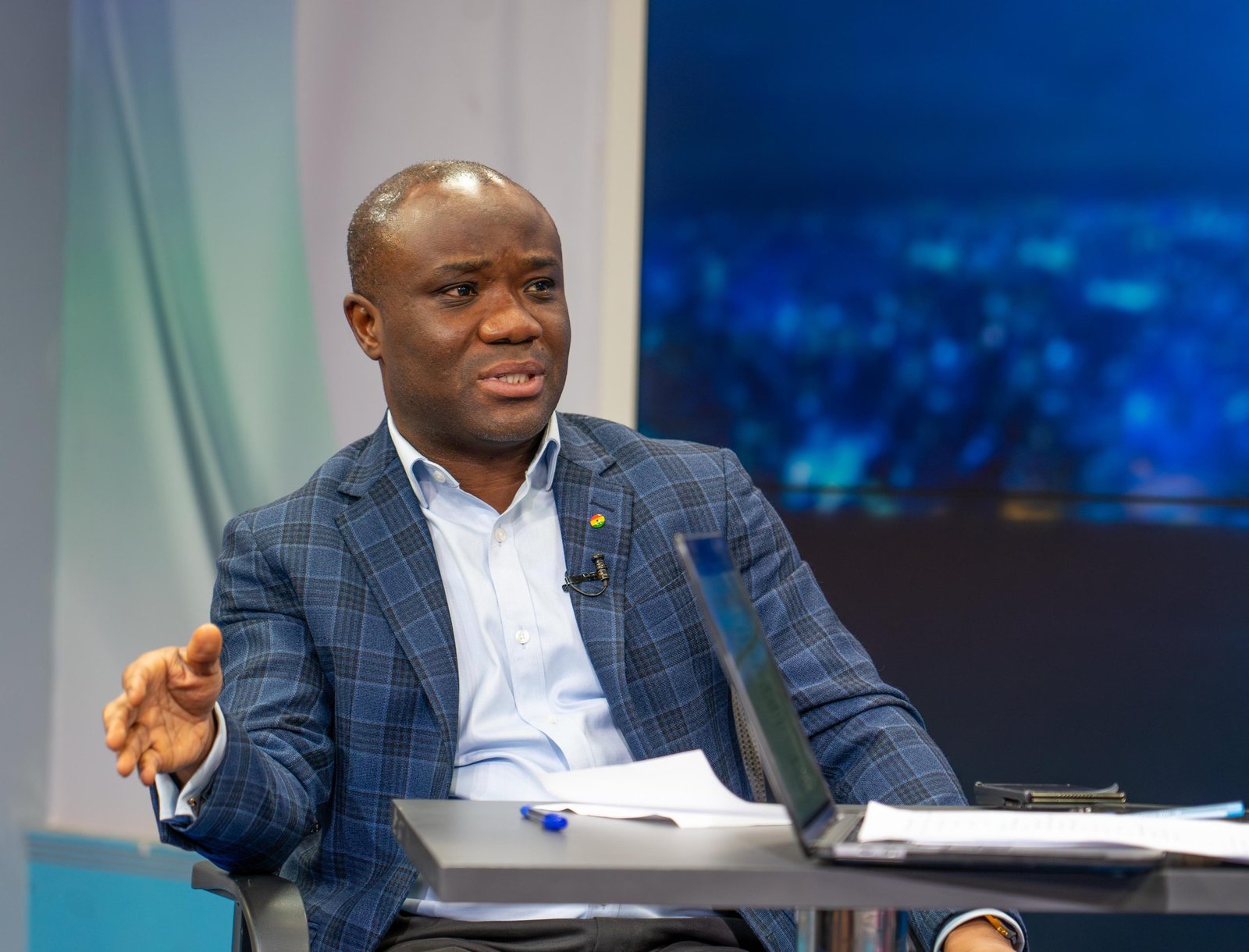
Government spokesperson Felix Kwakye Ofosu has rejected descriptions of Ghana as a “cocaine coast”, arguing that drug seizures and arrests show that security agencies are actively disrupting trafficking operations.
The Abura Asebu-Kwamankese MP said it was misleading to group all drug-related incidents together and use them as evidence that Ghana has become a hub for cocaine trafficking.

Speaking on Joy News’ PM Express on Wednesday, Mr Ofosu-Kwakye said a distinction must be made between trafficking operations that evade law enforcement and those that are detected and disrupted by security agencies.
“You have to separate drug trafficking cases that escape the attention of law enforcement, and drug trafficking cases that law enforcement themselves disrupts or arrests people for,” he said.
His comments come amid renewed scrutiny of Ghana’s role in international drug trafficking following the seizure by French customs of nearly 3.9 tonnes of suspected cocaine from a container that had arrived from Ghana. The seizure has triggered investigations and concerns over how the consignment passed through Ghana’s systems.
The Minority in Parliament has also called for an inquiry into what it describes as Ghana’s emergence as a narcotics transit hub. Parliament was recalled on September 29, although the Speaker subsequently rejected the Minority’s proposed parliamentary inquiry.
Mr Ofosu-Kwakye maintained that cases successfully detected by Ghanaian agencies should not automatically be used to label the country a cocaine hub.
“So, if there are 12 cases, and two of them involve transhipment, or if you like exports of drugs outside of Ghana, you don’t put everything together and say Ghana is a volcano,” he said.
He pointed to the work of the Narcotics Control Commission (NACOC) and the police in detecting and preventing illegal drug trafficking.
“What does NACOC exist to do? To apprehend and prevent drug trafficking, not so much drug use, illegal drug use, for that matter,” he said.
According to him, arrests and the disruption of trafficking operations should be recognised as evidence of law enforcement activity rather than automatically interpreted as proof that Ghana is a cocaine hub.
“So if they do the work, why do you say the country is a cooking coast?” he asked.
Mr Ofosu-Kwakye, however, acknowledged concerns over consignments that leave Ghana undetected and are subsequently intercepted in other countries.
He said President John Mahama had convened security agencies to address the issue and directed them to strengthen collaboration. The President has also ordered an inter-agency task force to develop a roadmap aimed at preventing drug trafficking through Ghana’s borders.
“The president was clear that he will not tolerate Ghana’s borders becoming a transit point for drug trafficking,” he said.
According to Mr Ofosu-Kwakye, the meeting also revealed tensions among some agencies over control of the ports, including difficulties with information sharing.
“Each of them is trying to assert their supremacy over the posts, and so sometimes they don’t share information,” he said.
He said the President had directed the agencies to end such rivalry, improve information sharing and collaborate on measures to strengthen security at Ghana’s ports.
“I want an end to this 10th battle. You must share information. You must collaborate,” he said.
Mr Ofosu-Kwakye said the government’s position remained that Ghana must not become a transit point for international drug trafficking, while maintaining that not every drug seizure should be interpreted as evidence that the country is a cocaine hub.
By:Rachael Djabakie