


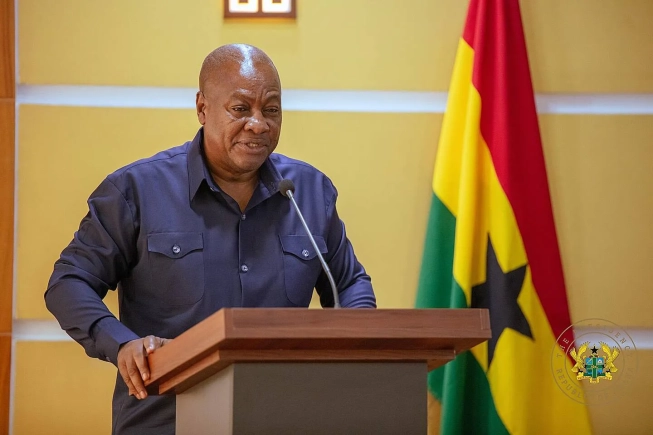
President John Dramani Mahama has called for stronger domestic capacity, effective institutions and sustainable financing as countries in the Global South navigate mounting debt pressures and changes in the international development landscape. Editorial Standards
Speaking at a Presidential Roundtable organised by the Open Society Foundation in New York on Monday, September 21, 2026, on the sidelines of the 81st United Nations General Assembly, President Mahama said countries must strengthen their ability to determine and implement their own development priorities.
The roundtable brought together presidents and chief executives of major global foundations to discuss sustainable development, financing and institutional capacity across the Global South.
President Mahama argued that the changing international environment should also be viewed as an opportunity for countries to develop new approaches to financing, governance and service delivery.
“In all the disruption and chaos are born new ideas and partnerships,” he said, while stressing that governments must remain focused on creating jobs, improving public services, building infrastructure and expanding opportunities, particularly for young people.
He described sovereignty in practical terms as the capacity of a country to act on its priorities.
“When I speak about sovereignty in this context, I am speaking about the capacity to act,” President Mahama stated.
Building stronger domestic systems
The President said countries such as Ghana need stronger systems to ensure that development priorities can be pursued with greater continuity regardless of changes in the international environment. Editorial Ethics & Independence
He identified stronger coordination across government, better preparation of programmes and projects, increased domestic resource mobilisation and sound financial management as important components of that effort.
He also called for institutions that can demonstrate clear and measurable results.
“We need stronger coordination across government, better preparation of programs and projects, greater domestic resource mobilisation, sound financial management, and institutions that can demonstrate clear results,” he said.
For Ghana and other countries facing financing constraints, the emphasis on domestic resource mobilisation points to the importance of strengthening the ability of governments to generate and manage resources locally.
President Mahama also stressed that governments should not operate in isolation. He encouraged countries to make better use of expertise and capabilities outside the public sector, including civil society, businesses, academic institutions and local communities.
“We must carry our share of the responsibility if we want greater room to lead,” he said.
Rethinking international development partnerships
A significant part of the President’s message was directed at international partners and philanthropic organisations.
He urged development partners to move beyond short-term interventions and place greater emphasis on building lasting national capabilities.
President Mahama questioned whether international cooperation could do more to strengthen national systems and work through local institutions when those institutions meet appropriate standards.
“Can international cooperation do more to build national capability and work through local systems when they meet required standards? Can we reduce unnecessary duplication while protecting accountability?” he asked. Corrections Policy
He also highlighted the potential role of foundations in supporting areas where commercial financing may not be suitable.
According to the President, philanthropic organisations have greater flexibility to support institutional development, early-stage programmes, public goods and social priorities.
He said successful initiatives should eventually be integrated into public systems and supported through local delivery institutions and sustainable financing arrangements.
“Where an approach proves successful, the next step should be its adoption into public systems, local delivery institutions, and long-term financing models,” he stated.
Youth employment and development
The President placed young people at the centre of his argument, stressing the need for countries to expand economic, digital and structural opportunities for the next generation.

He said the objective of development should ultimately be reflected in tangible improvements in people’s lives, including access to jobs, quality public services, infrastructure and opportunities to participate in economic activity.
The emphasis on youth comes as many countries across the Global South continue to grapple with the challenge of creating enough employment and economic opportunities for rapidly growing populations.
For President Mahama, strengthening domestic institutions and financing capacity is therefore closely connected to the ability of governments to respond to those pressures.
Ghana’s role at the UN General Assembly
The Presidential Roundtable forms part of President Mahama’s wider engagements during the 81st UN General Assembly in New York.
The President’s programme includes a high-level event on the Accra Reset, aimed at discussing ways of improving global development outcomes, particularly for Africa and other countries in the Global South.
He is also scheduled to host a side event on reparatory justice on Wednesday, September 23, focusing on international cooperation for the return and restitution of cultural properties and heritage.
President Mahama is expected to deliver Ghana’s official statement during the main General Debate of the UN General Assembly on Thursday, September 24.
His engagements in New York come alongside Ghana’s efforts to build partnerships with international institutions and foundations. Earlier, he met Alex Soros, Chairman of the Open Society Foundations, to discuss possible partnerships supporting ECOWAS integration.
The discussions at the Presidential Roundtable broaden that engagement to the wider question of how international cooperation can support countries in building stronger institutions and more sustainable development systems.
President Mahama’s central message was that international support can complement national efforts, but countries must also strengthen their own capacity to finance priorities, deliver public services and build institutions capable of producing lasting results.