

Russia has doubled its annual scholarship allocation for Ghanaian students from 120 to 240, opening up additional opportunities for Ghanaian students seeking fully funded higher education in the country.
The expanded scholarship package is expected to prioritise students pursuing programmes in strategic areas including artificial intelligence (AI), engineering, petroleum sciences and pharmaceuticals, reflecting efforts by both countries to strengthen cooperation in education, science and technology.
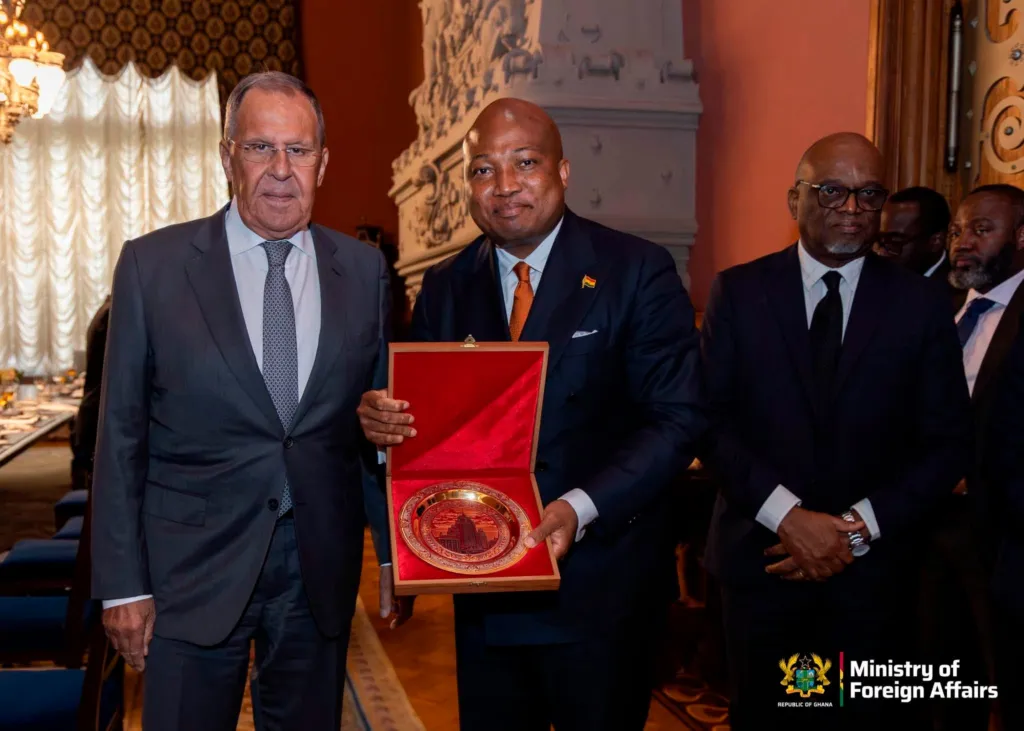
The announcement follows a three-day official visit to Moscow by Ghana’s Minister of Foreign Affairs, Samuel Okudzeto Ablakwa, at the invitation of his Russian counterpart, Sergey Lavrov. The visit formed part of renewed diplomatic engagement between Ghana and Russia, with discussions covering education, energy, international security and other areas of mutual interest. Mr Ablakwa announced the scholarship increase in a social media post, describing it as one of the significant outcomes of his ongoing engagement with Russian authorities.

“Following my ongoing official visit to Russia, Russian scholarships for Ghanaian students have now been doubled from 120 each academic year to 240,” he said.
The increase means twice as many Ghanaian students could benefit from Russia’s government-funded scholarship programme each academic year. The opportunity is expected to be particularly significant for students interested in specialised scientific and technical fields that Ghana has identified as important to its economic transformation.
The new priority areas include artificial intelligence, engineering, petroleum sciences and pharmaceuticals. These disciplines are increasingly important to Ghana’s ambitions to strengthen technological capacity, develop local expertise and reduce reliance on foreign technical skills. The latest allocation builds on Russia’s existing scholarship support for Ghanaian students. The Russian Embassy in Ghana had previously indicated that 120 government scholarship slots were available to Ghanaian students for the 2026/27 academic year.
Russia’s scholarship quota for Ghana has increased considerably over the past several years. In 2022, the allocation was increased from 75 to 110 scholarships, before rising further to 120. The latest decision to double the figure to 240 represents the largest expansion in the programme in recent years.

Beyond education, Ghana and Russia also reached understandings on cooperation in the energy sector, particularly Ghana’s peaceful nuclear energy programme.According to Mr Ablakwa, the two countries have agreed to deepen collaboration in Ghana’s plans to introduce nuclear power into its national energy mix. The cooperation is expected to support Ghana’s objective of adding about 700 megawatts of nuclear-generated electricity as part of efforts to diversify its energy sources.
Ghana has been exploring nuclear power as a long-term solution to its growing electricity needs and as a way of strengthening the reliability and diversity of its energy supply.
The country’s nuclear cooperation with Russia dates back several years. Ghana and Russia signed an agreement in 2015 covering cooperation in the peaceful use of atomic energy. The agreement established a framework for collaboration in nuclear science, technology and energy development.
Russia’s state nuclear corporation, Rosatom, has subsequently emerged as one of the companies competing to participate in Ghana’s first nuclear power plant project. Rosatom was shortlisted alongside companies from France, the United States, China and South Korea as Ghana considered potential partners for the development of its first nuclear power facility.

More recently, cooperation between the Ghana Atomic Energy Commission and Rosatom has been strengthened through a memorandum of understanding. The arrangement provides another platform for the two sides to explore areas of mutual interest in nuclear technology and peaceful applications of atomic energy.
Ghana and Russia have also discussed floating nuclear power units as a potential option for integrating nuclear-generated electricity into Ghana’s national grid. Such discussions form part of the broader search for technologies capable of supporting Ghana’s future energy requirements.
The nuclear discussions are particularly important as Ghana seeks to reduce pressure on its existing energy sources and create a more diversified electricity generation system. The planned addition of nuclear power would complement existing sources, including hydroelectricity, thermal generation and emerging renewable energy projects.
The diplomatic discussions between Accra and Moscow have also extended beyond education and energy. Mr Ablakwa said Ghana and Russia would strengthen cooperation on a number of international issues, including counterterrorism, climate change and reform of the United Nations.

Counterterrorism cooperation is expected to focus on shared concerns surrounding international security and the need for stronger collaboration among countries in addressing emerging threats. Climate change also featured among the areas of mutual interest, as both countries consider ways to respond to global environmental challenges while pursuing their respective development objectives.
Ghana has consistently called for stronger international cooperation on climate change, while also advocating for reforms to global institutions to make them more representative and responsive to the interests of developing countries. The renewed engagement with Russia therefore represents a broadening of bilateral relations beyond traditional diplomatic exchanges. Education, energy, science and technology are increasingly becoming important components of Ghana’s foreign policy and international partnerships.
For Ghanaian students, however, the expansion of the scholarship programme is likely to be one of the most immediate and visible outcomes of the latest diplomatic engagement. With the annual allocation increasing from 120 to 240, more students will have the opportunity to pursue fully funded studies in Russia, particularly in fields considered critical to Ghana’s future development.

The emphasis on AI, engineering, petroleum sciences and pharmaceuticals also suggests that the scholarship programme is being aligned with Ghana’s broader need to develop specialised human capital. The latest developments are expected to provide further momentum to Ghana-Russia relations, while creating opportunities for cooperation in education, energy, science, technology and international affairs.
As both countries work to implement the outcomes of the Moscow discussions, attention will now turn to the modalities for the expanded scholarship programme and the continued development of cooperation in Ghana’s nuclear energy ambitions.
Philbert Amiba Ayuusah