

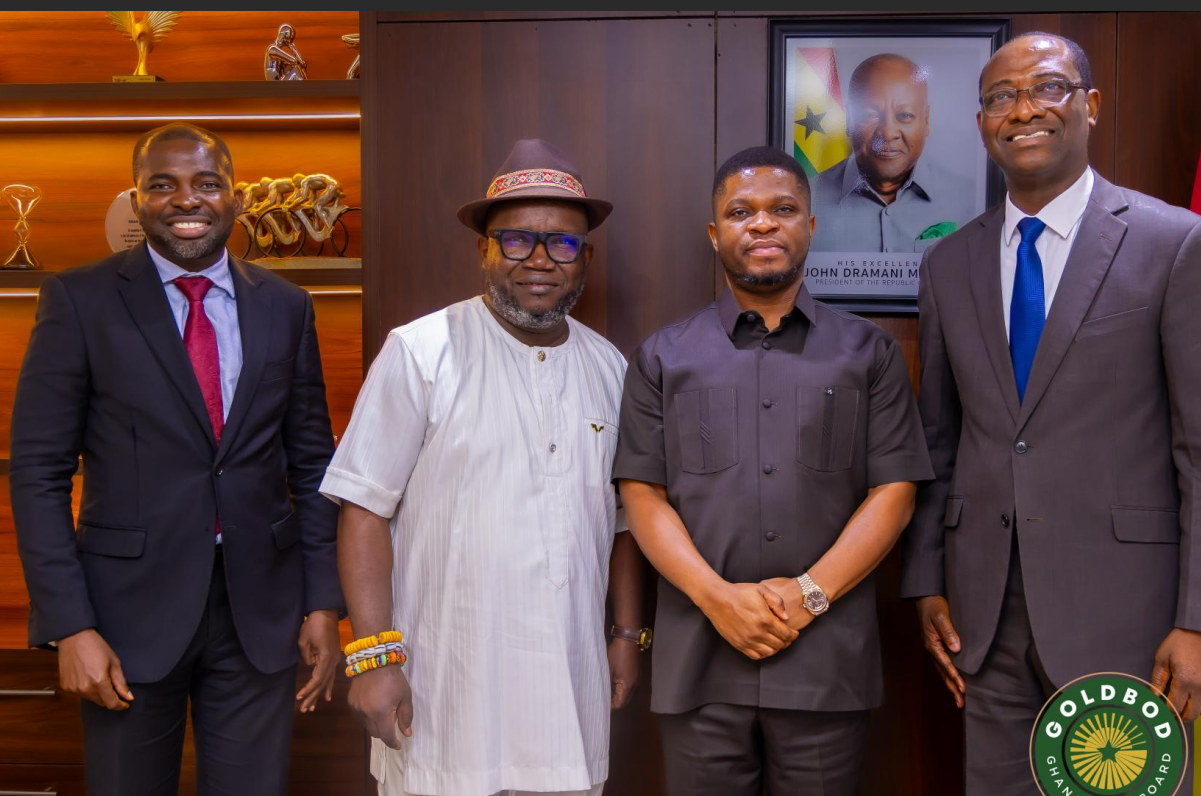
The Government of Ghana has announced that the Ghana Gold Board (GoldBod) will begin purchasing 30 percent of the gold output of all large scale mining companies operating in the country from July 1, 2026, under a landmark agreement aimed at strengthening the country’s gold reserves, increasing local value addition, and supporting economic stability.
The new arrangement, reached between the Government of Ghana and the Ghana Chamber of Mines, represents a significant expansion of the country’s domestic gold purchase programme, which previously required participating mining companies to sell a smaller portion of their production to the state. The agreement takes effect on July 1 and is expected to play a key role in Ghana’s strategy to increase its foreign exchange reserves and reduce dependence on external borrowing.
Under the agreement, every large scale mining company will sell 30 percent of its gold production directly to GoldBod in Ghana. Unlike the previous arrangement under the Bank of Ghana, all purchases will be made locally in doré form, which is unrefined gold, at a discount of 0.55 percent. Payments will be made in Ghana cedis using the Bank of Ghana reference exchange rate.

Government officials say the policy forms part of the Ghana Accelerated National Reserve Accumulation Programme (GANRAP), an initiative designed to increase the country’s gold reserves to the equivalent of 15 months of import cover by the end of 2028. The programme also seeks to strengthen the Ghana cedi by boosting the country’s reserve assets through increased domestic gold acquisition.
Another major objective of the agreement is to promote local refining and value addition within Ghana. According to GoldBod, all doré gold acquired under the programme will first be refined locally before being sent to a London Bullion Market Association accredited refinery for final certification and stamping. The refined bullion will then be transferred to the Bank of Ghana to support the country’s official gold reserves. Government believes this approach will help Ghana achieve internationally recognised refinery accreditation by 2030 while reducing the export of raw minerals.
The latest agreement follows earlier efforts by GoldBod to increase state participation in the country’s gold industry. In April 2025, GoldBod signed agreements with nine large scale mining companies to purchase 20 percent of their export bound gold. Those agreements were viewed as the first step toward the broader national strategy that has now been expanded to cover all large scale mining companies at the higher 30 percent threshold.
Negotiations over increasing the state’s share of gold purchases have been ongoing for several months. Earlier this year, officials from the Bank of Ghana disclosed plans to increase purchases from 20 percent to 30 percent as part of efforts to strengthen external reserves. Some mining companies had raised concerns about pricing mechanisms and commercial terms during negotiations, but government has now confirmed that an agreement has been successfully concluded with the Chamber of Mines.
GoldBod Chief Executive Officer Sammy Gyamfi has previously described the programme as one of the most ambitious reforms in Ghana’s gold sector. According to the agency, the initiative is intended not only to build reserves but also to maximise national benefits from the country’s position as Africa’s leading gold producer. GoldBod was established in 2025 to regulate gold trading, improve traceability, support responsible mining, and ensure that more revenue from Ghana’s gold industry remains within the local economy.

The agreement is expected to have significant economic implications. By purchasing a larger share of domestically produced gold, government hopes to strengthen the country’s balance sheet, improve investor confidence, stabilise the local currency, and reduce exposure to global financial shocks. Officials also expect the initiative to support long term industrial development through investments in refining, processing, and other downstream activities within Ghana’s mining sector.
The full details of the Memorandum of Understanding signed between the Ministry of Finance, the Ministry of Lands and Natural Resources, GoldBod, the Bank of Ghana, and the Ghana Chamber of Mines are expected to be published in the coming days.