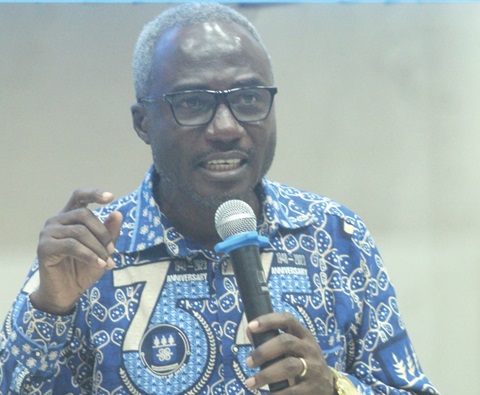
Ghanaians still prefer democracy despite rising frustration over economy and corruption – UG study

0
10

A new study by the University of Ghana has revealed a growing disconnect between public support for democracy and dissatisfaction with its performance, particularly in addressing economic hardship and corruption in the country.

According to the findings, a significant 85.2 per cent of respondents identified democracy’s inability to deliver meaningful economic development as the biggest challenge facing the system. The concerns were largely centred on persistent unemployment, rising living costs, and the broader economic pressures affecting households across Ghana.

The data reflects a deepening frustration among citizens who, while committed to democratic governance, feel that the system has not translated into tangible improvements in their daily lives. The high cost of living, driven by inflation and currency pressures in recent years, has become a defining issue for many Ghanaians, especially among the youth and working class.

Closely linked to these economic concerns is the issue of corruption. The study found that 75.5 per cent of respondents believe democracy has failed to effectively address corruption, reinforcing long-standing perceptions about weak accountability mechanisms and governance inefficiencies.

Despite these concerns, the research highlights that democracy remains the preferred system of governance among Ghanaians. A majority of respondents expressed a clear rejection of military rule, indicating that while citizens are dissatisfied with outcomes, they still value the principles of democratic governance such as freedom of expression, rule of law, and political participation.

The findings suggest that Ghana’s democratic challenge is not about legitimacy, but performance. Citizens are not calling for a change in system, but rather demanding better delivery within the existing democratic framework.

The study comes at a time when Ghana continues to navigate economic recovery efforts following recent fiscal challenges, including inflation spikes and debt restructuring measures. Policymakers have repeatedly emphasised reforms aimed at stabilising the economy, but public sentiment indicates that the impact of these measures has yet to be widely felt.

Analysts say the results should serve as a warning to political leaders that economic governance is now central to sustaining democratic confidence. When democratic systems fail to deliver economic stability and opportunity, public trust can erode, even if support for the system itself remains intact.

Ghanaians still prefer democracy despite rising frustration over economy and corruption – UG study

The research also reinforces the importance of strengthening anti-corruption institutions and ensuring greater transparency in public administration. While Ghana has established multiple oversight bodies over the years, including anti-corruption agencies and parliamentary committees, enforcement gaps continue to undermine public confidence.

Ultimately, the study underscores a critical reality: Ghanaians are not abandoning democracy, but they are demanding results. The pressure is now on government and institutions to bridge the gap between democratic ideals and real-world outcomes, particularly in job creation, cost of living management, and the fight against corruption.

NDC Denounces Police Brutality Against Democracy Hub Protesters

Author

  • Daniel Ablordey

    Daniel Ablordey is a Business Analytics student at the University of Ghana Business School and an emerging strategist at the intersection of data, markets, and narrative. With a keen analytical mind and a passion for African business and economic trends, he is building a career focused on translating complex data-driven insights into accessible, decision-relevant stories that matter.

    As a writer and editor with Insight Ghana, African Business Insight, and The African Journal, Daniel delivers sharp, high-impact analysis on current affairs, business developments, and emerging trends across the continent. His work is defined by precision, clarity, and a deep commitment to responsible journalism — ensuring that every story he tells is not only accurate but meaningful to the audiences it serves.

    Beyond his editorial work, Daniel serves as an Ecobank Youth Ambassador, where he actively promotes financial inclusion, digital banking, and financial literacy among young Ghanaians. His leadership experience spans academic, professional, and faith-based institutions, where he has consistently driven initiatives centered on growth, structure, and long-term impact.

    Grounded in the principles of Pan-Africanism and service, Daniel brings a rare combination of analytical rigour and storytelling depth to his work. Whether unpacking market behavior, profiling emerging business leaders, or covering cultural shifts shaping the continent, he approaches every assignment with strategic intent and editorial integrity.

    His broader ambition is to contribute to Africa's transformation by shaping how data, business, and storytelling intersect — not just locally, but on a global stage.

Previous articleMexico overpower nine-man South Africa in fiery World Cup opener
Next articleGhana assures investors mining sector remains open despite push for greater local ownership
Daniel Amenyo Ablordey
Daniel Ablordey is a Business Analytics student at the University of Ghana Business School and an emerging strategist at the intersection of data, markets, and narrative. With a keen analytical mind and a passion for African business and economic trends, he is building a career focused on translating complex data-driven insights into accessible, decision-relevant stories that matter.

As a writer and editor with Insight Ghana, African Business Insight, and The African Journal, Daniel delivers sharp, high-impact analysis on current affairs, business developments, and emerging trends across the continent. His work is defined by precision, clarity, and a deep commitment to responsible journalism — ensuring that every story he tells is not only accurate but meaningful to the audiences it serves.

Beyond his editorial work, Daniel serves as an Ecobank Youth Ambassador, where he actively promotes financial inclusion, digital banking, and financial literacy among young Ghanaians. His leadership experience spans academic, professional, and faith-based institutions, where he has consistently driven initiatives centered on growth, structure, and long-term impact.

Grounded in the principles of Pan-Africanism and service, Daniel brings a rare combination of analytical rigour and storytelling depth to his work. Whether unpacking market behavior, profiling emerging business leaders, or covering cultural shifts shaping the continent, he approaches every assignment with strategic intent and editorial integrity.

His broader ambition is to contribute to Africa's transformation by shaping how data, business, and storytelling intersect — not just locally, but on a global stage.