

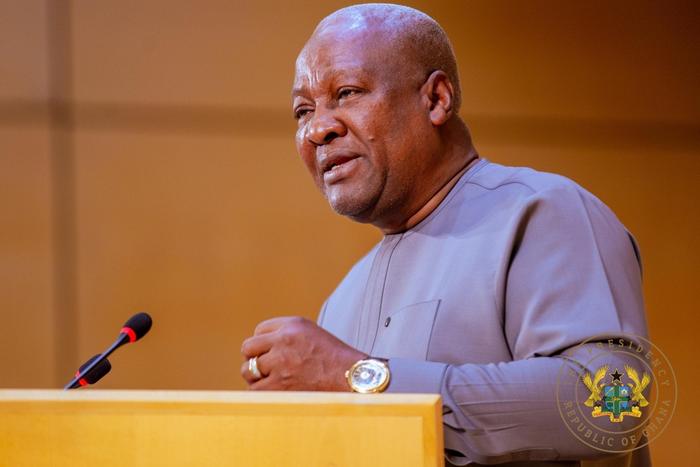
President John Dramani Mahama has issued a firm directive to government appointees, cautioning them against engaging with award schemes and recognition platforms without explicit approval from the Office of the President.
The warning, communicated in an official notice, instructs all political appointees to refrain from participating in, sponsoring, endorsing, attending, or accepting awards from organisations unless they receive prior authorisation. The directive is part of efforts to safeguard the credibility of public office and ensure that state officials are not associated with questionable or unverified entities.
The Presidency emphasised that the increasing proliferation of award schemes, some of which lack transparency and credibility, poses a reputational risk to government institutions. Officials say the move is intended to prevent situations where public officeholders are linked to platforms that may prioritise publicity over merit.

According to the directive, appointees must channel any invitations or engagements related to awards through the appropriate government structures for vetting. This ensures that only credible, reputable, and nationally beneficial recognitions are considered.
The development comes at a time when award ceremonies and recognition events have become increasingly common across Ghana and beyond, often targeting public officials, business leaders, and influencers. While some of these platforms are legitimate, others have been criticised for lacking rigorous selection criteria or for using awards as commercial ventures.
Government sources indicate that the President’s stance is aimed at reinforcing discipline within the administration and maintaining high ethical standards among appointees. By centralising approval, the Presidency seeks to ensure consistency and prevent conflicting representations of government endorsement.

Analysts say the directive reflects a broader concern about public perception and accountability. In an era where public trust is closely tied to transparency and integrity, associations with questionable organisations can quickly attract scrutiny and undermine confidence in leadership.
The policy also aligns with ongoing efforts to strengthen governance frameworks and promote professionalism within the public sector. By setting clear boundaries, the administration is signalling that recognition and honours involving public officials must meet defined standards.
Observers note that similar measures have been adopted in other jurisdictions where governments seek to regulate the public engagements of officials to avoid reputational risks and conflicts of interest.
While the directive does not prohibit appointees from receiving awards altogether, it introduces a layer of oversight intended to ensure that such recognitions are meaningful and aligned with national interests.
For appointees, the message is clear: any engagement with award granting bodies must be carefully considered and officially approved. Failure to comply could have implications for professional conduct and public accountability.

The President’s warning reinforces the administration’s emphasis on discipline, credibility, and responsible representation, particularly in an environment where public visibility and recognition can carry significant political and institutional weight.