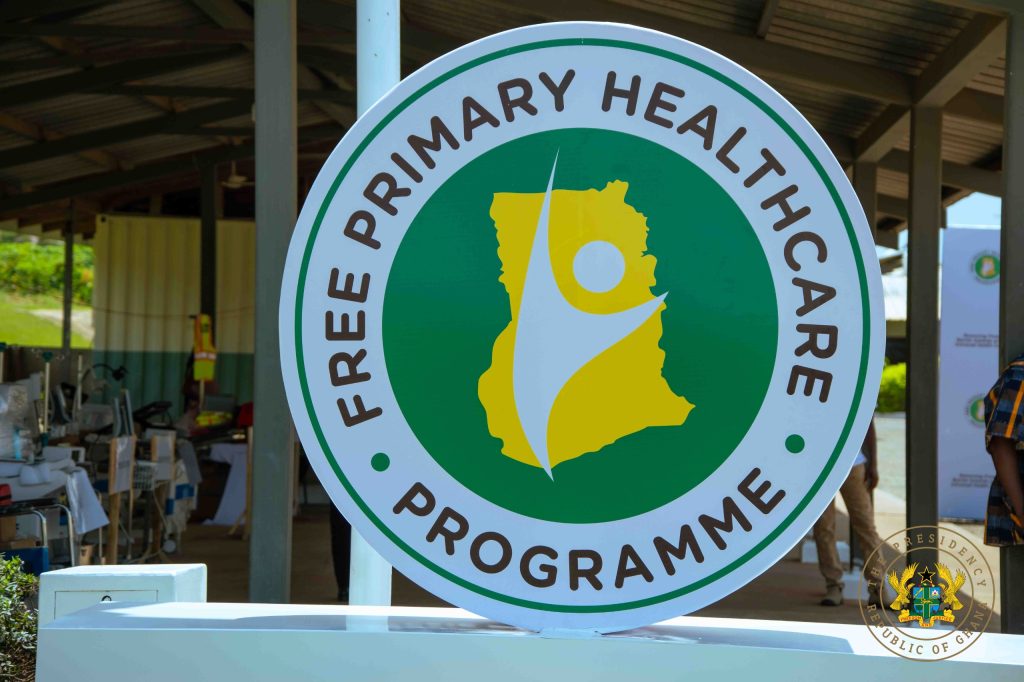
Government deploys 200 mobile health kiosks across 150 districts to boost frontline care

0
38

Hon. Kwabena Mintah Akandoh has announced that the government has delivered 200 mobile health kiosks to 150 districts nationwide as part of efforts to strengthen immediate healthcare access, particularly in underserved and remote communities.

The initiative is designed to bridge critical gaps in Ghana’s primary healthcare system by bringing essential medical services closer to populations that often struggle with distance, infrastructure limitations, and delays in accessing care. The kiosks are expected to serve as first-response health points, reducing pressure on major hospitals and improving early diagnosis and treatment.

According to the minister, the rollout forms part of a broader strategy to decentralise healthcare delivery and improve responsiveness at the community level. The kiosks are equipped to handle basic medical consultations, minor treatments, health screening, and referrals, ensuring that patients receive timely attention before conditions escalate into emergencies.

The deployment reflects a growing shift in healthcare policy toward preventive and community-based care, rather than relying heavily on centralised hospital systems. By positioning these kiosks within districts, the government aims to cut down travel time for patients and enhance access to routine services such as blood pressure checks, maternal care support, and basic diagnostics.

In many rural areas, residents often travel long distances to access healthcare facilities, sometimes delaying treatment due to cost or transportation challenges. The introduction of mobile kiosks is expected to reduce these barriers, making healthcare more accessible and potentially improving overall health outcomes.

Health sector observers note that while the initiative is a step in the right direction, its success will depend heavily on consistent staffing, maintenance, and supply of essential medical resources. Without proper operational support, such infrastructure risks becoming underutilised over time.

Government deploys 200 mobile health kiosks across 150 districts to boost frontline care

The move also aligns with Ghana’s ongoing commitment to achieving universal health coverage, ensuring that all citizens have access to essential health services without financial hardship. Strengthening district-level healthcare is widely seen as a critical component of that goal.

However, the rollout raises important questions about sustainability. Deploying kiosks is one thing; keeping them functional is another. Issues such as staffing shortages, equipment maintenance, and funding for consumables will ultimately determine whether the initiative delivers long-term impact or fades into another short-lived intervention.

There is also the question of integration. For maximum efficiency, the kiosks must be linked effectively to district hospitals and referral systems. Without seamless coordination, patients may still face delays when cases require higher-level care.

Despite these concerns, the initiative signals a proactive approach by the government to tackle healthcare accessibility challenges head-on. It also reflects increasing recognition that improving health outcomes requires not just hospitals, but strong community-level systems capable of handling everyday health needs.

If properly managed, the mobile health kiosks could play a significant role in reshaping healthcare delivery in Ghana, particularly for vulnerable populations who have historically been left on the margins of the system.

The real test now lies in execution. Infrastructure alone does not fix healthcare systems. Consistency, accountability, and sustained investment will determine whether these kiosks become a cornerstone of Ghana’s health delivery model or just another policy headline.

Mahama cabinet orders fuel levy suspension, cheaper buses to ease pump price burden

Author

  • Daniel Ablordey

    Daniel Ablordey is a Business Analytics student at the University of Ghana Business School and an emerging strategist at the intersection of data, markets, and narrative. With a keen analytical mind and a passion for African business and economic trends, he is building a career focused on translating complex data-driven insights into accessible, decision-relevant stories that matter.

    As a writer and editor with Insight Ghana, African Business Insight, and The African Journal, Daniel delivers sharp, high-impact analysis on current affairs, business developments, and emerging trends across the continent. His work is defined by precision, clarity, and a deep commitment to responsible journalism — ensuring that every story he tells is not only accurate but meaningful to the audiences it serves.

    Beyond his editorial work, Daniel serves as an Ecobank Youth Ambassador, where he actively promotes financial inclusion, digital banking, and financial literacy among young Ghanaians. His leadership experience spans academic, professional, and faith-based institutions, where he has consistently driven initiatives centered on growth, structure, and long-term impact.

    Grounded in the principles of Pan-Africanism and service, Daniel brings a rare combination of analytical rigour and storytelling depth to his work. Whether unpacking market behavior, profiling emerging business leaders, or covering cultural shifts shaping the continent, he approaches every assignment with strategic intent and editorial integrity.

    His broader ambition is to contribute to Africa’s transformation by shaping how data, business, and storytelling intersect — not just locally, but on a global stage.

Previous articleKATH nurses join strike as pressure mounts over CEO suspension
Next articleIbrahim Mahama offers 100 jobs to Ghanaian returnees after South Africa xenophobic attacks
Daniel Amenyo Ablordey
Daniel Ablordey is a Business Analytics student at the University of Ghana Business School and an emerging strategist at the intersection of data, markets, and narrative. With a keen analytical mind and a passion for African business and economic trends, he is building a career focused on translating complex data-driven insights into accessible, decision-relevant stories that matter. As a writer and editor with Insight Ghana, African Business Insight, and The African Journal, Daniel delivers sharp, high-impact analysis on current affairs, business developments, and emerging trends across the continent. His work is defined by precision, clarity, and a deep commitment to responsible journalism — ensuring that every story he tells is not only accurate but meaningful to the audiences it serves. Beyond his editorial work, Daniel serves as an Ecobank Youth Ambassador, where he actively promotes financial inclusion, digital banking, and financial literacy among young Ghanaians. His leadership experience spans academic, professional, and faith-based institutions, where he has consistently driven initiatives centered on growth, structure, and long-term impact. Grounded in the principles of Pan-Africanism and service, Daniel brings a rare combination of analytical rigour and storytelling depth to his work. Whether unpacking market behavior, profiling emerging business leaders, or covering cultural shifts shaping the continent, he approaches every assignment with strategic intent and editorial integrity. His broader ambition is to contribute to Africa’s transformation by shaping how data, business, and storytelling intersect — not just locally, but on a global stage.