


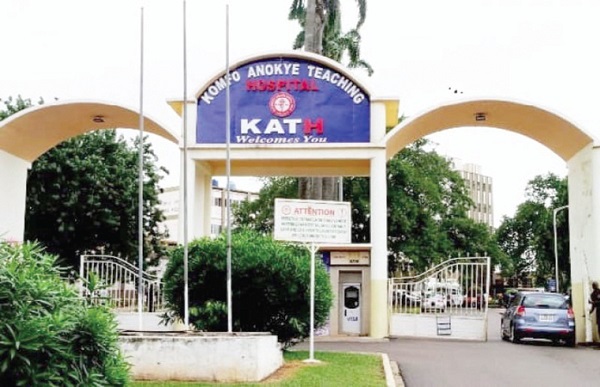
The National Labour Commission has directed the Komfo Anokye Doctors Association to call off its ongoing strike with immediate effect, escalating efforts to restore normal healthcare services at the Komfo Anokye Teaching Hospital.
The directive follows days of disruption at one of Ghana’s largest referral hospitals, where doctors had withdrawn services over grievances linked to working conditions and leadership concerns. The strike has significantly affected patient care in the Ashanti Region and beyond, given the hospital’s role as a major tertiary healthcare centre.
According to the Commission, the industrial action breaches established labour procedures, particularly provisions requiring essential service providers to maintain operations while disputes are being addressed through legal and arbitration channels. The Commission emphasised that healthcare is classified as an essential service, making prolonged withdrawal of services a serious concern for public welfare.

Officials have therefore instructed the doctors to immediately resume duties while ongoing negotiations continue. The Commission also signalled its readiness to engage both parties in structured dialogue to address the underlying issues that triggered the strike.
The dispute is understood to involve tensions between the doctors and hospital management, including concerns about administrative decisions, workplace conditions and broader governance issues within the facility. While the doctors have maintained that their actions are aimed at protecting professional standards and patient care, authorities argue that the strike risks endangering lives.
The Commission’s intervention reflects a familiar pattern in Ghana’s labour landscape, where industrial actions in critical sectors often trigger swift regulatory responses. In previous cases involving health workers, the Commission has consistently prioritised continuity of care while urging dialogue over confrontation.
For the doctors, the directive places them in a difficult position. Ignoring the order could expose the association to legal consequences, including sanctions or further escalation by the state. Complying, however, may weaken their bargaining leverage if their concerns are not addressed with urgency.
Healthcare analysts warn that recurring strikes within major hospitals point to deeper systemic issues that go beyond individual disputes. These include staffing pressures, infrastructure gaps, administrative tensions and broader challenges within Ghana’s public health system.
The situation at Komfo Anokye Teaching Hospital is particularly sensitive due to its strategic importance. The facility serves millions of people across multiple regions, and disruptions there tend to have a ripple effect across the national healthcare system.

Government officials have not yet publicly outlined specific steps to resolve the dispute, but pressure is mounting for a swift and lasting solution. Patients and families affected by the strike have expressed frustration, with many forced to seek care at alternative facilities or postpone critical treatments.
The Commission has indicated that it will closely monitor compliance with its directive and expects all parties to act in good faith. It also reiterated that grievances should be channelled through formal dispute resolution mechanisms rather than industrial action, especially in sectors where public safety is at stake.
Whether the doctors will immediately comply remains uncertain, but the directive shifts the momentum of the dispute. The next move from the Komfo Anokye Doctors Association will likely determine how quickly normal services resume and whether negotiations progress toward a sustainable resolution.
Organised Labour suspends strike