


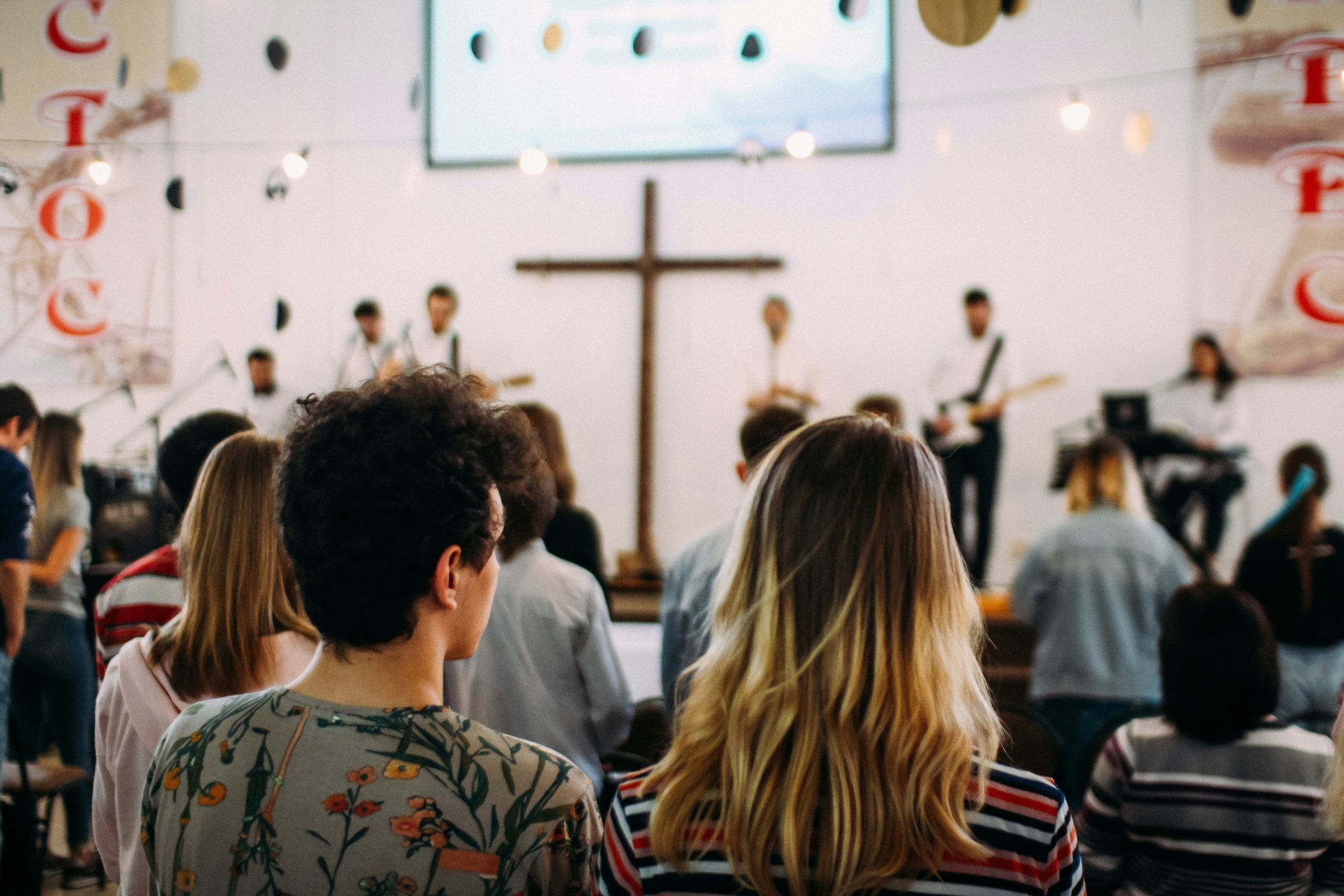
There is a question being asked in Ghanaian households with increasing frequency, usually by a parent or grandparent, and usually with an anxiety that is hard to separate from the asking. Why does the young person no longer come to church with the same consistency they once did? Why do they ask questions that would not have been asked a generation ago? Why does their faith, if they still call it that, look so different from the faith they were raised in? The question gets framed as drift, as a falling away, as a spiritual problem to be corrected. What it may actually be is something more complicated and more honest.
Ghana is one of the most religiously identified countries in the world. According to the 2021 Population and Housing Census, approximately 71.3% of Ghanaians identify as Christian and 19.9% as Muslim, with less than 1% identifying as having no religious affiliation. These figures make Ghana one of the most religiously affiliated nations globally, with religious identity deeply embedded in social, cultural, and institutional life. The church and the mosque are not peripheral to Ghanaian public life. They are central to it, in ways that shape everything from politics to education to the rhythms of the week.
And yet something is shifting, not uniformly, not dramatically, but measurably, in the relationship between young Ghanaians and the religious institutions that shaped them. Understanding what that shift actually is requires the willingness to look at it directly rather than through the frame of either celebration or alarm.
What the data suggests about religious change
The picture that emerges from research on religious change among young Africans is more nuanced than either the secularisation narrative or the African Christianity success story allows for.
Pew Research Center data examining religious trends in sub-Saharan Africa found that while the region remains among the most religious in the world, younger cohorts show measurably lower levels of daily prayer, weekly worship attendance, and self-reported importance of religion in their lives compared to older cohorts. The researchers noted that this generational difference, while smaller than equivalent differences in Western Europe or North America, represents a meaningful and consistent pattern that has not previously been as visible in African religious data.
A survey examining religiosity among Ghanaian university students found significant variation in religious practice and belief within a population that almost uniformly retained a religious self-identification. Students who identified as Christian reported regular church attendance at lower rates than their parents’ generation, higher rates of doubt about specific doctrinal claims, and a greater tendency to describe their faith in personal and experiential terms rather than institutional and doctrinal ones. The researchers described the emerging pattern as believing without belonging, a phrase coined in Western religious sociology but increasingly applicable to segments of educated young Ghanaians.
The phrase believing without belonging captures something important about what is actually happening, which is not primarily a movement away from faith but a movement away from specific institutional expressions of faith. The young Ghanaian who no longer attends their parents’ church every Sunday, who asks difficult questions about prosperity theology, who finds some pastoral messaging intellectually or ethically inadequate, is frequently not abandoning God. They are renegotiating their relationship with the institution through which they were introduced to God, and those are not the same thing.

What is driving the renegotiation
Several converging forces are reshaping the religious landscape for young Ghanaians, and they deserve to be named individually rather than collapsed into a single narrative of secular corruption or Western influence.
Education is the variable that research consistently identifies as among the most significant. Studies examining the relationship between educational attainment and religious practice in Ghana have found that higher levels of formal education are associated with greater religious questioning, lower institutional attendance, and a more individualised approach to faith, while not producing the wholesale religious disaffiliation that equivalent education levels have historically produced in Western contexts. The educated young Ghanaian tends to retain religious belief while becoming more selective about institutional participation and more critical of specific theological claims.
The prosperity gospel, which has dominated significant segments of Ghanaian Christianity for decades, is facing a particular crisis of credibility with younger cohorts. The theology that promised material blessing in return for faith and financial giving has been tested by the economic experience of a generation that has prayed faithfully, given generously, and encountered an economy that has not delivered the promised outcomes. The young person who watched their parents seed into a ministry for years without the prophesied breakthrough does not draw the same theological conclusions from that experience that their parents drew. They draw different ones, and those conclusions are not without intellectual basis.
Research on prosperity gospel decline among African youth found that economic frustration was a significant predictor of reduced engagement with prosperity-oriented churches, while not predicting equivalent reduction in engagement with churches whose theological emphasis was on community, justice, or experiential faith. The young people leaving were not leaving Christianity. They were leaving a specific version of it whose claims they had tested against their experience and found wanting.
The internet and global information access have introduced young Ghanaians to intellectual and philosophical traditions that previous generations had no access to, including serious critiques of religious claims, comparative religious scholarship, and secular philosophical frameworks. The young person who has read widely cannot unknow what they have read, and the church that has not prepared them to engage honestly with intellectual challenge frequently loses them not because the challenge is unanswerable but because no one in their religious community was willing to engage with it seriously.
There is also the ethical dimension. A generation that grew up watching religious leaders implicated in financial scandal, sexual misconduct, and the exploitation of vulnerable followers is not simply being cynical when it questions institutional religion. It is applying the same evaluative logic to religious institutions that it applies to every other institution, and finding that the gap between the institution’s claims about itself and its demonstrated behaviour is too wide to ignore. The young Ghanaian who leaves a church because its pastor has been credibly accused of misconduct is not drifting from faith. They are refusing to separate faith from ethics in a way that their tradition actually requires.

The emergence of new religious forms
What is often missed in the drift versus evolution conversation is the degree to which young Ghanaians who are moving away from traditional institutional religion are frequently moving toward something rather than away from everything. The religious landscape they are constructing is not primarily secular. It is differently religious.
The rise of what sociologists call spiritual but not religious, the orientation that retains belief in God, in prayer, in a transcendent dimension of experience, while rejecting institutional affiliation and doctrinal conformity, is visible among young urban Ghanaians in ways that were not previously documented. This is not a Western import, though Western categories are sometimes borrowed to describe it. It reflects a genuine renegotiation of the terms of religious engagement rather than its abandonment.
There is also significant movement between denominations and religious expressions rather than away from religion altogether. The young Ghanaian who leaves a traditional Pentecostal church may move toward a charismatic congregation with a different leadership culture, toward an Anglican or Catholic setting whose liturgical structure they find more intellectually honest, toward an online faith community, or toward a small group of peers who study scripture together without institutional affiliation. These movements are not consistently captured in surveys that measure religious identity in simple categorical terms.
Research on religious switching in Ghana found that denominational movement was significantly more common than religious disaffiliation, suggesting that young Ghanaians who are dissatisfied with their inherited religious expression are more likely to seek an alternative expression than to abandon religious practice altogether. The researchers noted that the Ghanaian religious market, with its extraordinary diversity of congregations, theological orientations, and worship styles, provides sufficient variety that most religious needs can be met somewhere within its bounds.
The questions that institutional religion is not answering
The young Ghanaian who is drifting from institutional religion is often drifting toward questions that the institution has not been honest or equipped to engage. These questions deserve to be named rather than simply diagnosed as symptoms of spiritual weakness.
The problem of suffering is among the most pressing. A generation managing economic hardship, watching family members suffer from conditions that prayer has not resolved, encountering a world whose difficulty does not respond to the theological formulas they were given, is asking the oldest theological question: if God is good and powerful, why does this happen? The church that responds with the prosperity gospel, with the suggestion that the suffering reflects insufficient faith or unclaimed blessing, is not answering the question. It is insulting the person asking it.
The relationship between faith and science is another area of genuine intellectual tension that most Ghanaian churches handle poorly. The young person studying biology, geology, or cosmology at a Ghanaian university is encountering a body of knowledge that is in genuine tension with some literal interpretations of religious texts, and they deserve honest engagement with that tension rather than the choice between intellectual capitulation and spiritual betrayal.
The ethics of certain traditional religious positions, on gender, on sexuality, on the treatment of those outside the faith community, are being questioned by a generation whose moral framework has been shaped by exposure to different ethical traditions and whose experience of the world includes people whose dignity they care about and whose treatment by religious institutions they find inadequate.
These are not trivial questions, and they are not evidence of spiritual weakness. They are evidence of a generation that takes both its faith and its intellectual integrity seriously enough to insist that they be reconcilable. The institution that responds to this with authority rather than honesty, with condemnation rather than engagement, tends to lose the very people whose engagement with faith would make it most vital.
What evolution looks like in practice
The young Ghanaians who are evolving in their religious engagement rather than simply drifting away from it tend to share certain characteristics. They distinguish between faith, which they retain and often deepen, and institutional religion, which they engage with more selectively. They maintain personal spiritual practices, prayer, meditation, scripture engagement, outside of formal religious settings. They are more interested in the ethical implications of faith than its ritual expressions. They tend toward religious communities characterised by intellectual honesty, genuine pastoral care, and leadership whose conduct matches its claims.
They are also more likely to hold their religious identity with a degree of humility and uncertainty that previous generations were not encouraged to model. The young Ghanaian who says they believe but has genuine doubts, who practises faith while acknowledging the questions it has not answered, is not a failed Christian or a weak Muslim. They are someone whose faith has become honest enough to survive contact with reality, which is arguably the most robust form of faith available.
What the institution owes this generation
The religious institutions that shaped Ghanaian society have something genuine to offer to a generation navigating complexity. The depth of theological tradition, the community that sustains people through difficulty, the framework of meaning that addresses the questions that secular alternatives struggle with, the ethical formation that produces people capable of self-giving rather than pure self-interest: these are real and valuable, and their value does not diminish because the institution is imperfect.
What the institution owes this generation in return is honesty. Intellectual honesty about the questions that faith is genuinely difficult to reconcile with. Ethical honesty about the gap between institutional conduct and institutional claims. Pastoral honesty about the reality of doubt, and the normalcy of spiritual struggle, and the availability of grace for people who are not sure they have it all right. The willingness to say, from the pulpit and in the pastoral conversation, that faith is not certainty, that doubt is not disqualification, and that the God who is claimed to be big enough to create the universe is presumably big enough to withstand the questions of young people who are trying to understand it.
The young Ghanaian who is drifting is often not going far. They are frequently standing just outside the door, waiting to see whether the institution they grew up in is capable of meeting them in their actual experience rather than in the experience the institution wishes they were having. The institution that can do that tends to find that what looked like drift was actually the beginning of a more honest and more durable faith than the one that preceded it.
“Christian or Muslim, I will marry who I love” — Black Sherif speaks on relationships and religion