

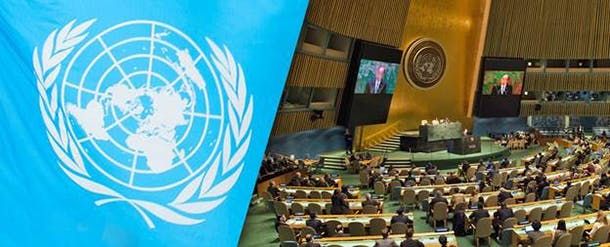
The United Nations General Assembly has formally backed a landmark advisory opinion issued by the International Court of Justice, affirming that governments have a legal obligation under international law to protect the environment from greenhouse gas emissions.
The resolution marks a significant shift in the global climate conversation, reframing climate action from a political commitment into a binding legal responsibility. By endorsing the ICJ’s opinion, UN member states have reinforced the principle that failure to address climate change could carry legal consequences under international frameworks.
The advisory opinion, delivered by the ICJ in The Hague, clarified that states are required to take concrete steps to limit emissions, prevent environmental harm, and safeguard ecosystems for present and future generations. It also emphasized that countries may be held accountable if their actions or inactions contribute to climate related damage beyond their borders.

The decision is widely regarded as historic because it strengthens the legal foundation for climate litigation worldwide. Environmental groups, legal experts, and vulnerable nations have long argued that existing international agreements, including the Paris Agreement, lack enforceable mechanisms to compel compliance. The ICJ’s interpretation now provides a legal pathway to challenge governments that fail to meet their climate obligations.
By adopting the resolution, the UN General Assembly has effectively endorsed this legal interpretation, giving it broader political legitimacy and increasing pressure on governments to align national policies with international climate law.
Legal analysts say the ruling could reshape how climate disputes are handled globally. Countries facing rising sea levels, extreme weather events, and environmental degradation may now have stronger grounds to seek accountability from major polluters. Small island states and developing nations, which contribute the least to global emissions but suffer disproportionately from climate impacts, are expected to benefit most from this development.

The resolution also reinforces the idea that environmental protection is tied to fundamental human rights. The ICJ opinion highlighted that climate change threatens rights such as access to food, water, health, and housing, making government action not just an environmental issue but a human rights obligation.
For major emitting countries, the decision increases scrutiny over national climate policies, particularly in areas such as fossil fuel production, industrial emissions, and deforestation. Governments may now face heightened legal and diplomatic pressure to accelerate transitions toward renewable energy and sustainable practices.
The move comes at a time when global climate efforts remain uneven, with many countries struggling to meet emissions reduction targets. Despite growing awareness and commitments, global emissions have continued to rise in recent years, raising concerns about the pace of climate action.


While the ICJ’s advisory opinions are not legally binding in the same way as court judgments between states, they carry significant weight in international law and are often used to guide policy, influence treaties, and shape legal arguments in national and international courts.
The UN General Assembly’s endorsement signals a growing consensus that climate change is not just an environmental challenge but a legal and moral issue that requires urgent and enforceable action.
As countries move forward, the resolution is expected to influence climate policy, strengthen environmental governance, and potentially open the door to a new wave of climate related legal actions across the world.
United States suspends visa services in Uganda amid Ebola outbreak declared global health emergency