

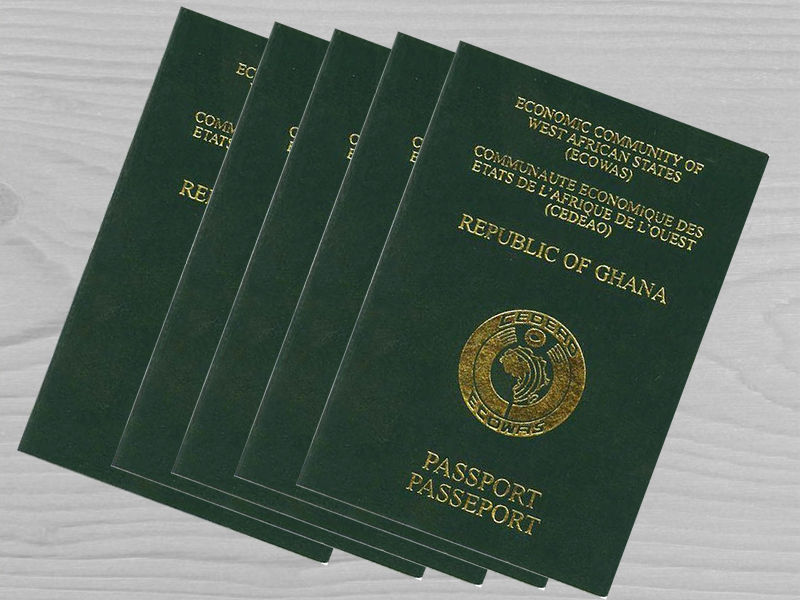
Ghana has recorded a significant leap in global passport rankings, climbing seven places in the latest index and outperforming regional peers including Nigeria, in a development that highlights gradual improvements in international mobility for Ghanaian citizens.
The latest ranking places Ghana among the top tier of African passports, ahead of at least 41 countries on the continent. The progress reflects a combination of visa free access agreements, diplomatic engagements, and evolving perceptions of Ghana’s stability and governance on the global stage.
Passport rankings are typically determined by the number of destinations holders can access without requiring a prior visa, either through visa free entry or visa on arrival arrangements. Ghana’s upward movement suggests that its citizens now enjoy broader travel access compared to previous years, even though the country still trails global leaders in Europe and parts of Asia.

While exact figures vary across ranking bodies, Ghana’s passport is now estimated to provide access to over 60 countries without the need for a traditional visa. This includes destinations across Africa, the Caribbean, parts of Asia, and select regions in South America. The expansion of travel access is often linked to bilateral agreements and Ghana’s relatively strong diplomatic relations within the Global South.
In contrast, Nigeria’s passport continues to rank lower due to more restrictive visa requirements imposed by many countries. Analysts say differences in migration patterns, security perceptions, and diplomatic engagements have contributed to the gap between the two West African nations.
Ghana’s improved position also reinforces its reputation as one of Africa’s more stable democracies. Over the years, the country has built a consistent record of peaceful elections and political transitions, which often play a role in how other nations assess travel risks and visa policies.
Beyond governance, economic factors also influence passport strength. Countries with more stable economies and lower levels of irregular migration tend to receive more favourable visa arrangements. While Ghana still faces economic challenges, including currency pressures and debt restructuring, its overall trajectory has remained relatively predictable compared to some peers.

On the African continent, only a handful of countries consistently rank higher than Ghana in passport strength, including Seychelles, Mauritius, and South Africa. These countries benefit from stronger global economic integration and long standing visa agreements with Europe and other advanced economies.
Despite the improvement, Ghana’s passport still faces significant limitations when it comes to travel to major destinations such as the United States, the United Kingdom, and the Schengen Area, where visas remain mandatory. This underscores the broader inequality in global mobility, where citizens of developing countries often face more barriers to travel.
Experts argue that further progress will depend on Ghana’s ability to deepen diplomatic ties, improve economic resilience, and maintain internal stability. Expanding trade partnerships, participating in international agreements, and strengthening border management systems could all contribute to enhanced global trust and, ultimately, better passport access.
There is also a growing emphasis on regional integration within Africa, particularly through frameworks like the African Continental Free Trade Area. Increased cooperation across African states could lead to more relaxed travel restrictions within the continent, boosting mobility for Ghanaian citizens even further.

For many Ghanaians, the improved ranking is more than just a statistic. It translates into easier travel for business, education, tourism, and family connections. Reduced visa barriers can lower costs, shorten travel preparation time, and open new opportunities for individuals and businesses alike.
However, analysts caution against overstating the significance of rankings alone. While they provide a useful benchmark, real impact depends on how accessible and practical travel actually becomes for citizens. Visa free access does not always guarantee ease of entry, as travellers may still face scrutiny at borders.
Nonetheless, Ghana’s rise in the rankings signals positive momentum. It reflects not only diplomatic progress but also the country’s broader positioning in a world where mobility, perception, and international relations are increasingly interconnected.
Ghana passport mobility gap persists despite diplomatic gains