

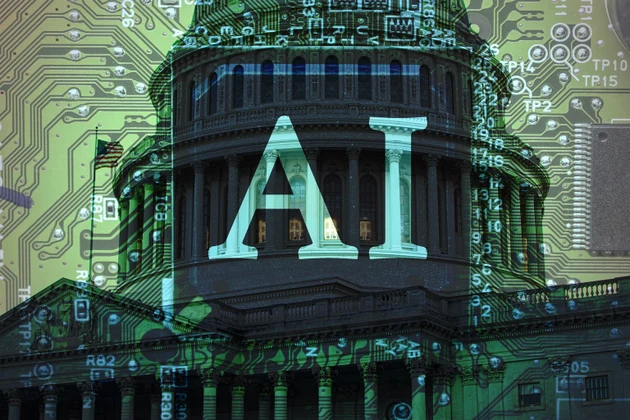
The expansion of U.S. government AI model access marks a significant turning point in how advanced artificial intelligence systems are developed, reviewed, and deployed in the United States. Under new arrangements involving major technology firms, federal agencies will now evaluate cutting-edge AI systems before they reach the public, introducing a new layer of oversight in a rapidly evolving industry.
At the centre of this shift in U.S. government AI model access is a coordinated agreement involving leading developers such as Google, Microsoft, and xAI, alongside earlier commitments from OpenAI and Anthropic. The objective is to allow government experts to examine model capabilities, identify security risks, and assess potential societal impacts before commercial release.
How U.S. government AI model access is reshaping oversight
The structure of U.S. government AI model access is being managed through the Commerce Department’s Center for AI Standards and Innovation, a body tasked with conducting pre-deployment evaluations of advanced AI systems. These assessments are designed to test how powerful models behave under controlled conditions, including stress testing for security vulnerabilities and misuse scenarios.
A notable feature of the arrangement is that companies are expected to provide versions of their models with reduced safeguards during evaluation. This enables deeper inspection but also raises questions about how closely government testing environments can replicate real-world usage conditions once the systems are released commercially.
Policy shift behind U.S. government AI model access
The emergence of U.S. government AI model access reflects a broader policy recalibration. While earlier regulatory approaches to artificial intelligence were often described as cautious or fragmented, the current framework signals a more structured, coordinated effort to balance innovation with national security concerns.
The Commerce Department has indicated that these agreements are intended to align with a broader national strategy on artificial intelligence governance. This includes reassessing earlier arrangements and expanding evaluation capacity as AI systems become more capable and potentially more unpredictable.
Security concerns driving U.S. government AI model access
A key driver of U.S. government AI model access is the growing concern over frontier AI systems and their potential misuse. Advanced models are increasingly capable of performing complex reasoning tasks, including identifying cybersecurity vulnerabilities and generating highly realistic synthetic content.
These capabilities have raised concerns among policymakers about how such systems could be exploited if released without adequate safeguards. As a result, early access allows government analysts to identify risks before deployment, rather than responding after potential harm has occurred.
For national security agencies, this approach provides an opportunity to understand emerging capabilities in controlled environments. However, it also introduces questions about how effectively oversight can keep pace with rapid technological innovation.
Impact of U.S. government AI model access on businesses
For technology companies, U.S. government AI model access introduces both operational and strategic implications. On one hand, it may increase regulatory friction and extend development timelines as models undergo additional evaluation stages. On the other hand, it could also improve public trust in AI systems, which is increasingly important for commercial adoption.
Firms operating in competitive AI markets must now factor government review processes into their product release cycles. This could influence how quickly new models reach consumers and enterprise clients, particularly in sectors where speed-to-market is a key advantage.
At the same time, companies may need to balance transparency with intellectual property protection. Sharing early-stage models with government agencies requires careful management of sensitive technical data, particularly in a highly competitive global AI landscape.
Implications for households and everyday users
The effects of U.S. government AI model access will eventually extend to households and individual users. By introducing pre-release evaluations, policymakers aim to reduce the likelihood of unsafe or unreliable AI systems reaching the public.
In practical terms, this could translate into more stable and secure AI tools used in everyday applications such as search engines, virtual assistants, education platforms, and workplace productivity software. Users may experience fewer errors, reduced security risks, and improved reliability over time.
However, there is also a possibility of delayed access to new features as systems undergo longer evaluation periods. This trade-off between safety and speed is likely to remain a central tension in AI governance.
Global competitiveness and regulatory influence
The introduction of U.S. government AI model access also has international implications. As other countries develop their own AI regulatory frameworks, the U.S. model could influence global standards for AI safety and oversight.
If successful, this approach may become a reference point for balancing innovation with risk management. If overly restrictive, however, it could raise concerns about slowing down technological progress or shifting innovation to less regulated environments.
Balancing innovation and control
Ultimately, U.S. government AI model access represents an effort to manage one of the most powerful technological shifts of the modern era. By embedding government evaluation into the AI development lifecycle, policymakers are attempting to anticipate risks rather than react to them after deployment.
For businesses, this introduces new compliance expectations and strategic planning considerations. For households, it offers the promise of safer and more reliable AI tools, albeit with potentially slower innovation cycles.
The success of this framework will depend on whether it can maintain a delicate balance between fostering technological advancement and ensuring that increasingly powerful AI systems remain secure, transparent, and aligned with public interest.
Read also: Uber turns into a personal assistant as it expands beyond rides and food delivery